






Spices: The Soul
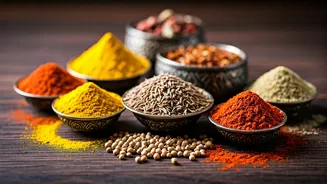
The cornerstone of Indian cuisine lies in its exquisite spice blends, which provide the distinct flavors, vibrant colors, and intoxicating aromas that
distinguish Indian dishes. Masalas, or spice mixtures, are frequently prepared in each home to provide specific tastes for various dishes. A standard masala might include turmeric, coriander, cumin, and chili powder. Turmeric adds a distinctive color and a slightly bitter flavor, while coriander and cumin impart earthy and warm tones. Chili powder provides heat, which may be modified according to taste. Beyond taste, spices serve important purposes in Indian cuisine. They possess antioxidant and anti-inflammatory characteristics and are thought to aid digestion. Freshly ground spices are favored to retain their freshness and intensity, and they are frequently toasted before being added to a dish to activate their flavors, offering depth and complexity to the overall taste profile.
Regional Specialties
India's cuisine is incredibly diverse, with regional variations heavily impacting the flavors and dishes. In the north, rich, creamy curries are commonplace, frequently made with dairy products and nuts, reflecting the influence of Mughal cuisine. Dishes such as butter chicken and palak paneer are highly sought-after. Traveling south, the emphasis turns to coconut, tamarind, and rice. The use of lentils and vegetables is extensive in vegetarian dishes, and dishes like dosas and idlis are staple breakfast items. Moving east, there is a greater emphasis on seafood and sweeter, spicier curries. West Bengal is known for its fish preparations, particularly the iconic fish curry. Finally, the cuisine of the west coast, particularly in Maharashtra and Goa, combines seafood with spices, resulting in a rich and sometimes fiery flavor palette. Each region uses unique cooking methods and ingredients, reflecting the cultural diversity of India.
Cooking Methods
The method of cooking plays a crucial role in creating authentic Indian cuisine. Tandoor cooking, a method of roasting in a clay oven (tandoor), gives a smoky flavor to dishes such as tandoori chicken and naan bread. Frying is another key technique, which is used to make a range of snacks and side dishes, like samosas. Simmering is frequently used to make curries and stews, enabling the flavors to blend. In preparing a dish, each cooking method serves a different purpose, influencing the final texture and taste of the food. When making Indian dishes, the careful control of heat and the order in which the ingredients are added are crucial. For example, frying spices in oil at the start of cooking is an essential technique known as tempering, which releases their full aroma and flavor. In addition, the use of a variety of cooking techniques, from slow cooking over low heat to high-temperature searing, contributes to the complexity and depth of Indian cuisine.
Essential Ingredients
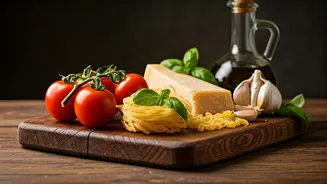
A small number of key ingredients form the basis of most Indian dishes. The most common ingredient is rice, which is served as a staple with curries and side dishes. Lentils (dal) are crucial, offering both nutrition and texture in a variety of dishes. Many Indian recipes depend on onions, garlic, and ginger, which are used to produce a flavorful base. Tomatoes are used in many curries, adding acidity and richness to the base of most sauces. Yogurt is a common component used to soften the flavor, add texture, and as a marinade for meat. Fresh herbs, such as coriander, mint, and curry leaves, provide freshness and a burst of flavor. These ingredients combine to produce the distinctive flavors that define Indian cuisine. Furthermore, each component serves a purpose, from the building blocks of flavor to the finishing touch of freshness.
Creating Authentic Dishes
Making authentic Indian dishes at home requires knowledge of the right ingredients, as well as an understanding of the cooking methods. Start with the spices: investing in a good selection of whole spices and learning how to grind them fresh makes a world of difference. It is important to know which spices go well together and to modify the heat level according to personal preference. Mastering the art of making basic sauces, such as tomato-based or cashew-based gravy, is key, as these are the base for many curries. Experiment with various regional recipes to experience a variety of flavors and tastes. It is important to remember that patience is key when preparing Indian dishes; the slow cooking and blending of flavors make for the best results. The taste is enhanced when the flavors are given time to blend. As one experiments with various recipes, he or she becomes more familiar with the nuances of each cuisine.