





What is an Exoplanet?
An exoplanet, simply put, is a planet that orbits a star other than our own Sun. The discovery of these celestial bodies has revolutionized our understanding
of the universe. Unlike planets within our solar system, exoplanets exist in a vast array of sizes, compositions, and orbital paths. This diversity presents astronomers with a wide range of study opportunities. Early exoplanet research, such as the discovery of 51 Pegasi b in 1995, orbiting a Sun-like star, provided the first firm evidence that planets are common throughout the cosmos. NASA has confirmed the existence of numerous exoplanets, and scientists are constantly refining their techniques to find new ones, with each finding expanding our knowledge about the possibilities of life beyond Earth.
How Are They Found?
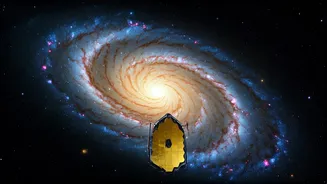
Scientists employ various techniques to locate exoplanets. The transit method is a prominent approach, detecting exoplanets by observing the slight dimming of a star's light as a planet passes in front of it. Another significant method is the radial velocity method, which identifies planets by measuring the subtle wobble in a star's movement caused by the gravitational pull of orbiting planets. Other methods, such as direct imaging, allow astronomers to capture images of exoplanets directly. The James Webb Space Telescope (JWST) plays a crucial role in these investigations, providing unprecedented capabilities. These advanced techniques help astronomers analyze exoplanet atmospheres and search for chemical signs of life, offering a deeper understanding of these distant worlds.
Types of Exoplanets
The variety of exoplanets is truly astonishing. 'Hot Jupiters,' large gas giants located very close to their stars, are a peculiar class of exoplanets. These planets have extremely high surface temperatures, due to their proximity to the stars. Super-Earths, planets with masses larger than Earth but smaller than ice giants, are also very common. Another interesting type includes 'rogue planets' which drift freely in space, unattached to any star. The range of known exoplanets is vast, including those with unique characteristics. Examples like Kepler-186f, located in the habitable zone of its star, suggest the possibility of liquid water and potential for life. Scientists study these various types to understand the factors driving planetary formation and evolution.
Teenage Exoplanets' Growing Pains
Recent discoveries have unveiled the 'growing pains' of young exoplanets. Astronomers are capturing the initial stages of planet formation around other stars, observing how planets come together and evolve. The JWST is also offering insights into the rapidly changing galaxies in the early universe, allowing scientists to see the universe's formative phases. The observation of events like collisions in nearby star systems offers a glimpse back in time, allowing us to understand the processes shaping these young planets. Analyzing these evolving systems provides valuable information on planet development and provides the basis for understanding planet formation and evolution.
The Habitable Zone
The 'habitable zone' refers to the region around a star where conditions are favorable for liquid water to exist on a planet's surface, which is thought to be essential for life as we know it. The location of the habitable zone varies depending on the star's size and energy output. Discovering exoplanets within this zone is a key focus in the search for extraterrestrial life. This zone is a crucial factor, especially when considering exoplanets like Kepler-186f, potentially located within a habitable zone, increasing the likelihood of finding habitable planets. Astronomers use these findings to focus on planets, which have the potential to harbor liquid water, a key element to life.
JWST's Discoveries & Mysteries
The James Webb Space Telescope is transforming exoplanet research. JWST has found 'little red dots' that scientists are studying to determine if they are nurseries for direct-collapse black holes. In addition, JWST is being used to analyze exoplanet atmospheres, and look for signs of life. The telescope has also discovered comet-seeding crystals far from newborn stars. Black holes are also being studied, as scientists have observed a black hole feeding frenzy, potentially solving some cosmic mysteries. The JWST continues to unveil remarkable details, expanding our understanding of the universe. With its advanced capabilities, it is pushing the boundaries of what we know about the cosmos, and the search for extraterrestrial life.
Looking Ahead
The future of exoplanet research promises even more exciting discoveries. Scientists continue to refine their methods and develop new tools to search for exoplanets. As technology advances, we can expect increasingly detailed insights into exoplanet atmospheres, compositions, and potential for habitability. Astronomers will be focusing on those planets that are potentially located in habitable zones, and are looking for signs of life. The study of exoplanets continues to drive curiosity, inspire innovation, and shape our understanding of our place in the universe. The discoveries will help us understand the possibility of life beyond Earth, and what our place is within the cosmos.