



Bharti's Traditional Choice
Standup comedian and host Bharti Singh recently shared an interesting tidbit about her kitchen practices during a chat with Rajeev Khandelwal. She revealed
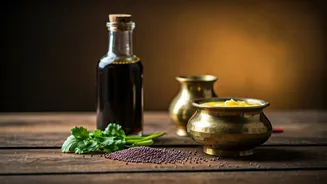
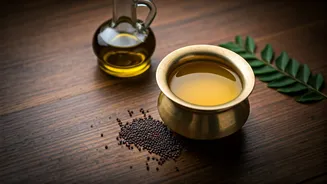
a deliberate decision to exclusively cook with two time-honored Indian fats: desi ghee and sarson ka tel, which translates to mustard oil. Bharti explicitly stated her avoidance of refined oils and 'meetha tel' (which can refer to various oils like peanut or sesame, depending on regional context). Her typical cooking involves either a curry prepared with desi ghee or one made using mustard oil, highlighting a simple yet firm commitment to these traditional options. This preference, she mentioned, is a consistent practice in her home, reflecting a desire for more natural and wholesome ingredients in her daily meals.
Expert Insights on Ghee & Mustard Oil
Following Bharti Singh's revelation, a closer look at the nutritional profiles of desi ghee and mustard oil, as explained by consultant dietitian Garima Goyal, reveals their inherent benefits. Mustard oil is lauded for its good fats, including monounsaturated fatty acids (MUFA) and omega-3s, and possesses anti-inflammatory qualities. Desi ghee, on the other hand, is a rich source of fat-soluble vitamins such as A, D, E, and K, and is also known to contribute to gut health when consumed appropriately. While these traditional fats offer advantages, Goyal emphasizes that a healthy diet is not solely determined by the type of fat used. The overall balance of your diet, the quantity of fats consumed, and the cooking methods employed are critical factors that significantly impact health outcomes and dietary goals. Therefore, a mindful approach is key to leveraging the benefits of these oils.
Mindful Usage & Balance
Garima Goyal further elaborates on the importance of moderation and mindful usage when incorporating ghee and mustard oil into one's diet. Even beneficial fats can lead to an excessive calorie intake if used without proper portion control. Mustard oil, if subjected to overheating or used in large quantities, can still present challenges. Similarly, ghee, being calorie-dense, can be easily overconsumed without the consumer realizing the extent. Thus, paying close attention to serving sizes is paramount for both. Furthermore, Goyal suggests that completely eliminating refined oils might not always be necessary. Often, the larger dietary culprits are ultra-processed foods and the detrimental habit of repeatedly heating and reusing cooking oils, rather than the oils themselves. The most prudent approach, according to the dietitian, involves utilizing a variety of healthy fats, keeping a watchful eye on the total intake of visible fats, and actively avoiding practices like deep frying or repeated oil heating. Bharti's traditional method is a good starting point, but the ultimate takeaway is about intelligent application, dietary equilibrium, and consistent healthy eating habits.