




Locating the Lyrids
The Lyrid meteor shower is renowned for its shooting stars that appear to originate from the constellation Lyra. To witness this celestial event, it's
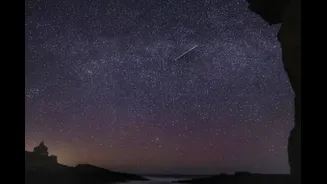
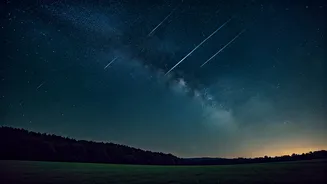
crucial to know where to direct your gaze. Lyra typically ascends in the northeastern part of the sky and climbs higher as the early morning hours approach, making it an event best suited for early risers. A key landmark for finding Lyra is the star Vega, one of the most luminous stars visible during this period. Vega becomes apparent above the northeastern horizon shortly after sunset and its ascent continues throughout the night. Specialized stargazing applications can greatly assist in pinpointing celestial targets like Vega. However, it's important to note that while the meteors seem to emanate from Lyra, the most breathtaking and elongated streaks are often observed when looking away from the radiant point. Therefore, it's advisable to scan the expanse of the sky surrounding Lyra, as well as the broader celestial canvas, because Lyrids can surprise viewers by appearing in unexpected locations.
Optimal Viewing Conditions
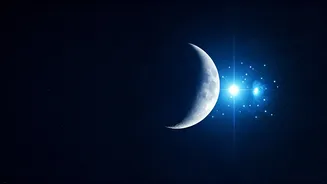
Under optimal circumstances, the Lyrid meteor shower can produce between 15 to 20 meteors every hour. Fortunately, the lunar phase in 2026 will be highly favorable for this year's display. The moon is scheduled to set after midnight, ensuring that the sky will be sufficiently dark for the peak viewing hours. This absence of significant moonlight interference is a major advantage, allowing for a more immersive and uninterrupted experience of the meteor shower. The clarity of the night sky, free from the moon's glare, will enhance the visibility of even the fainter meteors, promising a more profound celestial spectacle for all observers.
Maximizing Your Sighting
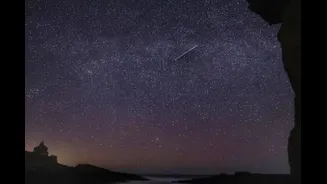
To significantly improve your chances of spotting the Lyrid meteor shower, several key strategies can be employed. Firstly, resist the urge to look directly at the radiant point in the constellation Lyra; instead, shift your gaze slightly away from it. This technique often reveals longer and more brilliant meteor trails as they traverse a greater portion of your field of vision. Secondly, position yourself to face the darkest section of the sky, actively avoiding light pollution from urban areas. A clear, unblemished patch of sky away from city lights offers the best backdrop. Thirdly, seek out a viewing location that provides a wide, unobstructed panorama. Expansive open areas such as fields, beaches, or elevated hilltops are ideal, as they offer a broader scope for meteor detection across a larger sky area. Fourthly, allow your eyes ample time to adjust to the darkness; a period of 20 to 30 minutes is recommended. During this adjustment phase, refrain from using electronic devices, especially smartphones, as their bright screens will reset your eyes' adaptation, forcing you to restart the process. Finally, prioritize comfort and patience. Lie back on a blanket or recline in a chair, ensuring you are warmly dressed. The longer you observe, the greater your likelihood of witnessing more meteors, so sustained, comfortable viewing is paramount.