








Ancient Wonders Beckon
The first stop on our architectural journey takes us back in time. The Great Pyramid of Giza, a testament to ancient Egyptian engineering, stands as a symbol
of human ingenuity. Constructed over 4,500 years ago, it served as a tomb for the pharaoh Khufu, showcasing remarkable precision in its construction. The colossal structure, a prominent feature in the Giza pyramid complex, continues to attract millions, marveling at its sheer size and enduring legacy. These majestic monuments and elaborate tombs illustrate ancient Egyptians' beliefs in the afterlife, highlighting their deep understanding of mathematics and construction techniques. Its massive scale and precise alignment are testament to the planning and coordination of ancient Egyptians, making it a must-see for history enthusiasts and architectural admirers alike.
Rome's Enduring Glory
Next, we move to the heart of the Roman Empire, where the Colosseum, a grand amphitheater, continues to echo tales of gladiatorial combats and public spectacles. Completed in 80 AD, this iconic structure had the capacity to accommodate between 50,000 and 80,000 spectators. The Colosseum's elliptical design and complex network of tunnels and chambers beneath the arena show the Romans’ expertise in engineering and its ability to construct and manage massive crowds. Visitors can walk in the footsteps of ancient Romans, imagining the drama and excitement that once filled this historic venue. The Colosseum stands as a striking reminder of Rome’s past power and architectural prowess, offering insights into their culture and entertainment.
Machu Picchu's Majesty
Journey to the heights of the Andes in Peru, where Machu Picchu, the 'Lost City of the Incas,' reveals the sophisticated architecture of the Inca civilization. Built in the 15th century, this mountaintop citadel stands at an altitude of approximately 2,430 meters (7,970 ft) above sea level, offering breathtaking views. The complex showcases the Inca's advanced understanding of stonework, with precisely fitted stones that needed no mortar. The site includes temples, residences, and agricultural terraces. It illustrates the Inca’s skill in adapting to their environment and creating a settlement that blended seamlessly with the natural landscape. Visiting Machu Picchu is an immersive experience, providing a glimpse into the ingenuity and artistry of the Inca civilization. Exploring the intricate stonework and strategic layout provides an unforgettable journey back in time.
Taj Mahal's Eternal Love
The Taj Mahal in Agra, India, is a monument to eternal love and architectural brilliance. Built in the 17th century by Emperor Shah Jahan as a mausoleum for his wife Mumtaz Mahal, it’s a breathtaking example of Mughal architecture. The Taj Mahal features white marble inlaid with semi-precious stones, a design that shimmers in the light, showcasing detailed craftsmanship. Every detail, from the grand dome to the intricate calligraphy, reflects a deep sense of beauty and devotion. The monument stands as a symbol of love and a testament to the Mughal Empire's artistic vision, offering a serene space that resonates with visitors.
Sagrada Familia's Vision
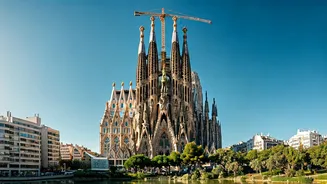
In Barcelona, the Sagrada Familia, designed by Antoni Gaudí, is a stunning example of Art Nouveau architecture. Construction started in 1882 and is still ongoing. The church’s intricate facades are adorned with sculptures, and its soaring spires reach towards the sky. The interior's columns and stained glass create a captivating play of light and shadow, illustrating Gaudí’s ability to blend nature and architectural design. Gaudí’s innovative approach, which combines religious symbolism with organic forms, makes this cathedral a standout destination. Visiting the Sagrada Familia offers an insight into Gaudí’s profound vision and the enduring legacy of this unique architectural masterpiece.
Sydney Opera House
The Sydney Opera House, a modern architectural marvel, dominates the Sydney Harbour skyline. Designed by Jørn Utzon and completed in 1973, its unique sail-like structure makes it one of the most recognizable buildings worldwide. The building is home to multiple performance venues. The construction of the Sydney Opera House involved extensive engineering challenges, with a design that set a new standard for modern architecture. Its innovative use of precast concrete panels and glass creates a beautiful contrast with the harbor. The Sydney Opera House not only serves as a cultural hub but also as an icon of design, attracting millions and showcasing Sydney’s vibrant arts scene.
Burj Khalifa's Heights
The Burj Khalifa in Dubai stands as the world’s tallest building, reaching a height of over 828 meters (2,717 feet). Opened in 2010, this skyscraper is a symbol of innovation and ambition. It showcases a blend of design styles, including elements inspired by Islamic architecture. The Burj Khalifa's design incorporates advanced engineering to handle high winds and extreme temperatures. It houses luxury residences, a hotel, and observation decks that provide views of the city. Visiting the Burj Khalifa offers an immersive experience, allowing visitors to appreciate the scale and architectural achievement while enjoying panoramic city views, making it a must-visit for anyone traveling to Dubai.
Fallingwater's Harmony
Fallingwater, designed by Frank Lloyd Wright in Pennsylvania, USA, is a prime example of organic architecture. Constructed in the 1930s, the house is built over a waterfall, integrating the structure seamlessly with its natural surroundings. The design uses natural materials. Fallingwater’s unique placement and innovative use of space make it a pioneering project that influenced modern architecture. The interior is designed to connect the inhabitants with the environment, with the sound of the waterfall. This integration allows visitors to connect with nature while experiencing a functional home. Fallingwater is an inspiring example of design that harmonizes with its natural environment.
The Pantheon's Dome
The Pantheon in Rome, Italy, is a testament to the architectural brilliance of ancient Rome. This remarkable building, originally constructed in the first century AD and rebuilt by Emperor Hadrian, has stood for nearly two millennia. The most impressive aspect of the Pantheon is its massive dome, which is still the world's largest unreinforced concrete dome. The Pantheon's oculus, a circular opening at the apex of the dome, lets in natural light and further highlights the building's stunning design. The structure's precise construction and use of concrete continue to amaze. The Pantheon is a symbol of architectural innovation and engineering. It is a stunning sight, that offers visitors an immersive journey into the history and ingenuity of the Roman Empire.