






Creatine's Natural Role
Contrary to popular belief, creatine isn't just a supplement; your body naturally produces this compound. Synthesized in the liver, kidneys, and pancreas
from amino acids like glycine, arginine, and methionine, about 95% of your body's creatine resides in your skeletal muscles. The rest is distributed throughout the brain, heart, and other vital tissues. Within cells, creatine transforms into phosphocreatine (PCR), a critical molecule for rapidly replenishing adenosine triphosphate (ATP), the body's main energy currency. This rapid ATP regeneration is paramount in tissues with high energy demands, such as muscles during intense exercise or the brain during cognitive tasks, ensuring sustained function. When its energy-providing duty is complete, creatine breaks down into creatinine, a waste product efficiently removed by the kidneys. It's important to note that creatine is not a steroid; its function is purely to fuel muscle contractions and energy processes, not to build muscle mass directly.
Supplementation's Impact
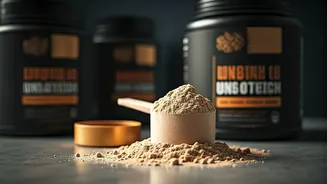
Creatine monohydrate, the most extensively researched form, significantly boosts muscle creatine and phosphocreatine levels. This enhancement directly fuels ATP regeneration during short, high-intensity activities, leading to improved power output, better sprint performance, and increased training volume. Beyond athletic gains, creatine shows promise for cognitive enhancement, positively affecting memory, mood, and processing speed, particularly in individuals with lower baseline creatine levels, such as older adults. Emerging research is exploring its therapeutic potential for conditions like Parkinson's disease, depression, and mitigating menopausal bone and muscle loss. Its anti-inflammatory and antioxidant properties are also under investigation for clinical applications, suggesting a future where creatine might be recognized as an over-the-counter therapeutic agent.
Dosing and Absorption
A common creatine supplementation strategy involves an initial 'loading phase' of 20 grams daily, split into four doses over 5-7 days, followed by a daily maintenance dose of 3-5 grams. This method quickly saturates muscle creatine stores. Alternatively, a consistent daily intake of 3-5 grams can achieve similar saturation over approximately 28 days. However, the body's absorption of creatine isn't absolute; gastrointestinal stability and individual muscle capacity influence how much is retained. Consuming creatine with carbohydrates can improve its uptake by stimulating insulin-mediated transport, thus enhancing its effectiveness.
Individual Responses
Research indicates that men and women can respond differently to creatine supplementation due to variations in muscle mass and baseline creatine levels. Women, often starting with lower muscle creatine stores, may experience more pronounced relative benefits. Older adults can also benefit significantly from creatine's ability to help counteract age-related declines in muscle mass, bone density, and cognitive function. For vegetarians and vegans, who typically consume little to no creatine in their diets and thus have lower baseline levels, supplementation can yield more substantial benefits compared to omnivores. However, dietary patterns vary widely, even within these groups. Further well-designed human studies are needed to fully understand these individual differences and optimize creatine utilization.
The Verdict
Creatine stands out as one of the most thoroughly researched and effective supplements, boasting a strong safety profile and a widening array of potential applications. It's crucial to understand that creatine isn't a miracle solution; it doesn't build muscle independently or negate the necessity of proper training and nutrition. The notion that higher doses lead to greater benefits is also a misconception, as muscle creatine stores have a finite saturation point, with excess being excreted. While common concerns about kidney damage in healthy individuals have been largely dispelled, those with pre-existing renal conditions should consult a healthcare provider before use. The efficacy of creatine's benefits is not uniform and depends on factors like initial creatine levels, dosing strategies, and individual physiology. Therefore, creatine is best understood as a powerful supplement with significant potential, rather than a universal cure-all.