





Singapore's Leading Status
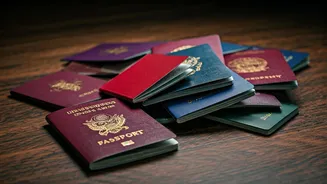
For the third consecutive year, Singapore has secured the top spot in the Henley Passport Index. Its passport provides visa-free access to an impressive
192 destinations, establishing it as the world's most powerful travel document. This unparalleled access allows Singaporean citizens remarkable freedom to traverse the globe with ease. The country's strong diplomatic ties and economic influence are key drivers behind this exceptional global mobility. The consistent top ranking highlights Singapore's commitment to fostering international relations and providing its citizens with unparalleled travel opportunities. This also underlines the importance of a passport's power in a globally connected world.
Japan, South Korea Strong
Sharing the second position, Japan and South Korea offer access to 188 destinations each. These countries demonstrate how robust diplomatic relationships and economic clout translate into tangible travel benefits for their citizens. Their sustained presence near the top of the index underscores their strategic international engagements and the high value placed on their passports globally. Both nations have consistently invested in global partnerships, which, in turn, provide their citizens with expanded travel privileges. This joint ranking emphasizes the enduring influence of these East Asian nations in facilitating global movement and connectivity.
European Powerhouses Displayed
A collection of European nations are prominently featured in the top ranks. Denmark, Luxembourg, Spain, Sweden, and Switzerland jointly hold third place, granting access to 186 destinations. Following closely, Austria, Belgium, Finland, France, Germany, Greece, Ireland, Italy, Netherlands, and Norway share the fourth position, providing access to 185 destinations. This collective strength reflects decades of international cooperation and agreements within Europe, enabling citizens to enjoy extensive global mobility. This illustrates the impact of regional alliances and collaborative efforts in expanding travel opportunities for people within these nations. The success of European passports highlights the power of unified diplomatic strategies.
Fifth, Sixth, Seventh Rankings
In fifth place, Hungary, Portugal, Slovakia, Slovenia, and the UAE offer access to 184 destinations, demonstrating a diverse range of countries with significant travel freedom. Sixth place sees Croatia, Czechia, Estonia, Malta, New Zealand, and Poland with access to 183 destinations, showcasing the mobility available to citizens of smaller European and Pacific nations. Australia, Latvia, Liechtenstein, and the UK share seventh place with access to 182 destinations. The UK's recovery is particularly noteworthy, regaining ground after Brexit-related declines. These rankings show a varied mix of countries, highlighting how diverse factors contribute to passport power.
Other Notable Countries
Canada secured eighth place, providing access to 181 destinations. Its presence in North America ensures citizens have wide travel freedom across Europe, Asia, and other regions. Lithuania, meanwhile, secured ninth place with access to 180 destinations, proving that even smaller countries can achieve considerable global mobility. The United States rounded out the top 10 with access to 179 destinations. After previous setbacks, the US passport regained its position among the elite, reaffirming its global influence. These countries collectively demonstrate a range of strategies and diplomatic approaches that enhance their citizens' travel access.
India's Advancement
India has climbed an impressive five places to rank 80th in the Henley Passport Index. Indian passport holders now enjoy visa-free or visa-on-arrival access to 55 destinations. This marks a notable recovery to its 2024 position, after a slight drop to 85th in 2025. India shares the 80th spot with Niger and Algeria, which reflects the ongoing challenges in expanding travel freedom. This ascent highlights the Indian government's efforts to enhance diplomatic ties and facilitate smoother travel for its citizens. Despite the progress, the shared ranking with other nations signals that further improvements are needed.