







Safety First
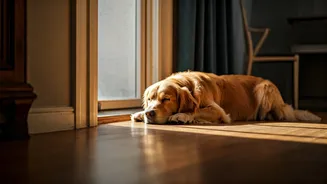
One of the primary reasons dogs gravitate towards doorways is a heightened sense of security. The doorway serves as a strategic vantage point, allowing
them to monitor their surroundings effectively. From this position, they can quickly detect any movement or potential threats, ensuring the safety of themselves and their pack (which includes you!). Doors often lead to the outside world, creating a sense of anticipation and alertness, as dogs are wired to be vigilant against potential dangers. This instinct stems from their ancestors, where being aware of entrances and exits was crucial for survival. By sleeping near the door, a dog can quickly respond to external stimuli and act as a first line of defense, guarding their territory or family.
Sensory Advantage
The location near a door offers dogs a sensory advantage, providing a wealth of information about their environment. Doors often act as gateways for smells, sounds, and temperature changes from the outside world. Dogs possess a superior sense of smell, and the doorway becomes a hub for collecting and analyzing scents, offering clues about other animals, people, or potential changes in the weather. The sounds of activity, such as footsteps or voices, are also more easily detected near the door. Additionally, temperature fluctuations may influence their comfort levels. By sleeping near the door, dogs can be aware of environmental variations, enabling them to make instinctive choices to adapt to changing conditions and enhance their overall comfort and sense of security.
Pack Instincts
For dogs, the doorway represents a central point of connection to the outside world, and this aligns with their pack mentality. Many dogs enjoy being close to family members, and the doorway often allows them to maintain a sense of proximity to the humans in their household. This fulfills their innate desire for social interaction and protection. Choosing the doorway can be a way of remaining near their pack, ensuring they are readily available to greet arriving family members or monitor the house's general activity. It's a method of remaining connected and reinforcing their status within the family unit. The doorway location also allows them to maintain a level of accessibility, ensuring they can promptly respond to any signals or needs from their human companions.
Comfort Considerations
While security and sensory information are key factors, comfort also plays a role in where a dog chooses to sleep. Depending on the construction of the house and the season, the doorway may offer a temperature advantage. During warm months, the floor near the door could be cooler, providing relief from the heat. In colder periods, a draft-free doorway might offer a relatively warmer spot. The surface itself – whether it's tile, wood, or another material – can affect the dog's comfort. Some dogs might prefer a hard surface for coolness, while others may choose a softer location, depending on their individual preferences. Also, certain dogs might feel restricted by their beds, preferring the freedom and open space of the doorway to stretch out or adjust their position. The doorway provides a flexible and adaptive resting place.
Addressing Needs
Understanding why your dog sleeps near the door can guide you in meeting their needs more effectively. If security is the main driver, consider creating a safe and secure space near the door, like a dog bed or a comfortable mat. Supplementing the door's security by providing more comfort can resolve the dog's need. If sensory information is critical, ensure the area remains clear and unobstructed so they can efficiently monitor outside elements. To address comfort concerns, you could alter the surface by adding a bed, or a soft blanket, depending on the season, thereby making the spot more enticing. Recognizing the reasons behind their behavior can enhance the human-animal bond, as you demonstrate your awareness of your pet's desires.