





The Mighty Gluteus Maximus
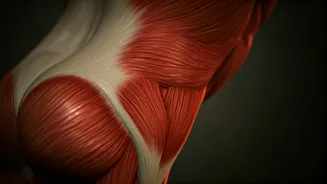
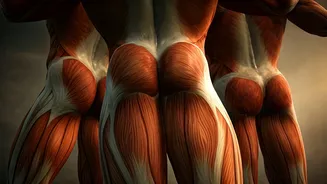
Dominating the posterior hip region, the gluteus maximus is the undisputed heavyweight champion among the gluteal muscles. Its sheer size contributes significantly
to the overall shape of the buttocks and hip area, but its importance extends far beyond aesthetics. This exceptionally thick and robust muscle is instrumental in powerful actions such as rising from a seated position, ascending stairs, and propelling yourself forward during walking and running by extending the hip. Its massive presence is a cornerstone of lower-body strength and maintaining an upright posture, enabling us to stand tall and move with confidence and stability throughout the day. Without its immense contribution, many of our fundamental lower-body movements would be significantly hampered, underscoring its critical role in daily physical function and athletic performance.
Quadriceps: The Thigh's Powerhouse
Residing at the front of your thigh, the quadriceps femoris is not a single entity but a formidable group comprising four distinct muscles: the rectus femoris, vastus lateralis, vastus intermedius, and vastus medialis. This synergistic team works in unison to achieve knee extension, a fundamental movement for countless activities. They are crucial for the fluidity of walking, the dynamism of running, the stability required for squatting, and the explosive power needed for jumping. As one of the human body's most significant muscle conglomerates for strength and locomotion, the quadriceps group is indispensable for generating force and enabling a wide spectrum of lower-body movements, from standing to vigorous exercise. Their collective power is key to our mobility and physical capabilities.
Trapezius: The Upper Back's Span
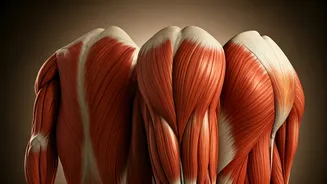
Spanning across the upper back and neck, the trapezius muscle is a broad, superficial muscle that plays a pivotal role in upper-body mechanics and posture. Its primary functions include facilitating the movement and stabilization of the shoulder blades, which is crucial for arm articulation and overall upper-body alignment. Furthermore, it significantly contributes to maintaining an erect posture and assists in the controlled movement of the head and shoulders, allowing for a wide range of motion and nuanced adjustments. Given its extensive coverage and influence across a large area of the upper torso, the trapezius is highly visible and exerts considerable control over upper-body actions and stability, making it a key player in everyday tasks and physical activities.
Latissimus Dorsi: The Back's Broad Sweep
Extending across a significant portion of the lower back and reaching towards the upper arm, the latissimus dorsi is characterized by its wide, flat structure. This powerful muscle is vital for a range of pulling and stabilizing movements, enabling the arm to be drawn downwards, backwards, and inwards towards the body. These actions are fundamental to activities like climbing, rowing, and lifting heavy objects. Beyond its role in gross motor movements, the latissimus dorsi also assists in forceful exhalation, highlighting its importance in respiratory function during strenuous physical exertion. Its dual contribution to both gross motor skills and respiratory support underscores its essential role in overall physical capability and endurance.
Pectoralis Major: Chest's Primary Mover
The pectoralis major, situated on the anterior chest wall, is the largest and most prominent muscle in this region. This substantial, fan-shaped muscle is a key driver of arm movement, facilitating its flexion, adduction, and internal rotation at the shoulder joint. Its involvement is critical for a multitude of upper-body actions, including pushing, lifting, and a broad array of other activities that require strength and power from the chest. Its size and strategic location make it one of the most visually recognizable and functionally significant muscles for upper-body strength and performance, essential for everyday tasks and athletic endeavors alike.