





Learning's Human Core
At the heart of the debate surrounding artificial intelligence in education lies a fundamental question: can machines replicate the complex process of human
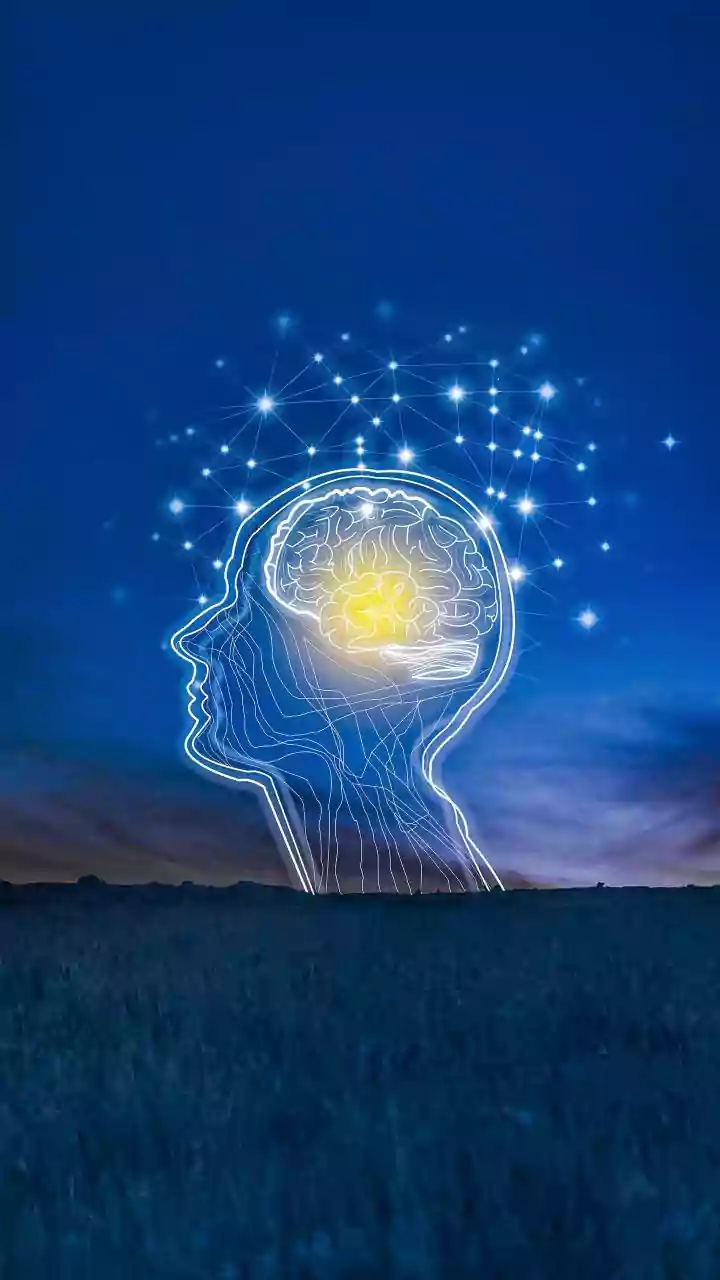
learning? Philip Moyer, CEO of McGraw Hill, a major player in educational content, firmly believes they cannot. Drawing on extensive experience with technological shifts at companies like Microsoft, Amazon, and Google, Moyer asserts that predictions of entire industries being rendered obsolete by technology have consistently fallen short. He sees the current AI discourse in education following a similar pattern. His core argument is that learning transcends mere data processing; it is a deeply physical, social, and emotional journey. These dimensions are intrinsically tied to individual context, including age, cultural background, and lived experiences, factors that no algorithm can fully grasp. Moyer illustrates this point by contrasting the human brain's incredible efficiency with AI's immense resource demands. A small segment of human brain tissue, no larger than a grain of rice, contains vast neural networks capable of processing immense amounts of information with minimal energy. In stark contrast, training sophisticated AI models requires substantial computational power and energy, underscoring a fundamental difference in how intelligence operates and learns.
Teaching's Dynamic Nature
The art of teaching is inherently dynamic and requires constant adaptation, a capability that eludes artificial intelligence. Human brains are not static entities; they evolve and reconfigure as new knowledge is acquired. This means that every student enters the classroom with a unique and ever-changing understanding of the material. Moyer uses the example of Algebra 2, noting that a student can exist in thousands of different states of knowledge regarding the subject matter. Effective teachers navigate this complexity intuitively, managing multiple learning trajectories simultaneously. They don't need to consciously calculate every variable; they develop an innate understanding of their students, recognizing their strengths, challenges, and even their emotional states. The moments when a student experiences a breakthrough, exclaiming, 'I get it!', are pivotal. Moyer emphasizes that these profound moments of connection and understanding are experiences that artificial intelligence, including large language models, can never truly feel or replicate, distinguishing human teaching fundamentally from machine-driven instruction.
Technology's Role Evolution
When considering technology's place in education, Moyer cautions against the recurring assumption that software alone can perfectly mirror complex human systems, an assumption that has repeatedly proven flawed in the educational sector. Teaching methodologies are highly localized, varying significantly across different regions, educational institutions, and even individual classrooms. This nuanced, 'last mile' of educational delivery has consistently presented challenges for technological solutions originating from places like Silicon Valley. Instead of aiming to replace educators, Moyer advocates for AI to serve as a powerful assistive tool. Machine learning and large language model technologies are already demonstrating value by helping to identify learning gaps and generating personalized educational materials. However, Moyer contends that these tools are most impactful when they empower teachers to guide their students more effectively, rather than when they are positioned as autonomous substitutes for human interaction and instruction.
The Future of Learning
Moyer's perspective doesn't dismiss the significance of AI but rather redefines its role in the evolving educational landscape. He acknowledges that emerging fields like robotics, bioinformatics, and quantum computing will necessitate new skill sets, and educational systems must adapt to cultivate them. AI can play a supportive role in this transition, enhancing the delivery and customization of educational content. Nevertheless, he maintains that the fundamental essence of education remains human-centric. Moyer stresses that the intricate process of developing human intelligence not only surpasses any AI model currently in existence but exponentially dwarfs the capabilities of all such models combined. Therefore, the current conversation should focus not on replacement, but on achieving a harmonious balance between human expertise and technological innovation. While AI may indeed transform the modalities through which education is delivered, the irreplaceable role of teachers as facilitators of learning and human development is poised to endure.