





Solar Storm Approaching
A series of three powerful solar events, known as coronal mass ejections (CMEs), are currently en route to our planet. While these energetic bursts of plasma
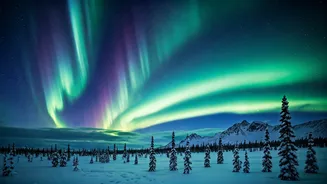
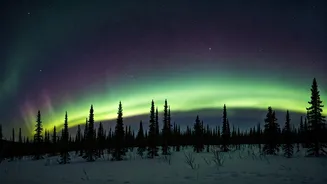
and magnetic field from the sun are not predicted to hit Earth directly, they are expected to cause multiple glancing blows. These impacts could significantly interact with Earth's magnetosphere, potentially triggering geomagnetic storms. Forecasters indicate that these storms might range from minor (G1) to moderate (G2) levels. The current projections show the auroral oval, the region where auroras are most frequently observed, dipping lower than usual, extending into parts of the northern United States. This celestial dance of solar particles and Earth's magnetic field is what creates the mesmerizing aurora borealis.
Where to Spot Auroras
If conditions escalate to G1 geomagnetic storm levels, residents in states like Alaska, Washington, Montana, North Dakota, Minnesota, Michigan, and Maine will have a potential opportunity to witness the northern lights. Should the storm intensity increase to G2 levels, the visibility of the auroras could expand further south, potentially reaching areas such as Idaho and New York. These predictions are based on sophisticated modeling that maps the expected path of the solar material. Even a side-swipe from these CMEs can be sufficient to agitate the geomagnetic field and enhance aurora visibility, painting the night sky with ethereal colors for lucky observers.
The Science Behind It
The impending geomagnetic activity is attributed to several CMEs that were ejected from the sun in the preceding days. Scientists' simulations suggest that the majority of this solar ejecta will bypass Earth, passing to the north. However, even a peripheral encounter with these fast-moving solar clouds can generate enough disturbance in Earth's magnetic environment to spark aurora displays. Adding to this potential is the lingering influence of a high-speed solar wind stream originating from a coronal hole that has been impacting Earth recently. This persistent stream, according to the U.K. Met Office, could amplify the effects of the CMEs, boosting geomagnetic conditions and increasing the likelihood of auroral sightings through May 20.
Optimizing Your Hunt
The prime time for aurora viewing typically aligns with the deepest hours of the night, usually within a few hours of midnight, when the sky is darkest and geomagnetic activity often reaches its peak. Between 11 p.m. and 2 a.m. local time (0300-0600 GMT), there's a heightened chance of observing G1 geomagnetic storm conditions. However, it's crucial to remember that auroras are inherently unpredictable phenomena. Even during periods of elevated geomagnetic activity, a sighting is not guaranteed. A confluence of factors, including clear skies free from light pollution, exceptionally dark viewing conditions, and the precise alignment of Earth's magnetic field with the incoming solar particles, must all converge for the aurora to become visible.
Viewing Tips & Tools
For those residing in northern U.S. states with a chance of seeing the northern lights, seeking out a vantage point facing north and minimizing exposure to artificial light is key. Even faint auroras can be detected by smartphone cameras before the human eye notices them, making your phone a useful tool for scanning the sky and identifying potential viewing areas. However, remain observant across the entire sky, as auroras can manifest unexpectedly in any direction. To stay informed about optimal viewing times and conditions specific to your location, consider using dedicated space weather apps. Options like 'My Aurora Forecast & Alerts' and 'Space Weather Live' can provide real-time forecasts and alerts, enhancing your chances of a successful aurora hunt.