




Musk's 'Big Win' Strategy
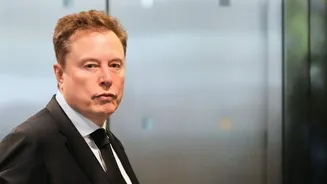
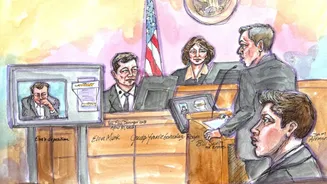
During his testimony, Greg Brockman illuminated Elon Musk's initial strategic imperative for OpenAI: to achieve a significant, undeniable success before
entertaining any for-profit ventures. Musk reportedly conveyed to the team that a major breakthrough was a prerequisite, stating, "Once we have a big result, then and only then can we entertain the for-profit." This pivotal moment, according to Brockman, arrived in 2017 when an OpenAI bot triumphed over a leading player in the video game Dota 2 on an international stage. This achievement, witnessed by twenty thousand spectators and subsequently celebrated by Musk on Twitter, marked the 'big win' Musk had envisioned, paving the way for discussions about the company's future structure and financial model. The significance of this victory extended beyond the gaming world, serving as a catalyst for the team's aspirations and reinforcing their competitive drive in the nascent AI field.
Celebratory Party Fallout
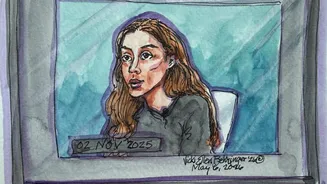
Following the triumphant Dota 2 victory, the OpenAI team was invited to Elon Musk's San Francisco residence, described as a 'haunted mansion,' for a post-victory celebration and strategic discussions. Greg Brockman recounted the atmosphere, noting the remnants of revelry like confetti and cups scattered around. Notably, Musk's then-girlfriend, Amber Heard, was present and even participated in discussions about the company's for-profit future. Brockman recalled Amber serving whiskey and Musk inviting her into the conversation, marking it as a 'very celebratory moment' where crucial conversations about the company's commercial direction took place. This event, steeped in a celebratory mood, also served as a backdrop for the evolving dynamics and differing perspectives on OpenAI's path forward, particularly concerning its financial structure.
The 51% Equity Demand
A central point of contention revealed in Greg Brockman's testimony was Elon Musk's demand for a controlling 51% equity stake in OpenAI, coupled with the desire to serve as its CEO. Musk reportedly justified this demand by emphasizing his track record of founding multiple successful multi-billion-dollar companies and his perceived lack of failures. Brockman quoted Musk as saying, "Look, you guys are great, but I can start another AI company tomorrow, like in one tweet." This assertion, however, met strong opposition from the other co-founders, including Brockman himself, Ilya Sutskever, and Sam Altman. Their resistance to granting Musk such a dominant position signaled a fundamental disagreement over the company's governance and ownership structure, ultimately contributing to the escalating tensions and eventual fragmentation within the founding team.
Breakup and Boardroom Battles
The relationship between Elon Musk and the OpenAI founders deteriorated significantly after the discussions surrounding equity and control. Brockman described a shift in Musk's demeanor during a pivotal August 2017 meeting, where the founders planned to issue founding shares and proposed that Musk purchase any additional shares at market price. Brockman stated that "something really changed" in Musk's reaction, describing him as becoming angry and falling silent for several minutes before ultimately declaring, 'I decline.' This marked a turning point, leading to a contentious period characterized by disputes over structural changes and detailed company governance. Brockman even testified that he felt Musk might "physically attack him" and that Musk "stormed around the table," illustrating the intense and acrimonious nature of their eventual separation and the subsequent legal battle.
Competing with 'Wolves' and Safety
Following his resignation from the board, Elon Musk engaged with OpenAI employees, sharing his rationale for leaving and his vision for AI development. Brockman recounted that Musk explained his departure was due to OpenAI's projected need for "billions of dollars per year" and his belief that Tesla was the only entity capable of undertaking such a massive financial commitment. Significantly, Musk stated that while pursuing AI at Tesla, he would "not work on safety," prioritizing speed and competition. He expressed a desire to "catch up to DeepMind," Google's AI lab, emphasizing that the crucial element was to compete aggressively. Musk's analogy of "wolves" (those not focused on safety) versus "sheep" (those prioritizing safety) underscored his view that OpenAI's safety-first approach would hinder its progress in the race against competitors like Google.
Skyrocketing Compute Costs
Greg Brockman's testimony also highlighted the immense and rapidly increasing financial demands of operating a leading AI company. He revealed that OpenAI anticipates spending approximately $50 billion on computing power by the year 2026, a stark contrast to its expenditures just a decade prior. According to Brockman, the company's computing costs have surged dramatically from around $30 million in 2017 to tens of billions of dollars in the current year. This exponential growth in costs underscores the intensive computational resources required for advanced AI development and deployment. Brockman also touched upon the challenges of fundraising, detailing how OpenAI, in its early nonprofit phase, approached numerous wealthy individuals and corporations on the Forbes 500 list in search of investors passionate about AI.