





Azulejos: Portugal's Painted Stories
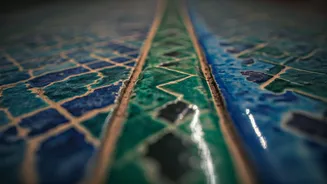
Azulejos stand as a hallmark of Portuguese and Spanish artistry, adorning countless surfaces with their distinctive charm. These ceramic tiles, frequently
rendered in a striking palette of blues and whites, serve as canvases for a variety of visual narratives. They meticulously depict historical events, sacred religious tales, and intricate ornamental designs, transforming mere walls and building facades into open-air galleries. The application of azulejos extends beyond simple decoration, acting as a visual chronicle that reflects the cultural preoccupations and artistic sensibilities of the regions where they are found. Their enduring presence continues to enhance the architectural character and visual appeal of these Iberian nations.
Iznik Ceramics: Ottoman Splendor
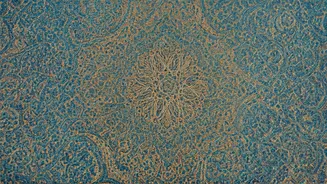
Hailing from the historic town of Iznik during the illustrious Ottoman Empire, Iznik ceramics represent a pinnacle of artistic achievement in decorative tile work. These exquisite tiles are immediately recognizable by their vibrant and rich color palette, prominently featuring a deep cobalt blue, a striking turquoise, and a fiery red. This distinctive combination of hues became synonymous with the grandeur of Ottoman design. The fame of Iznik ceramics is perhaps most vividly demonstrated in their prominent use in adorning some of the most iconic and revered monuments of the era, most notably the breathtaking Blue Mosque in Istanbul, where they contribute significantly to its awe-inspiring interior beauty and architectural splendor.
Khavda Pottery's Earthy Charm
The village of Khavda in India is the origin of a distinct and grounded form of tile art: Khavda pottery tiles. Artisans in this region practice a craft that is deeply connected to the earth, creating ceramic tiles and pottery characterized by their natural, earthy tones. These pieces are adorned with traditional motifs and patterns, meticulously rendered using natural pigments sourced from the local environment. The artistic inspiration is drawn directly from the surrounding desert landscape, infusing each tile with the spirit and textures of its arid home. This heritage is preserved and promoted through centers like The Gandhi Centre, ensuring the continuation of this unique artisanal tradition.
Majolica: Renaissance Glaze
Emerging from Italy during the vibrant Renaissance period, Majolica tiles are celebrated for their distinctive glossy glaze and their capacity for detailed, colorful narrative artistry. This technique involves applying opaque tin glazes that provide a brilliant white base, upon which intricate designs are painted. The resulting tiles were not merely decorative but often served as storytelling mediums. Their widespread application can be observed in the sacred spaces of churches, the opulent interiors of villas, and as standalone decorative panels, each piece contributing to the rich visual tapestry of Renaissance art and architecture and showcasing a sophisticated level of craftsmanship.
Talavera: Spanish-Indigenous Fusion
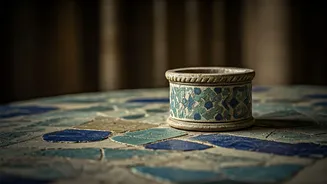
Talavera pottery tiles, originating from Puebla, Mexico, are a testament to the beautiful fusion of Spanish colonial and indigenous ceramic traditions. These tiles burst with vibrant colors, a characteristic that immediately captures attention. The designs themselves are often intricate, featuring bold floral motifs that bloom with life or precise geometric patterns that showcase skilled artistry. The application of Talavera tiles is extensive, adorning the exteriors of buildings, contributing to the distinctive architectural character of regions where they are prevalent, and also serving as exquisite decorative elements within interior spaces, adding warmth and visual interest to homes and public areas.
Zellige: Moroccan Mosaics
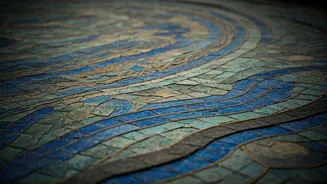
Zellige represents the exquisite art of traditional Moroccan mosaic tile work, renowned for its unparalleled complexity and visual splendor. Artisans meticulously hand-cut thousands of individual glazed tiles, each selected for its specific hue and finished surface. These precisely cut pieces are then artfully assembled into extraordinarily intricate geometric patterns, often forming mesmerizing kaleidoscopic designs. Zellige art is a quintessential element of Moroccan architectural beauty, frequently gracing the walls of mosques, the tranquil surfaces of fountains, and the majestic interiors of palaces, adding an element of divine proportion and aesthetic harmony to these significant structures.