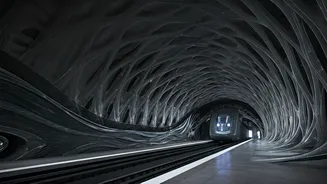








Parisian Architectural Prowess
The Parisian metro system boasts stations that are true testaments to innovative design and historical commemoration. Villejuif-Gustave Roussy, a recent
addition, captivates with its multi-level glass and steel structure, interconnected by walkways and escalators, all illuminated by a massive cylindrical glass shaft. In contrast, the Arts et Métiers station, dating back to 1904, pays homage to Jules Verne's classic 'Twenty Thousand Leagues Under the Sea' with its brushed copper platforms evoking a submarine's interior. Bastille station adds a layer of historical depth by incorporating sections of the original Bastille prison walls, a poignant reminder of the French Revolution, connecting to the city's very first metro line opened in 1900. The Vitry-Centre station, part of a long-term expansion project concluding in 2030, showcases sweeping brushed-steel interiors and a striking above-ground concourse, embodying the future of urban transit design.
Moscow's Opulent Underground
Moscow's metro system is often lauded as an "underground palace," a title earned through its incredibly ornate and grand station designs. Komsomolskaya station, opened in 1952, is a prime example of this lavish aesthetic, adorned with magnificent chandeliers, extensive mosaics depicting Russian military triumphs and World War II scenes, and classical pillars, all contributing to a baroque splendor. Sharing the same opening year, Novoslobodskaya station presents a different, yet equally stunning, interpretation of grandeur with its "underground palace" concept. This station is celebrated for its innovative use of internally lit stained-glass panels, meticulously framed by brass, creating an ethereal and luminous atmosphere that transforms the station into an art installation.
Global Design Inspirations
Across the globe, metro stations draw inspiration from diverse sources, creating unique urban experiences. Xiamen, China's Wuyuanwan subway station underwent a dramatic transformation in 2024 with a new façade by Ateno Architects. This design features a continuous wave effect using red concrete panels, a direct nod to the region's traditional Minnan red brick architecture, known as 'cuo.' The station also serves as a space for contemporary art, showcasing sculptures by Chinese artist Su Wu. In Naples, Italy, the Monte Sant’Angelo station, designed by Anish Kapoor, utilizes weathered steel and draws inspiration from Dante's 'Inferno' and the region's volcanic landscape, referencing Mount Vesuvius and Campi Flegrei. These examples highlight how metro stations can reflect local heritage, artistic movements, and natural environments.
Preserving History Underground
Some European metro stations serve as living museums, preserving fragments of the past within their modern infrastructure. Kungsträdgården in Stockholm, operational since 1977, uniquely incorporates elements from heritage homes that were demolished to make way for the station. Visitors can find preserved water fountains, statues, and intricately carved columns, offering a tangible connection to bygone eras. This approach transforms a utilitarian space into a historical archive, allowing commuters to interact with tangible pieces of the city's architectural legacy. By integrating these historical artifacts, these stations ensure that the past is not forgotten but is instead woven into the daily lives of the city's inhabitants.