




Solar Eruption Unveiled
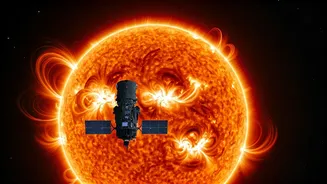
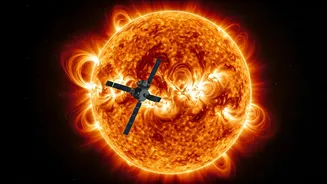
Just days before the highly anticipated Artemis II mission was slated to begin its journey, a significant solar event occurred. The Sun unleashed an X1.4-class
solar flare, a powerful outburst that caused brief radio blackouts in parts of Asia and Australia. This celestial phenomenon, captured by NASA's Solar Dynamics Observatory, immediately raised questions about its potential implications for the upcoming lunar mission. The timing of such an intense flare, categorized as the most severe by scientists, understandably sparked concern regarding the safety of astronauts and the integrity of the mission's systems. Understanding the nature of these flares and their associated Coronal Mass Ejections (CMEs) is crucial in assessing any perceived risks, especially given the mission's trajectory beyond Earth's protective magnetosphere.
Flare's Impact Assessed
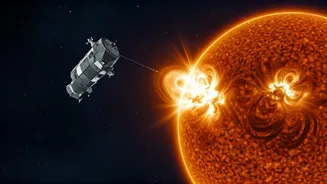
The solar flare, which registered as an X1.4 event, emanated from the Sun late on March 29th, at approximately 11:19 pm EDT. Such flares are known to release substantial amounts of radiation and energy, capable of disrupting terrestrial communication networks and impacting sensitive satellite operations. Indeed, a temporary radio blackout was reported across specific regions of Asia and Australia, a predictable consequence of an eruption of this magnitude, according to expert observations. Accompanying the flare was a Coronal Mass Ejection (CME), a vast cloud of charged particles expelled into space. When these CMEs are Earth-directed, they can trigger geomagnetic storms through interactions with our planet's magnetic field, potentially affecting satellites and electrical grids. However, in this instance, the critical factor highlighted by experts was the timing and trajectory of the CME relative to the Artemis II mission.
Launch Proceeding Unaffected
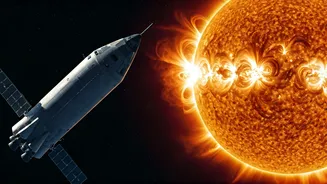
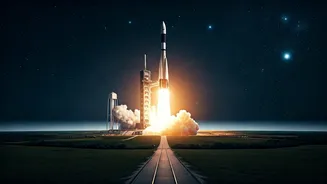
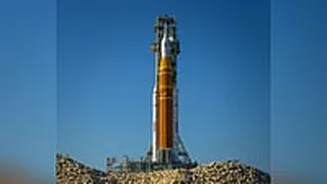
Despite the dramatic solar activity, officials at Kennedy Space Center have expressed confidence regarding the Artemis II launch. Amit Kshatriya, speaking at a press briefing, assured reporters that the CME associated with the recent flare is not anticipated to pose any significant obstacles to the mission. He emphasized that the mission management team is not monitoring any issues that would necessitate a delay or cancellation of the launch. NASA experts have thoroughly reviewed the latest space weather data and have concluded that all parameters remain within acceptable operational limits. The mission is currently scheduled for a launch at 6:24 pm EDT on April 1st, with weather forecasts also indicating favorable conditions at the launch site. This reassurance underscores NASA's rigorous monitoring and preparedness for such cosmic events.
Astronaut Safety Protocols
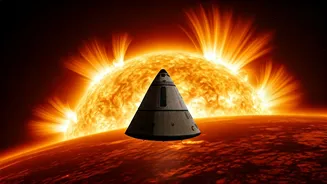
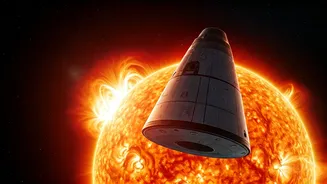
Even with positive assessments regarding the launch's immediate impact, space agencies maintain a heightened awareness of solar activity due to the inherent risks of radiation exposure for astronauts venturing beyond Earth's protective magnetic shield. This concern is particularly relevant for missions bound for the Moon, where this natural defense is significantly diminished. In recognition of this, the Artemis II mission incorporates a specific safety measure: a radiation shelter protocol. The astronauts will practice deploying a designated area within their spacecraft that offers enhanced shielding. This preparedness ensures that they can retreat to a safer zone if radiation levels unexpectedly surge during their journey, demonstrating NASA's commitment to astronaut well-being and mission success amidst the challenges of deep space exploration.