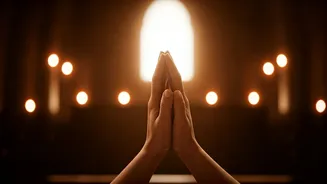








A Habit Rooted Deeply
For many, the practice of closing one's eyes during prayer is an ingrained habit, learned from childhood role models like parents, educators, and religious
figures. This early instruction solidifies the gesture as a component of proper prayer etiquette, transforming it into an automatic action over time. The widespread adoption of this practice across diverse cultures, however, points to something more fundamental than mere learned behavior; it suggests an alignment with innate human tendencies. When individuals seek to deepen their concentration, engage in introspection, or foster a stronger emotional resonance, they often instinctively close their eyes, whether engaged in prayer, meditation, or even absorbed in listening to music. This observed phenomenon underscores the dual nature of the gesture, acting as both a culturally transmitted ritual and a manifestation of psychological inclination, perfectly facilitating the brain's innate capacity for inward focus and contemplation.
Symbolism of Surrender
Beyond its role in enhancing concentration, the act of closing one's eyes during prayer is laden with significant symbolic meaning. This gesture, often accompanied by a bowed head, communicates humility and a profound acknowledgment of one's place before a power or entity perceived as greater than oneself. In numerous spiritual traditions, prayer is not intended as a public spectacle but as an intimate dialogue between the individual and the divine. Closing the eyes serves to reinforce this sense of surrender, signifying a voluntary relinquishing of external control and self-awareness. By directing one's gaze away from the external world, individuals tend to become less preoccupied with how they are perceived by others and more fully immersed in the spiritual experience itself. This symbolism is echoed across various faiths, from Hindu devotees closing their eyes during chants to Christian prayer groups encouraged for reverence, and Muslims during supplications. Though specific rituals may vary, the underlying principle remains consistent: a deliberate turning away from the mundane world to foster a connection with the sacred and profound.
Creating Inner Sanctuary
Prayer is fundamentally a deeply personal endeavor, an avenue through which individuals express gratitude, articulate anxieties, or seek solace for challenges they may not readily share with anyone else. The act of closing one's eyes serves to erect a subtle yet potent psychological barrier between the individual and their immediate surroundings. Even within a bustling religious gathering – be it a temple, mosque, or church – this simple gesture provides a vital moment of privacy. It fosters a sense of reduced exposure and encourages greater emotional openness. This mirrors the instinctual behavior of closing one's eyes during moments of intense thought or deep emotion, allowing feelings to surface and be processed without external interference. Neuroscience research further corroborates this, indicating that diminishing visual input can enhance emotional processing. By freeing up cognitive resources normally dedicated to processing visual stimuli, the brain can more readily access memories, intentions, and deeply held convictions, facilitating a more profound internal experience.
Enhancing Visualization Power
Many spiritual practices incorporate visualization as a key element of prayer. Devotees might envision a divine being, imagine radiating light or sacred energy, or mentally repeat sacred verses. Closing the eyes plays a crucial role in facilitating the creation of these internal images. In the absence of competing visual distractions from the external environment, the mind is better equipped to construct vivid mental pictures. For instance, a person engaged in prayer might conjure the image of a deity, experience the tranquility of a sacred locale, or feel a sense of protective presence. This capacity for imagination significantly enhances the immersive and emotional impact of prayer. Meditation traditions also highlight this principle: when eyes are closed, the brain often transitions to slower, calmer brainwave patterns associated with relaxation and introspection, a state conducive to deep contemplation and heightened spiritual awareness.
Minimizing External Clutter
One of the most practical advantages of closing one's eyes during prayer is its effectiveness in minimizing distractions. The human brain is inherently wired to be drawn to movement, colors, and activity in its environment. Even minor visual cues, such as a flickering flame, passersby, or fluctuations in light, can easily divert attention away from the prayer itself. By closing the eyes, this constant stream of visual information is effectively eliminated. With fewer external stimuli competing for mental resources, the mind can more readily settle on its intended focus, whether it be spoken words, internal thoughts, or directed feelings towards the divine. Many traditions view prayer not merely as speaking to a higher power but also as an act of listening and reflection. Shutting out visual noise creates a mental quietude that deepens this inward focus. In essence, this practice aligns with psychological principles of sensory reduction, allowing the brain to allocate more cognitive energy to internal processes like reflection, memory recall, and emotional processing, thereby significantly improving concentration.