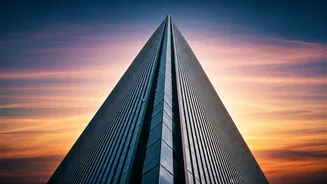







Engineering the Sky
The pursuit of building ever-higher structures is a testament to human ingenuity and technological advancement. Modern skyscrapers are not just about reaching
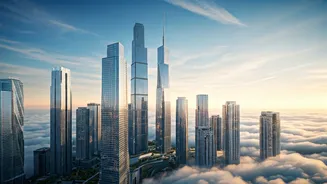
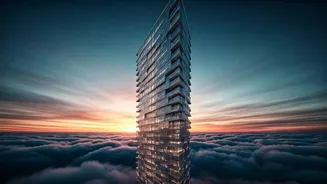
for the clouds; they represent a fusion of cutting-edge engineering, innovative materials, and sophisticated design. Advances in high-strength concrete and wind-resistant structural systems are crucial, allowing these giants to withstand immense forces. Furthermore, the development of ultra-fast elevator technology plays a vital role in making these vertical cities functional and accessible. These supertall buildings are increasingly designed as self-sustaining urban environments, integrating residential spaces, offices, hotels, retail outlets, and public attractions like observation decks. This mixed-use approach ensures they contribute vibrantly to the cityscape, serving as landmarks that define their respective cities and offer unparalleled perspectives for visitors and inhabitants alike. They are more than just buildings; they are icons of progress and ambition.
The Reigning Giants
The global hierarchy of supertall buildings is dominated by impressive structures that have set new benchmarks in vertical construction. Since 2010, the Burj Khalifa in Dubai, at an astounding 828 meters, has held the undisputed title of the world's tallest building. This iconic, needle-like structure serves as the centerpiece for Downtown Dubai, a district that has significantly boosted the city's international profile. Following closely is Kuala Lumpur's Merdeka 118, which, since its completion in 2023, stands at 679 meters, making it Southeast Asia's tallest. Its design and name evoke Malaysian independence, blending national pride with architectural aspiration. Shanghai Tower in China, measuring 632 meters, captivates with its distinctive twisting glass façade, a design choice that not only enhances its aesthetic but also improves aerodynamic performance and reduces energy consumption, highlighting a move towards sustainable skyscraper design. This structure is a marvel of engineering and a symbol of China's rapid urban development, housing a variety of functions from offices to hotels and observation decks.
Spiritual and Financial Beacons
Among the world's tallest buildings are those that hold profound cultural or economic significance. The Makkah Royal Clock Tower in Mecca, standing at 601 meters, overlooks Islam's holiest site. It's a massive complex designed to accommodate thousands of pilgrims, merging spiritual devotion with immense scale. In Shenzhen, the Ping An Finance Center soars to 599 meters. This sleek commercial skyscraper is a prominent fixture in the city's financial district, symbolizing Shenzhen's remarkable evolution into a global technology and innovation hub. Its sheer height mirrors the city's transformation from a manufacturing base to a powerhouse of the digital age. These buildings are not just feats of engineering but also powerful symbols reflecting the values and aspirations of the cities and countries they represent.
Skylines Redefined
Further down the list, we find structures that continue to shape urban landscapes with their distinctive designs and functional integration. Lotte World Tower in Seoul, reaching 555 meters, gracefully tapers skyward. This mixed-use development is a major attraction, featuring retail spaces, offices, residences, and one of the world's highest observation decks, making it a defining element of Seoul's modern skyline. In New York City, One World Trade Center stands at 541 meters. Built on the site of the former World Trade Center, it serves as both a memorial and a contemporary landmark, its symbolic height of 1,776 feet referencing the year of American independence. Further enriching the skylines of China are the Guangzhou CTF Finance Centre and the Tianjin CTF Finance Centre, both measuring 530 meters. These 'vertical cities' house a multitude of functions, from offices and residences to luxury hotels, and boast some of the world's fastest elevators. Lastly, Beijing's CITIC Tower, nicknamed 'China Zun' due to its vase-like silhouette, reaches 528 meters. It combines traditional aesthetics with modern engineering, marking Beijing's growing vertical ambitions and standing as the capital's tallest building.