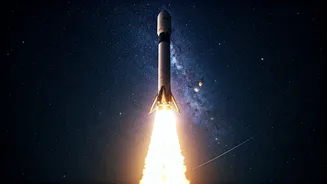







The Falcon 9's Mission
The Falcon 9 rocket, a reusable two-stage vehicle, has become synonymous with SpaceX's success. Its primary mission is to transport payloads, including
Starlink satellites, into Earth's orbit. The first stage of the rocket, equipped with multiple Merlin engines, provides the initial thrust needed to escape the Earth's atmosphere. These engines burn a mixture of liquid oxygen and rocket-grade kerosene (RP-1) with impressive efficiency. Once the first stage has exhausted its fuel, it separates from the second stage. SpaceX is known for its pioneering recovery efforts, where the first stage often returns to Earth for a controlled landing on a drone ship in the ocean or at a designated landing site. The second stage, powered by a single Merlin Vacuum engine, then continues to propel the payload into its final orbital position. These satellites will work together to create a global internet network.
Starlink Satellite Deployment
Once the Falcon 9 reaches the intended orbit, the second stage undertakes the crucial task of deploying the Starlink satellites. These satellites are typically stacked within the rocket's payload fairing, a protective structure that shields them during ascent. The deployment process is carefully orchestrated, with the satellites released in stages to minimize interference and ensure precise orbital placement. This is achieved by mechanisms that use springs to push the satellites away from the rocket at a carefully calculated velocity, ensuring they don't collide. The Starlink satellites then deploy their solar arrays and begin communicating with ground stations. This stage involves complex calculations and precise timing. The deployment process demonstrates precision engineering. Each satellite must be positioned to work effectively with its neighbors in space.
Rocket Design and Reusability
The Falcon 9 rocket's design incorporates innovative features. Reusability is a key aspect of SpaceX's strategy, designed to reduce launch costs and increase efficiency. The first stage, after separating from the second stage, uses its engines to perform a series of maneuvers. These maneuvers allow it to return to Earth. It then lands on a designated landing platform. This process reduces the cost of space travel. The second stage, while not designed for reuse currently, is being developed with future reusability plans. This design makes SpaceX a leader in the space industry. Reusability reduces the environmental impact of space launches by minimizing the need to manufacture new rockets for each flight.
Global Internet Access
The Starlink constellation aims to provide high-speed, low-latency internet access to users across the globe. By deploying thousands of satellites in low Earth orbit, SpaceX seeks to create a vast network that can cover areas where terrestrial internet infrastructure is either unavailable or unreliable. This technology is set to transform remote areas, offering them connectivity. This technology can serve both homes and businesses. This is especially helpful in locations where traditional internet services are difficult or expensive to deploy. The goal is to provide a reliable, high-speed connection.
Impact and Future Plans
The launch of Starlink satellites represents a major step forward in expanding global internet access. The increasing availability of high-speed internet can have a positive effect on education, healthcare, and economic development, connecting communities around the world. SpaceX continues to refine the Starlink system. This involves increasing the number of satellites, enhancing ground infrastructure, and improving the user experience. SpaceX plans to launch even more satellites. They plan to improve service. The ongoing development of Starlink promises to shape the future of connectivity. The company is also working to increase the speed and reliability of the internet service provided.