






Eclipse Timing & Visibility
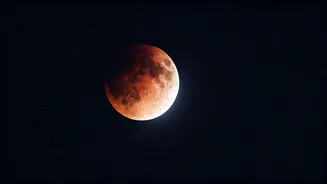
On March 3, 2026, the year's initial lunar eclipse, known as Chandra Grahan, is set to occur, offering a simple yet remarkable skywatching opportunity.
For those in India, the eclipse will begin its observable phase as the moon ascends. The penumbral and totality phases commence simultaneously at 4:58 PM IST. Totality will conclude by 5:32 PM IST, with the entire event wrapping up by 7:53 PM IST. Reports indicate that due to the moon's position at moonrise, observers in India will primarily witness the latter part of the eclipse. The most captivating visual segment will be around sunset, providing a viewing window of approximately 20 minutes as the moon emerges from Earth's shadow. This means no late-night vigils are required; a simple step outside at dusk will suffice to catch the spectacle.
Understanding Lunar Eclipses
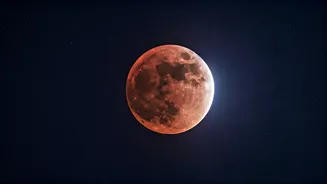
A lunar eclipse is a magnificent astronomical occurrence that takes place when the Earth positions itself directly between the Sun and the Moon. During this alignment, our planet casts its shadow upon the lunar surface, causing the Moon to dim and potentially take on a reddish hue, often referred to as a 'blood moon'. While these celestial performances happen multiple times annually, not all are visible from every geographical location. This particular eclipse on March 3rd holds a special significance for Indian viewers because a portion of it will be observable, offering a chance to connect with a grand cosmic event.
Simple Viewing Experience
The beauty of a lunar eclipse lies in its accessibility. You won't need any sophisticated telescopes or specialized filters to enjoy this event. Unlike solar eclipses, which require protective eyewear to prevent eye damage, observing a lunar eclipse is entirely safe for the naked eye. On the evening of March 3rd, 2026, provided the skies are clear, all you need to do is step outside and direct your gaze towards the moon. While binoculars can certainly enhance the experience by offering a more detailed view of the lunar surface and the eclipse's progression, they are by no means essential for appreciating this natural wonder.
Significance Beyond Sight
Beyond the sheer visual delight, lunar eclipses serve as a profound reminder of the intricate and precise mechanics governing the movements of celestial bodies like the Sun, Earth, and Moon. They offer a moment for contemplation about our place within the vastness of the cosmos. Furthermore, for many cultures, these eclipses carry significant historical, traditional, and even spiritual weight. Even though the visible portion of the March 3rd eclipse in India might be brief, it presents a valuable opportunity to pause from daily routines, look skyward, and marvel at one of nature's most captivating displays. Crucially, checking the local weather forecast for clear skies will be paramount to fully enjoying this astronomical spectacle.