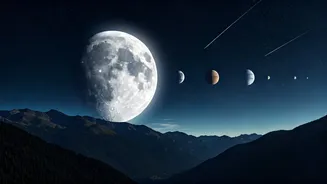







January Night Sky
January's night sky provides an incredible display of celestial objects for observers in India. The prominent feature is the visibility of Jupiter, the 'king
of planets.' It dominates the night sky this month, offering a bright spectacle. Observers should also watch for the presence of two planets, which are visible to the naked eye. The article focuses on providing maps, key dates, and a guide on where to look for various celestial events. The visibility of the moon, its conjunctions with stars, and planets provides an additional treat for viewers. Furthermore, the article also guides viewers on spotting the red eye of Taurus, adding to the richness of the night sky experience.
Jupiter's Grandeur
The month of January is dominated by Jupiter, making it the prime object of observation. As the king of planets, Jupiter presents a captivating sight for skywatchers. Its brightness and size make it easily observable, even in light-polluted areas. Jupiter is set to be a major highlight, shining brightly throughout the month. This makes January an ideal time to observe Jupiter and appreciate its magnificence. Look for Jupiter in the night sky and enjoy the wonderful view it offers. Observing Jupiter provides an opportunity to marvel at the celestial beauty and enhance the stargazing experience.
Planetary Pairings
Beyond Jupiter, two planets will grace January's night sky, visible to the naked eye. Specific details about these planets' identities and visibility locations will be key for planning. Observing these planets will add another layer of enjoyment to the experience of stargazing in January. Locating them requires some specific information, but these two planets will be major highlights. This offers amateur astronomers and casual observers a chance to spot these planets and study their movements. Watching them allows stargazers to appreciate the dynamics of the solar system and develop their knowledge of space.
Lunar Showtimes
The moon is set to put on a stellar performance, dancing alongside bright stars and planets throughout January. Watch the moon as it interacts with prominent stars. Details of these pairings, including specific dates and times, will be crucial for planning skywatching sessions. A highlight includes the moon's conjunction with Saturn in the southern sky. This interaction between the moon and celestial objects offers various opportunities for photographers to capture striking images of the cosmos. These events enhance the beauty of the January night sky.
Constellation Highlights
In January's night sky, several prominent constellations steal the show. The article highlights the appearance of Taurus, presenting its iconic red eye. Viewing these constellations deepens appreciation for the vastness of space. Understanding the position of the constellations can also improve the navigation of the night sky. The presence of these constellations provides a framework for exploring other celestial phenomena, enhancing the experience for all levels of stargazers. These well-known constellations create a map to enjoy and help to understand the surrounding skies.
Observing Tips
To fully enjoy the January night sky, skywatchers in India need to prepare. Having maps will help to locate celestial objects. The article includes specific maps and resources. Being aware of key dates provides an advantage in anticipating and witnessing various events. With simple equipment, such as binoculars, a whole new level of observations can be unlocked. With the right tools and planning, stargazers can maximize their experience and discover the wonders that the January night sky has to offer. The use of planning tools is critical for ensuring that you do not miss any celestial phenomena.