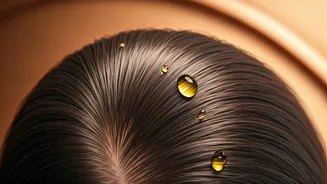







Summer Scalp Challenges
Summer presents unique hurdles for hair growth, primarily due to increased scalp oil production and sweat buildup, which can lead to clogged follicles.
Unlike other seasons, the goal for summer hair care isn't solely focused on stimulating growth; it's a more comprehensive approach that balances nourishment with maintaining a clean, breathable scalp environment. Heavy oils that might be beneficial in cooler months can become detrimental in summer, potentially hindering progress by trapping heat and preventing the scalp from functioning optimally. Therefore, understanding these seasonal changes is crucial for selecting the right hair care practices to support healthy hair development.
The Science of Hair Oiling
Hair oil doesn't directly sprout new hair overnight; instead, it fosters an optimal environment for growth. Its primary functions include enhancing blood circulation to the scalp, which nourishes the hair follicles, and fortifying the hair roots to minimize breakage. This reduction in breakage allows hair to attain greater length over time. Critically, maintaining a clean and healthy scalp is paramount, as even the most potent oil will fail to deliver benefits if the scalp is congested, irritated, or overly sweaty. A clean scalp ensures that oils can effectively penetrate and provide their intended advantages.
Rosemary Oil's Power
Rosemary oil is gaining recognition for its potential to stimulate hair growth, with some scientific backing suggesting it can improve blood flow to the follicles and encourage dormant roots to become active, potentially aiding with thinning hair. In fact, studies hint that its efficacy over time could rival certain specialized hair growth treatments. However, it's crucial to remember that rosemary oil is potent and should never be applied undiluted. For optimal and safe use, it must always be mixed with a lighter carrier oil to prevent irritation and ensure it's properly diluted.
Bhringraj for Tradition
For those who prefer traditional remedies, Bhringraj oil stands out as a powerful Ayurvedic choice for hair health. Often hailed as the 'king of herbs' for hair growth, it is renowned for its ability to boost scalp circulation, significantly strengthen hair roots, and effectively reduce hair fall. When used in moderation overnight, it is particularly effective and does not tend to feel excessively heavy on the scalp, making it a suitable option for summer care when properly incorporated into a blend.
Amla's Strengthening Boost
Amla, also known as Indian Gooseberry, is an often-underestimated ingredient that offers substantial benefits for hair health. Its rich content of antioxidants and Vitamin C aids in boosting collagen production, which is essential for strong hair follicles. Amla also contributes to hair thickness and imparts a healthy shine. During the summer months, it works most harmoniously and effectively when combined with lighter oils, preventing any potential greasiness while still delivering its fortifying properties.
Coconut Oil's Role
Coconut oil is a long-standing favorite in hair care due to its ability to reduce protein loss from hair, thereby strengthening strands and enhancing softness while preventing breakage. However, its application during summer, particularly for overnight oiling, requires a cautious approach. Overuse can lead to a greasy sensation and trap sweat, which is counterproductive in warm weather. It functions best as a foundational carrier oil in a blend, rather than the primary active ingredient, providing a base without overwhelming the scalp.
Lightweight Scalp Balancers
For individuals whose scalps tend to become oily quickly, specific lightweight oils are highly recommended for summer overnight use. Jojoba oil is an excellent choice as it closely mimics the scalp's natural sebum, helping to regulate oil production and prevent pore blockage. Argan oil is another superb option; it's exceptionally light, offers protection against sun damage, and effectively controls frizz. These oils are ideal because they nourish the scalp without suffocating it, ensuring it remains breathable even during warmer nights.
Oils to Limit or Avoid
It's important to be mindful of certain oils that can be too heavy or possess properties unsuitable for summer overnight oiling. Heavy oils like castor oil, due to its extreme thickness, can potentially trap heat and block pores, exacerbating scalp issues. Mustard oil, known for its heating properties, may cause discomfort on a warm scalp. Similarly, olive oil, while beneficial in moderation, can lead to heavy buildup if used excessively. While these oils aren't entirely off-limits, their use should be significantly limited or restricted to small quantities mixed within lighter oil formulations during summer.
The Ideal Summer Blend
Crafting the perfect summer overnight hair oil blend is straightforward and effective, prioritizing lightness and targeted benefits. A recommended mixture involves combining one to two tablespoons of a base oil, such as coconut or jojoba oil, with just two to three drops of rosemary oil for stimulation. Optionally, a few drops of Bhringraj or amla oil can be added for extra nourishment. This simple combination ensures an effective treatment that is neither greasy nor overly heavy, providing the scalp with what it needs for healthy growth.
Oiling Technique for Results
Achieving the best results from overnight hair oiling hinges on technique rather than sheer quantity. Contrary to popular belief, drenching your hair is unnecessary and can be counterproductive. Apply a small amount of your chosen oil blend, focusing primarily on the scalp rather than the lengths of your hair. Gently massage the oil into your scalp for about 5 to 10 minutes to enhance absorption and circulation. Loosely tie your hair to keep it contained and wash it out the following morning. Consistency in this practice, more than the amount of oil used, is the key to visible improvements over time.