

Lush Verdure Designs
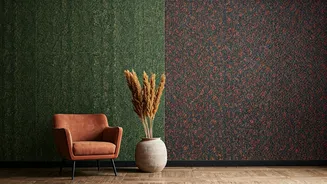
Step into a world of botanical richness with Verdure tapestries, a style experiencing a significant revival. These designs are defined by their layered
depictions of trees and foliage, rendered in deep, captivating shades of green, blue, and brown. Interior designers highlight the inherent sophistication and mood-enhancing qualities of these hues, which create a sense of opulent depth within a room. Think of these large-scale tapestries as a unique alternative to traditional wallpaper, capable of transforming an entire wall. They are particularly effective placed behind a headboard in a bedroom, establishing a striking focal point that draws the eye and adds immediate visual interest. In living spaces, a Verdure tapestry can serve as a commanding anchor above a sofa or console table, introducing warmth, tactile dimension, and artistic flair. Beyond their aesthetic appeal, these tapestries function as expansive, unframed pieces of art, offering an immersive and unconventional way to showcase landscape artistry. The intricate layering within Verdure designs contributes to a deeply immersive and visually engaging experience, making them a powerful tool for breathing life into otherwise understated environments and moving away from monotonous, minimalist aesthetics.
Elegant Jacobean Florals
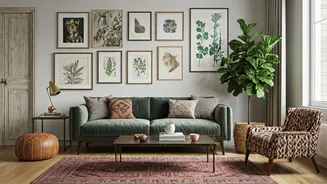
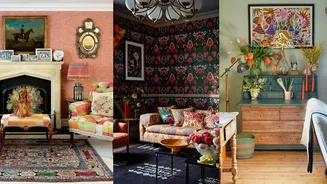
Explore the charm of Jacobean Floral patterns, another historically-inspired motif that draws inspiration from nature and vintage aesthetics. This intricate design typically features a harmonious blend of flowers, vines, and leaves, often presented in vibrant, rich color palettes. You'll commonly encounter Jacobean florals on fabrics for curtains, upholstery, or as a distinctive wallpaper choice. Originating from the era of James I of England in the late 1500s and early 1600s – where "Jacobean" is derived from the Latin word for James – this pattern carries a sense of enduring legacy. Interior design professionals emphasize that Jacobean Florals subtly communicate an appreciation for timeless and sophisticated design principles. The repetition of floral and leaf motifs, alongside other classical elements, allows this pattern to be employed effectively for both subtle accent details and grand design statements within a home's décor. Its versatile application means it can elevate a small decorative pillow or make a significant impact as a bold fabric choice, ensuring that spaces feel curated and possess a distinct personality, moving beyond the simplicity of 'overly beige' rooms.
Geometric Fret Patterns
Introducing the Fret pattern, a third essential design term for enhancing your home's visual appeal. This pattern is characterized by its repetitive geometric arrangement of straight lines, typically intersecting at right angles to form shapes such as T's, L's, or squared corners, with the Greek Key being a well-known example. Fretwork is particularly well-suited for introducing a sense of order and linearity into more modern or architecturally defined spaces. Unlike the traditional, non-raised nature of Verdure and Jacobean floral tapestries, Fret designs can sometimes feature a raised or textured finish, adding an extra layer of tactile interest. This type of pattern is frequently found on accent pieces like throw pillows or area rugs, offering a way to incorporate graphic elements without overwhelming the entire room. In an era where consumers are increasingly seeking spaces with more character and less minimalism, Fret patterns provide a sophisticated yet accessible way to add visual complexity and a refined aesthetic. They serve as a crucial element in creating interiors that feel dynamic and engaging, effectively counteracting the monotony of overly simple or neutral color schemes and ensuring a home reflects a distinct personality.