

Edison's Early Dream
Over a hundred years ago, Thomas Edison envisioned a future powered by nickel-iron batteries. While his 1901 lead-acid battery for automobiles showed promise,
it ultimately succumbed to the limitations of cost and range compared to the burgeoning internal combustion engine. The dream of a more advanced nickel-iron successor, however, lingered. Interestingly, early 20th-century roads saw more electric-hybrid vehicles than gasoline-powered ones, indicating a different technological trajectory was almost realized. This historical context highlights how technological advancement isn't always linear and how concepts ahead of their time can resurface with new enabling technologies.
Nature's Blueprint for Power
Modern researchers, inspired by biological structures, have found a novel way to construct batteries. By mimicking how bones and shells form using proteins as frameworks for mineral deposition, scientists have developed a new nickel-iron battery. This approach involves using proteins, derived from byproducts of beef processing and enhanced with graphene oxide, to meticulously arrange nickel and iron atoms at the nanoscale. This bio-inspired method allows for precise atomic placement, leading to incredibly strong yet flexible structures, much like vertebrate bones. This detailed assembly at the atomic level is crucial for the battery's exceptional performance.
The Aerogel Advantage
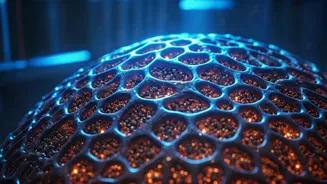
The team's innovative process involves creating a unique aerogel structure, which is an astonishingly porous material composed of nearly 99% air by volume. This aerogel is formed by embedding nickel and iron clusters within a protein framework, which is then subjected to high temperatures in superheated water. This treatment converts the proteins into carbon while eliminating oxygen, simultaneously embedding the metallic clusters. The immense surface area generated by this nanoscale structure is a game-changer for battery efficiency. With particles so tiny, almost every atom can actively participate in charging and discharging reactions, leading to significantly faster energy transfer and higher overall efficiency.
Grid Storage Potential
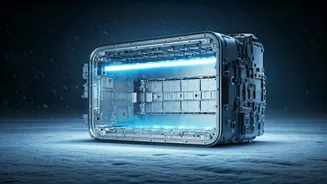
While this advanced nickel-iron battery doesn't currently possess the energy density required for electric vehicles, its strengths lie in other critical areas. It boasts an incredible charging speed, capable of replenishing in mere seconds, and an extraordinary lifespan, enduring over 12,000 charge cycles, equivalent to more than 30 years of daily use. These attributes make it an ideal candidate for large-scale energy storage solutions, such as solar farms. It can efficiently capture and store excess solar energy during the day, releasing it back to the grid during nighttime hours. Furthermore, its high output and rapid response capabilities could provide essential backup power for energy-intensive data centers.
Sustainable and Simple
The revival of Edison's nickel-iron battery concept is not only technologically promising but also environmentally conscious. Unlike many modern batteries that rely on scarce and difficult-to-mine rare earth metals, this new design utilizes common, readily available materials. The manufacturing process itself is relatively straightforward, involving simple mixing of ingredients and gentle heating steps. This reliance on abundant resources and a less complex production method makes the technology more sustainable and accessible for widespread implementation, offering a viable alternative to current battery technologies without the associated environmental concerns of rare earth extraction.