







Dal Nutrition Breakdown
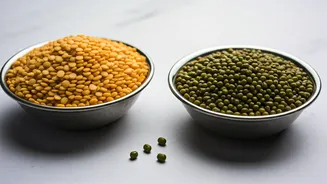
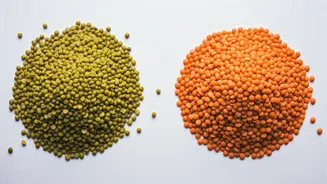
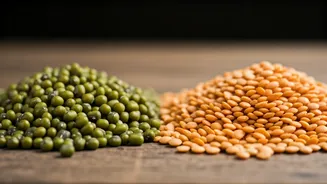
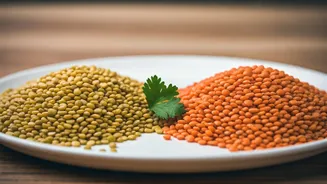
Both moong and arhar dal are cornerstones of Indian cuisine, celebrated for their nutritional value and versatility. However, when the focus shifts to weight
management, understanding their distinct properties becomes crucial. While both are low-fat, protein-rich legumes, subtle variations in calorie density, fiber composition, and digestibility can influence how full you feel and how effectively they support a calorie-conscious diet. Some individuals find moong dal to be lighter and easier on the stomach, promoting a sense of well-being, while others prefer the familiar and filling nature of arhar dal. It's important to remember that weight loss is a holistic journey, and how you cook your dal, the portion size you consume, and what you pair it with significantly contribute to its overall impact on your dietary goals. By grasping these finer points, you can make informed decisions that align with your objectives without sacrificing the enjoyment of these beloved staples.
Calorie and Protein Comparison
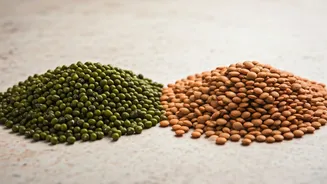
According to consultant dietician Kanikka Malhotra, per 100g of cooked dal, moong dal typically provides around 120-140 kcal and 7-8g of protein, alongside 4-5g of fiber. In contrast, arhar (toor) dal offers a slightly higher calorie range of 130-150 kcal with a similar protein content of 7-8g, but boasts a marginally higher fiber count of 5-6g. Malhotra points out that moong dal's advantage lies in its lower calorie count and simpler fiber structure, which contributes to greater satiety relative to its caloric intake. While neither dal is inherently vastly superior for weight loss, moong dal's less dense profile can be more conducive to maintaining a modest calorie deficit, a key factor in shedding pounds. Therefore, moong dal may offer a slight edge for those meticulously tracking their calorie intake.
Fiber, Digestibility, and Satiety
The interplay of fiber and protein quality in both moong and arhar dal plays a significant role in how they affect satiety, blood sugar levels, and overall weight management. Moong dal's combination of fiber and high-quality protein is effective at slowing down digestion, which helps in maintaining stable blood sugar levels and preventing energy dips that can lead to overeating. Arhar dal, with its higher fiber content, also contributes to steady blood sugar, but some individuals may find it to be heavier or experience bloating due to its more complex fiber structure, and it may have a slightly higher glycemic index. Moong dal generally digests more smoothly, allowing for consistent eating patterns without discomfort. Both dals are beneficial for muscle building, but moong dal can offer a quicker energy source for those with active lifestyles. Ultimately, the ease of digestion offered by moong dal can be a significant benefit for weight management, promoting comfort and regularity.
Ideal Preparation and Portions
For individuals focused on weight loss, expert advice suggests aiming for approximately 30-40 grams of dry dal per serving. This translates to roughly half to three-quarters of a cup when cooked, equating to about 100-120 calories. To optimize digestion and nutrient absorption, it's recommended to soak the dal before cooking. Moong dal generally requires 20-30 minutes of pressure cooking, while arhar dal needs 40-50 minutes. Preparing the dal with minimal oil, incorporating turmeric (haldi) and cumin (jeera) for flavor and digestive benefits, is advisable. To enhance fiber content without significantly increasing calories, pair your dal with green vegetables like spinach (palak) or bottle gourd (lauki), a side of crunchy salad, or a single whole wheat roti. It's best to avoid heavy tempering (tadka) that can add extra fat and calories. For lighter evening meals that support weight management goals, moong dal is particularly well-suited, helping you stay on track.