





Anxious Alert
In a heartwarming display of canine intuition, a California couple, Chase Johnson and Ben Byrn, found their beloved Labrador mix, Ceto, behaving most unusually.
This wasn't just random pet quirkiness; Ceto's peculiar anxiety and persistent nudges became the unexpected harbingers of serious health discoveries for both Chase and Ben. Their story underscores the profound bond between humans and animals, and the remarkable, often overlooked, capabilities of our four-legged companions to sense subtle changes that we humans might easily miss. Ceto's actions, initially perplexing, would soon prove to be instrumental in averting potential tragedies, transforming a seemingly ordinary pet into an extraordinary lifesaver for his family.
Chase's Lump Discovery
Ceto’s unusual behavior intensified when he began showing marked anxiety and distress around Chase Johnson. Describing Ceto as typically a very calm and collected dog, Chase was taken aback by his constant pacing, whimpering, and general unease directed towards her. This unsettling behavior persisted for a couple of weeks. The pivotal moment arrived when Ceto, with a forceful nudge of his nose, pressed against Chase’s breast. This direct, albeit slightly painful, action prompted Chase to investigate, leading to the discovery of a palpable lump. This lump was later diagnosed as triple-negative breast cancer, an aggressive form of the disease that necessitated a rigorous treatment plan involving chemotherapy, radiation, a lumpectomy, and lymph node removal. Chase credits Ceto unequivocally, stating that without his intervention, she might not have found the cancer in time, a delay her oncologist warned could have been fatal.
Ben's Prior Warning
The couple recognized a pattern emerging, drawing parallels between Ceto's recent actions and his earlier behavior towards Ben Byrn. Previously, Ceto had exhibited similar anxiety around Ben, which was later connected to Ben’s diagnosis of colon cancer. When Ceto’s anxious episodes recurred, and knowing Ben had recently received a clear scan, Chase and Ben logically deduced that Ceto was again signaling a health concern, this time directed at Chase. This shared history of Ceto’s perceptive warnings solidified their trust in his instincts. The deep emotional bond between Chase and Ceto, with the dog often described as her 'little shadow,' likely amplified the dog's sensitivity to her well-being, creating an unspoken communication that transcended words and ultimately played a crucial role in their health journey.
Canine Detection Science
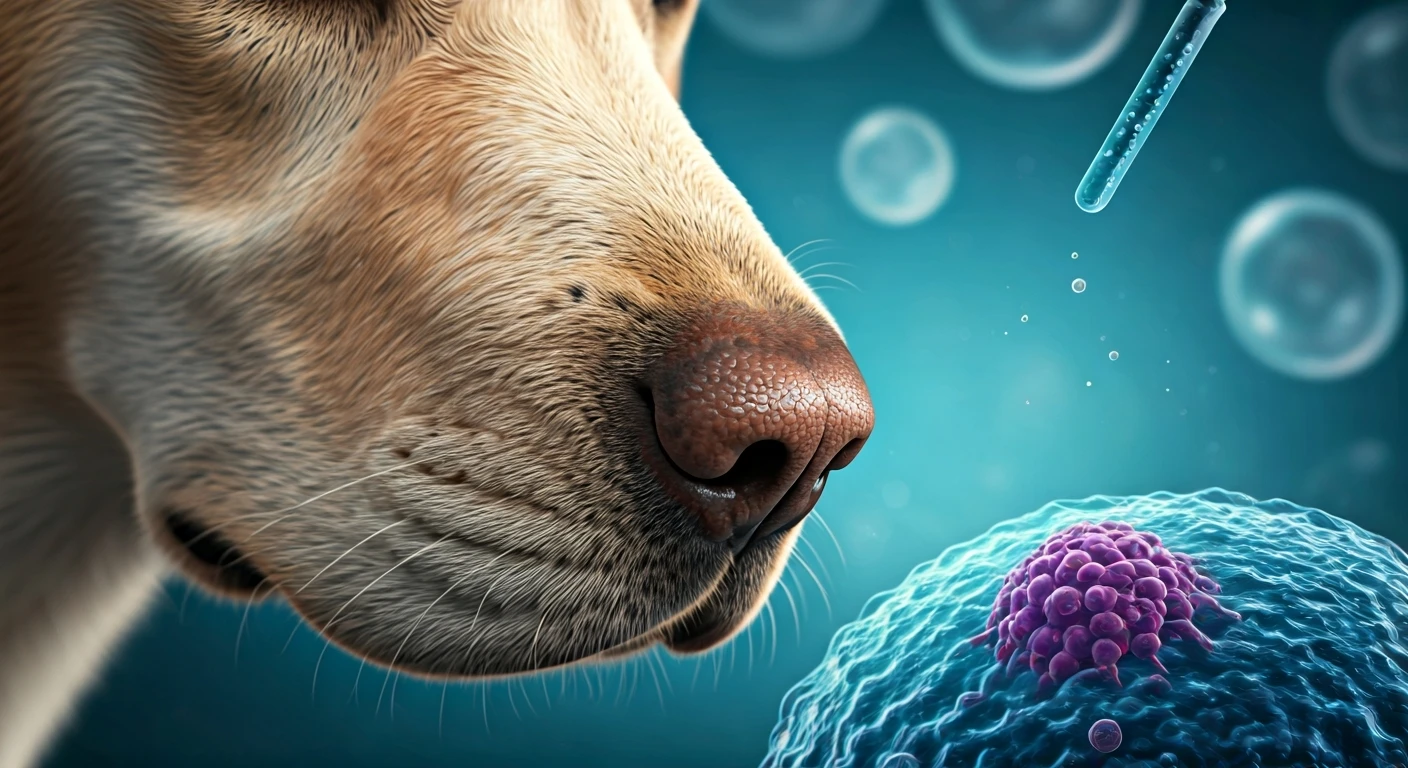
The phenomenon of dogs detecting cancer is rooted in their incredibly sensitive olfactory systems. Dogs can detect volatile organic compounds (VOCs) released by cancerous tumors, which are present in a person's breath, urine, or even on their skin. Scientific studies, including those published in journals like PLOS and PMC, have explored and validated this capability. For instance, research has shown that dogs can identify lung cancer with a sensitivity rate of up to 83.9% by analyzing breath samples. Beyond lung cancer, studies confirm that dogs possess the ability to detect other forms of cancer, including breast and colon cancer, much like Ceto demonstrated. This remarkable detection ability stems from their ability to pick up on incredibly faint scent molecules that are imperceptible to humans, making them invaluable partners in early disease detection.