






The Quest for Quiet
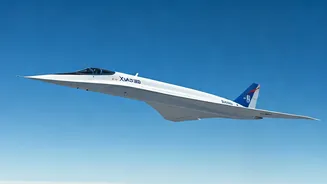
NASA, in collaboration with Lockheed Martin, has developed a groundbreaking aircraft, the X-59, engineered to overcome a significant hurdle in supersonic
aviation: the deafening sonic boom. Unlike conventional supersonic jets that produce a concussive boom, the X-59 is designed to mitigate this noise, transforming it into a soft "thump." This innovation stems from the aircraft's unique design, featuring an elongated fuselage and a strategically repositioned engine. These elements work in tandem to alter how air flows around the craft, effectively spreading out the shockwaves generated at supersonic speeds. This advanced aerodynamic shaping aims to make supersonic flight permissible over populated areas, a feat currently restricted in the U.S. since 1973 due to the disruptive nature of traditional sonic booms. The successful development of such technology could pave the way for renewed supersonic commercial air travel, promising drastically reduced flight times and significant economic benefits across various sectors.
Testing the Skies
The X-59 has already taken to the skies, completing its inaugural test flight in October 2025, and is now poised for its second mission. This upcoming flight will see the experimental jet take off from NASA's Armstrong Flight Research Center and journey to Edwards Air Force Base, both located in Southern California. During this approximately one-hour flight, the X-59 is scheduled to ascend to an altitude of 20,000 feet (6 kilometers) and reach a top speed of 260 mph (418 km/h). This controlled flight profile is part of a larger, phased approach to testing. Future flights will progressively increase the X-59's speed and altitude, meticulously evaluating its safety and performance characteristics. Technicians are currently conducting essential engine runs at Armstrong to ensure the aircraft is fully prepared for this next critical phase of its flight test program.
Redefining Supersonic Travel
The implications of NASA's X-59 project extend far beyond mere aeronautical achievement; they signal a potential revolution in global travel and commerce. By successfully demonstrating that supersonic flight can be quiet, the X-59 could lead to the lifting of current restrictions on overland supersonic travel, a ban that has been in place in the United States since 1973. This opens the door for next-generation commercial supersonic aircraft, such as the Boom X-1, to become a reality for the public. The ability to travel at speeds exceeding Mach 1 would drastically cut down flight durations, transforming long-haul journeys into significantly shorter ones. Such efficiency gains would be invaluable to industries that rely on rapid transportation and timely responses, potentially boosting economic growth and connectivity on a global scale. The X-59 is not just an experimental jet; it's a symbol of innovation aimed at making faster, more accessible travel a tangible possibility for everyone.