





Towering Innovation Unveiled
The landscape of wind energy construction is undergoing a dramatic shift, spearheaded by a novel self-erecting tower system. Following a successful trial
at a facility in China, the next phase involves the deployment of seventeen of these advanced hybrid turbines in Western Australia. This remarkable development, showcased by a Spanish company, centers on a hybrid system that effectively negates the need for the colossal cranes typically required for turbine erection. Collaborating with an energy firm, these new turbines, featuring 7.8-megawatt capacity, are now operational at elevated heights, confirming the viability of this innovation in real-world conditions. This technology not only streamlines the construction process but also carries significant environmental advantages by reducing concrete consumption and its associated pollution.
Record-Breaking Performance
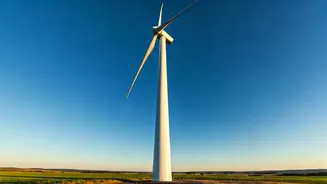
These cutting-edge turbines are engineered to excel across a wide spectrum of environmental conditions. In instances of gentle breezes, their impressive tower height, capable of reaching up to 188 meters (617 feet), allows them to capture optimal wind resources. This exceptional height, combined with the project's substantial 7.8-MW power output and a vast rotor diameter of 182 meters (597 feet), establishes new records for onshore wind installations. Furthermore, the design incorporates robust resilience against cyclone-force winds, a critical feature for turbines operating in regions prone to severe weather patterns, particularly relevant for turbines developed with Chinese collaboration. This dual capability ensures consistent energy generation and operational integrity, regardless of external atmospheric challenges.
Scaling Up Green Energy
The successful implementation of these Nabrawind towers is set to progress beyond initial deployments. Following the installation of seventeen units at Fortescue's Nullagine Wind farm, there's considerable potential for a much more expansive project at the proposed Bonney Downs wind farm in Australia. This future development could yield an astounding 2.1 gigawatts of power, a capacity nearly twenty times greater than the 113-MW Nullagine facility is projected to deliver. Such advancements are pivotal in accelerating Australia's transition towards renewable energy sources like wind power. Despite some initial reservations regarding onshore wind infrastructure in the country, this technological leap represents another encouraging stride towards increasing domestic wind energy capacity and meeting ambitious environmental targets.