

Gather Your Ingredients
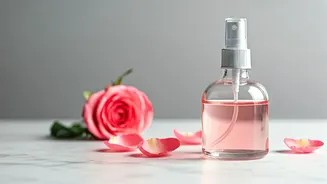
To begin your journey in crafting a pristine rose water face mist, procuring the right components is paramount. Aim for five to seven fresh, organic roses;
ensuring they are free from pesticides is crucial given their direct application to your skin. Should fresh blooms be scarce, a cup of dried, culinary-grade rose petals serves as an excellent alternative. Complementing the roses, you'll require approximately one and a half to two cups of distilled water. It's vital to eschew tap water, as its impurities can rapidly degrade your carefully prepared mixture. Essential tools include a medium-sized saucepan, a lid that fits snugly, a fine-mesh strainer or cheesecloth for separation, a clean glass bowl to collect the liquid, and finally, your preferred spray bottle for convenient application.
Gentle Petal Extraction
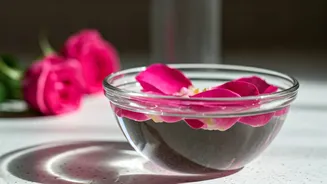
The core of your rose water mist lies in its extraction process, which demands a delicate touch. Start by carefully detaching the rose petals from their stems, followed by a brief rinse under cool water to dislodge any surface dust. Place these cleansed petals into your saucepan. Next, pour in the distilled water, ensuring the petals are just submerged; an excess of water will only dilute the potency of your final product. Secure the lid and set your stovetop to a medium-low heat. It's imperative to maintain a gentle simmer, avoiding a vigorous boil at all costs. High temperatures can destroy the delicate beneficial compounds within the petals and compromise that signature floral fragrance you aim to preserve. Allow this mixture to simmer softly for about 20 to 30 minutes. You'll notice a distinct transformation: the petals will lose their vibrant color, becoming pale and almost translucent, while the water absorbs their rich, rosy pigment.
Cooling and Straining
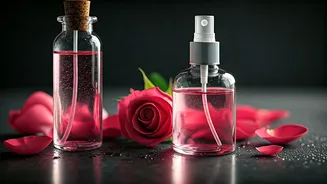
Once the simmering phase is complete, remove the saucepan from the heat. Resist the urge to proceed immediately; allow the liquid to cool down entirely to room temperature. This waiting period is essential for both safety and optimal extraction. After it has cooled sufficiently, carefully strain the fragrant liquid through your fine-mesh sieve or a piece of cheesecloth into a clean glass bowl. Apply gentle pressure to the spent petals to extract every last drop of the concentrated rose essence. This collected liquid forms the base of your refreshing mist. The next step involves carefully decanting this precious, strained rose water directly into your chosen spray bottle, ready for its final application.
Customizing Your Mist
While a pure rose water mist offers fantastic benefits, tailoring it to address specific skin concerns can elevate its efficacy. For those battling dryness, incorporating half a teaspoon of vegetable glycerin is highly recommended. This ingredient acts as a powerful humectant, drawing moisture from the environment into your skin and effectively sealing it in for prolonged hydration. If your skin tends to be oily, adding a tablespoon of alcohol-free witch hazel can work wonders; it functions as a natural astringent, helping to refine pores and reduce excess shine. For skin that has been irritated by the sun, a spoonful of pure aloe vera juice mixed into the mist can provide soothing relief. To enhance the antioxidant properties and offer a mild, natural preservative, consider adding two to three drops of Vitamin E oil.
Proper Storage for Freshness
Given the absence of synthetic preservatives and stabilizers in your homemade rose water mist, its storage is crucial for maintaining freshness and extending its usability. This homemade elixir absolutely requires refrigeration. Keeping your mist chilled not only feels incredibly refreshing, especially on a warm day, but also significantly prolongs its shelf life. Stored correctly in the refrigerator, your rose water mist can remain potent and beneficial for a solid three to four weeks. In contrast, storing it at room temperature, perhaps on a bathroom counter, might limit its effectiveness to as little as a single week. Before each use, a quick shake of the bottle ensures that any components are well-mixed, preparing it for immediate and revitalizing application.