
The Tandoor's Arrival
Following the tumultuous events of the Partition, a wave of Punjabi refugees arrived in Delhi, carrying with them not just their hopes but also their culinary
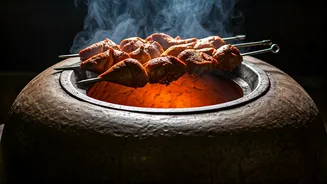
traditions. Among these traditions was the tandoor, a cylindrical clay oven fueled by charcoal. This cooking method, originating in the Punjab region, had the remarkable ability to impart a unique smoky flavor to meats and breads. As these refugees established themselves in Delhi, they began to introduce their cooking techniques to the locals. The tandoor, with its simplicity and delicious results, quickly captured the attention of Delhi's residents, becoming a symbol of the Punjabi culinary spirit. It was the refugees who understood its potential to transform the city's food landscape.
Evolution and Adaptation
The initial tandoors were fairly basic in construction, but as their popularity surged, they evolved. Gradually, the tandoor moved from homes to roadside eateries and eventually to upscale restaurants. Punjabi cooks adapted the traditional recipes to suit the tastes of Delhi's diverse population. This included experimenting with different spices and marinades to create distinctive flavors. The tandoor transformed beyond merely cooking bread and meat; it became a vehicle for culinary creativity. Various dishes, such as tandoori chicken, and a range of kebabs, were born and flourished. The adaptability of the tandoor, alongside the Punjabi refugee's determination, established it firmly in Delhi's food culture. This culinary innovation was marked by a commitment to quality and a desire to bring the taste of their homeland to their new community.
Tandoor's Culinary Impact
The influence of the tandoor on Delhi's food culture has been profound. It revolutionized the way food was prepared and enjoyed. The smoky flavors and unique textures created by the tandoor quickly became a cornerstone of the city's culinary identity. Restaurants embraced tandoor cooking wholeheartedly, integrating it into their menus and innovating with various dishes. The tandoor's appeal extended beyond the restaurant scene, penetrating the cultural fabric of Delhi. It played a role in social gatherings and celebrations, becoming a symbol of hospitality and togetherness. This transformation highlighted the Punjabi refugees' deep understanding of food and their ability to share their culinary heritage with their new home.
Tandoor Today and Beyond
Today, the tandoor continues to be a central part of Delhi's food scene. From street-side vendors to fine dining establishments, the tandoor is an integral part of the culinary landscape. The dishes born from the tandoor are enjoyed by people from all walks of life. The legacy of the Punjabi refugees is visible in every smoky bite and in the enduring popularity of tandoor-cooked food. This culinary tradition has not only survived but thrived, acting as a bridge between the past and the present. It stands as a testament to the power of food in connecting communities and preserving cultural heritage, forever changing Delhi's culinary journey and proving that simple cooking methods can lead to lasting impact.