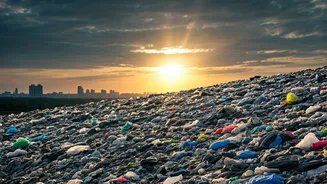








Plastic's Persistent Problem
The pervasive use of plastics has created a major global issue, resulting in substantial environmental concerns. The current reliance on plastic materials
has led to pollution in oceans, landfills, and ecosystems worldwide. Traditional plastics often take hundreds of years to decompose, contributing significantly to environmental degradation. In addition, the manufacturing processes associated with plastics generate greenhouse gases, worsening climate change. Addressing this issue demands innovative strategies that can reduce plastic consumption, enhance recycling capabilities, and develop biodegradable alternatives. Recognizing the urgency, researchers have focused on creating technologies that offer sustainable solutions to combat the negative impacts of plastic.
High-Performance Materials Defined
The term "high-performance materials" encapsulates a variety of cutting-edge substances meticulously engineered to surpass the capabilities of conventional plastics. These advanced materials boast remarkable characteristics such as enhanced durability, superior strength-to-weight ratios, and impressive resistance to environmental factors. Scientists are exploring several innovative paths, including bio-based polymers sourced from renewable resources, which decompose more rapidly and minimize environmental impact. The research also involves the design of materials that can be easily recycled through improved chemical or mechanical processes. The goal is to develop eco-friendly materials that can effectively replace traditional plastics across diverse applications, from packaging to construction.
Tech's Potential Impact
The introduction of this advanced technology holds transformative implications for multiple industries and global efforts to tackle plastic pollution. The potential applications of high-performance materials are extensive, spanning packaging, automotive components, and medical devices, to name a few. Substituting conventional plastics with more durable, recyclable, or biodegradable options could significantly reduce the volume of plastic waste accumulating in landfills and polluting the environment. Furthermore, these materials' development could accelerate the transition toward a circular economy, where resources are reused and waste is minimized. The broader adoption of this technology could help to minimize carbon emissions, support a cleaner environment, and improve public health outcomes.
Scientific Breakthroughs Explained
The research driving this technology is based on scientific innovation in materials science, chemistry, and engineering. Scientists are investigating the chemical structures of polymers, and refining their physical and chemical properties. This includes exploring novel polymer blends and composites. Innovative techniques like nanotechnology are used to develop materials with exceptional characteristics. Additionally, researchers are developing new recycling processes. This involves chemical recycling, which converts plastic waste into its basic building blocks, and mechanical recycling, which improves the sorting and processing of plastics. Successful implementation of these initiatives requires interdisciplinary collaborations, integrating scientific research with engineering expertise.
Challenges and Future Directions
While this advanced technology shows promise, certain obstacles must be overcome to ensure its wide-scale implementation and success. One major challenge is scaling up production to meet global demand, coupled with the need to manage the costs of developing and producing these new materials, aiming to ensure that they are economically viable. Furthermore, the existing infrastructure for recycling requires improvements, including enhanced sorting technologies and effective collection systems. Continuous research and development are vital. Scientists are working to refine material properties, explore new applications, and streamline production processes. Collaboration between scientific teams, policymakers, and industry stakeholders can ensure success, turning research into tangible solutions.