








The Grafting Maestro
In the heart of Malihabad, Uttar Pradesh, resides an extraordinary individual affectionately known as the 'Mango Man of India.' Kalimullah Khan, a recipient
of the Padma Shri, has achieved what many consider a horticultural miracle. At nearly 85 years old, he has dedicated his life to cultivating an astonishing array of mangoes, with over 348 distinct varieties flourishing on a single, venerable tree that has stood for 125 years. This impressive feat was not achieved through formal education, as Khan left school early, but through a profound passion and self-taught expertise in the intricate art of grafting. His family's orchard, passed down through generations, became his true university, where he learned to coax an incredible diversity of flavors, colors, and textures from a single root system. This living testament to his dedication has made him a celebrated figure in horticulture, not just in India but internationally, drawing admiration from farmers and enthusiasts alike.
A Tree of Legends
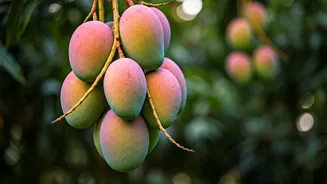
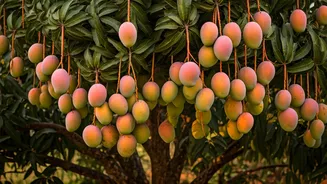
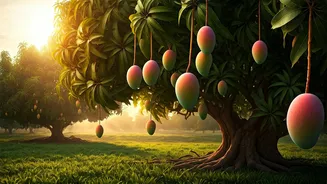
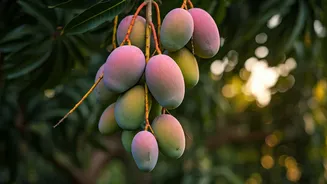
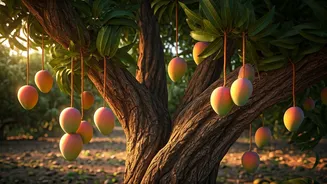
The centerpiece of Kalimullah Khan's remarkable achievement is a magnificent 125-year-old tree, originally an Alphonso variety. Khan's vision began in 1957 with an ambitious idea to graft seven different types of mango onto one tree, though an early setback due to floods taught him valuable lessons about soil management. It was by 1987 that he significantly accelerated his grafting experiments on this ancient tree. Over decades of persistent effort and meticulous trials, this single tree transformed into a nine-meter giant, now bearing an estimated 300 to 350 different kinds of mangoes. Each of these fruits retains its unique characteristics—flavor, size, and color—thanks to Khan's precise grafting techniques, which involve carefully joining branches from diverse donor trees to the robust rootstock of the old tree. This living legacy not only showcases horticultural innovation but also serves as a repository of mango diversity.
The Art of Grafting
The 'secret' behind Kalimullah Khan's extraordinary accomplishment lies in his mastery of grafting, a process he describes as both an art and a complex puzzle. Grafting involves skillfully taking healthy branches from different mango varieties and fusing them onto the rootstock of a mature tree, allowing them to grow together and produce their respective fruits. Khan emphasizes the importance of selecting compatible varieties, executing the fusion with precision, and dedicating years of patient nurturing before the grafted branches bear fruit. His son, Nazimullah, who has been instrumental in managing the orchard after leaving his own studies, highlights the long-term commitment required; for instance, developing a hybrid like 'Dushehri Kalim,' a cross between Dushehri and Sinduri, took a remarkable 12 years. The family sources seeds from various regions across India, including Mumbai and Delhi, to ensure genetic diversity and successful integration.
Varieties and Inspirations
The venerable tree is home to an impressive collection of well-known mango varieties, including the velvety sweet Alphonso, the tangy-sweet green Langra, the fragrant Kesar, the juicy Dasheri, and the aromatic Chaunsa. Beyond these popular types, Khan has also created unique hybrids, some of which he has affectionately named after prominent figures who have inspired him. These include mangoes christened 'Sachin Tendulkar,' 'Amitabh Bachchan,' 'Narendra Modi,' 'Anarkali,' and 'Aishwarya Rai.' Khan explained that these names are a tribute to individuals who have made a significant impact or inspired him personally. The daily upkeep of this complex ecosystem is managed by Nazimullah, who meticulously monitors environmental factors like rainfall, manages irrigation to prevent waterlogging, and combats fungal diseases and pests. He stresses that cultivating such a diverse range of mangoes is a time-consuming process requiring continuous research and dedication, not an overnight success.