


Coastal Pony Encounters
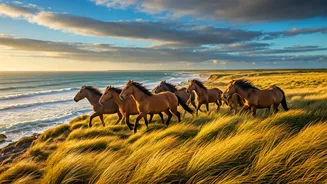
Imagine a scene straight out of a dream: wild ponies galloping along the sandy shores, their manes whipped by the ocean breeze. Assateague Island, a barrier
island off the coasts of Maryland and Virginia in the United States, is renowned for precisely this spectacle. These resilient creatures, descendants of horses that survived a shipwreck centuries ago, freely roam the beaches and marshes, offering visitors an unparalleled opportunity to see equines thriving in a unique coastal ecosystem. Their presence is a testament to nature's ability to adapt and endure, providing a truly magical encounter for those fortunate enough to witness them, often seen grazing near the dunes or even venturing close to picnic areas, a charming interaction between humans and these wild inhabitants.
Camargue's Wetland Wonders
Venturing into the wetlands of southern France, we find the Camargue region, famous for its distinctive white horses. These elegant steeds, known for their strength and unique gait, are often spotted moving with grace through the shallow waters and marshlands, their pure white coats a striking contrast against the verdant landscape. They are an integral part of the Camargue's identity, closely tied to the traditional way of life in this unique delta. Observing them as they traverse the water-filled plains, seemingly at one with their environment, is an experience that evokes a profound sense of natural beauty and untamed spirit, a living embodiment of the region's wild heart.
Doñana's Semi-Wild Herds
Located in Andalusia, Spain, Doñana National Park presents another fascinating glimpse into the world of free-roaming horses. Here, semi-wild populations can be found inhabiting the park's diverse landscapes, which include marshlands, forests, and coastal dunes. These horses are often part of traditional roundups, an event that highlights their deep connection to the land and the local culture.మీ Watching these herds navigate their natural territory, especially during these organized gatherings, offers a dynamic view of their social structure and their adaptation to this ecologically rich UNESCO World Heritage site, a place where nature's rhythms dictate the lives of its inhabitants.
Mongolia's Vast Steppes
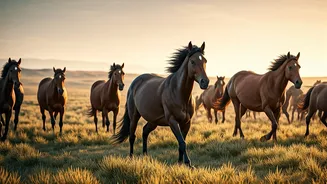
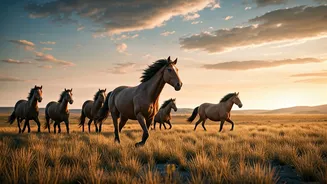
The iconic image of horses galloping across endless horizons is perhaps most powerfully realized on the Mongolian Steppe. This immense grassland is the ancestral home of semi-wild horses that have been integral to the nomadic culture of Mongolia for centuries. These horses are not merely animals; they are partners and vital components of a way of life that emphasizes freedom, resilience, and a deep spiritual connection to the land. Observing these herds moving in unison across the vast, open plains is a profound experience, showcasing the enduring spirit of both the horses and the people who share this magnificent, windswept landscape, a true testament to the wild in its purest form.
Namib's Desert Survivors
In one of the planet's most challenging environments, the Namib Desert in Namibia, a small population of wild horses has remarkably adapted to survive. Near the settlement of Garub, these resilient equines can be found navigating the stark, arid conditions, a truly unusual sight for any observer. Their presence in this harsh desert landscape is a testament to incredible fortitude and evolutionary adaptation, offering a unique and often poignant spectacle of life persisting against all odds. Encountering these desert dwellers provides a powerful reminder of the tenacity and adaptability of nature, even in the most unforgiving settings.