








A Novel Aerodynamic Approach
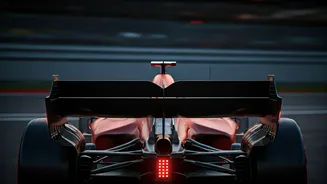
Ferrari has introduced a truly unique aerodynamic component to its Formula 1 challenger during pre-season testing, specifically a rear wing that can rotate
its upper flap by over 180 degrees. This means the wing can effectively operate upside down. During testing in Bahrain, Lewis Hamilton demonstrated this system, which features a pivot point on the leading edge of the upper element. When activated, this allows the wing to flip, positioning what would typically be its trailing edge at the front of the car and its leading edge at the rear. This contrasts sharply with older Drag Reduction System (DRS) regulations, which had stringent limitations on slot gap size (85mm) and a fixed axis of rotation. The current active aerodynamics rules offer considerably more design latitude, as seen with other teams adopting different hinge placements for their wings to achieve varied aerodynamic effects.
Optimizing Performance Through Inversion
The core challenge for aerodynamic engineers with this inverted wing design is to balance performance across different racing conditions. They must meticulously determine the two optimal wing angles: one that generates maximum downforce for cornering, and another that significantly reduces drag for high-speed straights. While some compromise is inevitable, the primary advantage lies in the system's ability to dramatically trim out drag when the active aerodynamics are engaged. Beyond simply reducing frontal area, teams can also induce a controlled stall on the wing. This aerodynamic stall, similar to a mechanism used in the Formula Renault 3.5 series where a hydraulic actuator closed a slot to create drag reduction via stall, allows for a substantial cut in induced drag without extensive wing rotation. Ferrari's approach maximizes drag reduction by fundamentally altering the wing's operational state, achieving a lower drag coefficient by effectively running the aerofoil in reverse.
Understanding Legality Frameworks
Ferrari's innovative 180-degree rear wing appears to comply with Formula 1's stringent regulations due to two critical factors. Firstly, the transition time between its two operational positions is crucial; as long as the wing completes its movement within 0.4 seconds, it is deemed legal. This timeframe is considered sufficient for the change to be recognized as an active aerodynamic adjustment rather than a continuously variable component. Secondly, and perhaps more significantly, the regulations pertaining to wing curvature, specifically Article C3.11.1(e), prohibit concave radii of curvature visible from below and mandate a minimum radius of 100mm for any concave curvature visible from above. In essence, this rule prevents teams from designing wing elements that appear concave when viewed from underneath the car. Ferrari's design is likely deemed legal as long as its floor and diffuser elements effectively obscure the rear wing from below, or if any part of the wing that might appear concave is proven not to be so when viewed from the prescribed angles.
Testing and Future Prospects
Ferrari has explicitly stated that this radical new rear wing design is currently a test item. The team plans to thoroughly evaluate its performance and aerodynamic credentials during subsequent testing and initial race weekends. This rigorous assessment will inform their decision on whether to incorporate this revolutionary concept into their car for the upcoming 2026 season. The outcome of these trials will be closely watched by rival teams, who may seek to emulate or adapt Ferrari's approach if it proves successful. The development underscores the relentless pursuit of innovation in Formula 1, where even seemingly minor adjustments to established aerodynamic principles can yield significant competitive advantages.