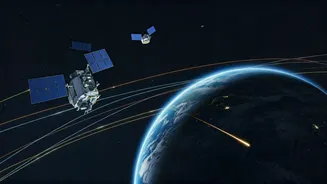

A Near Miss
In the escalating race to populate Earth's orbit with satellites, a precarious situation unfolded involving the Starlink constellation, managed by SpaceX
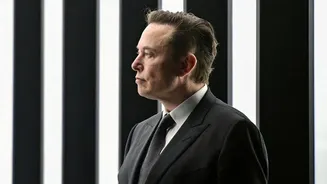
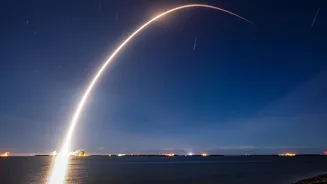
under the leadership of Elon Musk. This incident involved a near-miss with a satellite launched from China's Jiuquan Satellite Launch Center in Northwestern China. The closeness of the encounter prompted a significant response from SpaceX: the decision to lower the orbital altitude of almost 4,400 satellites. These satellites were brought down from their original height of 550 kilometers (341.7 miles) to 480 kilometers (298.2 miles), a move designed to mitigate further risks. According to SpaceX's engineering VP, the satellites came within a mere 200-meter range, a situation he attributed to inadequate 'coordination or deconfliction with existing satellites.' Data from the Chinese Academy of Sciences’ Institute of Software suggested that the maneuver was closely linked to this incident with an Earth imaging satellite. They stated that the orbital data was shared with SpaceX only a few minutes before the close approach, leaving limited time to react to the potential hazard.
Recurring Concerns
This specific incident isn't an isolated event. There have been previous instances where Starlink satellites have had near-collisions with the Chinese Space Station. These incidents underscore the growing challenges of space traffic management. SpaceX's strategy to lower the orbit of a significant portion of its Starlink satellites has been viewed as a step towards risk mitigation, yet it isn't without its own set of concerns. Researchers from China have expressed warnings that missteps in coordination could potentially trigger a chain reaction of collisions, leading to the creation of a vast amount of debris. This raises the possibility of a phenomenon often termed as Kessler Syndrome, where a cascade of collisions could make specific orbital areas unusable due to debris.
Risk Mitigation Moves
The decision made by SpaceX to lower the orbital positions of numerous Starlink satellites could be a proactive measure to avoid collision risks while aiming to foster goodwill. The risks, however, are very genuine. A study released in December 2025 described the possible chain reaction of uncontrolled collisions, a concept known as the Kessler Syndrome. Researchers who examined the data concluded that satellites at higher altitudes with longer orbital periods pose a greater risk, mainly because they are more challenging to navigate and regulate. SpaceX's choice to decrease the orbital presence of thousands of Starlink satellites seems to be a step in the right direction. Nicholls also argues that a lower orbit would diminish the ballistic decay time for malfunctioning satellites, hence reducing the likelihood of collisions. Despite these actions, risks persist, emphasizing the requirement for stricter oversight of satellite launches and a robust international framework. Such a framework should address the issue of space congestion while taking measures to reduce associated risks.
Space Becomes Crowded
Earth's orbit is becoming increasingly packed. Starlink, currently a major player in this domain, is being joined by other ventures such as Amazon Project Kuiper, Blue Origin Tera, Eutelsat OneWeb, and China's Qianfan. This increase in activity has raised significant concerns within the scientific community. These low Earth orbit (LEO) internet satellites have led to congestion, making it harder to perform scientific observations. The sheer number of satellites in the sky is already causing problems for astronomers, hindering their ability to observe the cosmos. Moreover, the increasing number of launches has triggered inquiries into the emissions from launch vehicles. There are also concerns over pollution created when satellites and rockets return to Earth, adding to the problem of space debris. Some scientists are worried that this debris might even pose a danger to commercial airlines.