




Understanding Dal Chawal's Pitfalls
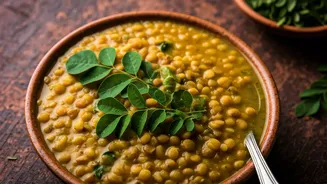
Dal chawal, a quintessential comfort food in Indian households, offers immense familiarity and satisfaction. However, when examined through the lens of modern
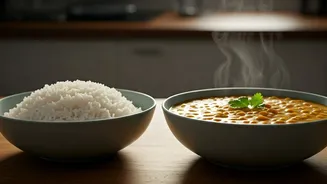
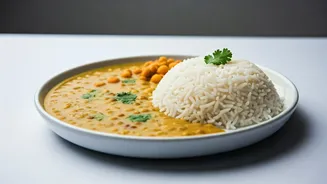
health and fitness objectives, this humble dish may require some strategic enhancements. Celebrity fitness expert Siddhartha Singh, who trains actress Tamannaah Bhatia, points out that the inherent issue isn't the dish itself, but rather how it's assembled and consumed. Traditionally, large servings of dal and rice, without significant additions, can lead to an imbalanced macronutrient profile, heavily leaning towards carbohydrates. Crucially, essential components like protein and fiber, vital for sustained energy, muscle upkeep, and feeling full, are often present in insufficient quantities. Singh highlights a widespread misunderstanding, stating that dal, contrary to popular belief, is not an exceptionally high-protein food on its own. Therefore, relying solely on dal chawal for protein needs can be misleading for those aiming for a balanced diet. The key lies in augmenting this staple rather than eliminating it entirely.
Portion Control First
The initial and perhaps most straightforward adjustment to make dal chawal a healthier option involves mindful portion management. Instead of completely banishing this beloved meal, the most effective strategy is to halve the typical serving size. This simple reduction immediately curtails the overall calorie intake, creating more space on your plate for nutrient-dense components without causing feelings of deprivation. By strategically decreasing the quantity of the core dal and rice, you can then strategically introduce other beneficial foods that enhance the meal's nutritional value and make it more satisfying and conducive to fitness goals. This approach prioritizes making gradual, sustainable changes rather than resorting to drastic eliminations, ensuring that comfort food can still be a part of a healthy lifestyle.
Integrating Quality Protein
Following the adjustment of portion sizes, the next critical step in optimizing your dal chawal is the incorporation of high-quality protein. Siddhartha Singh recommends introducing approximately 100 grams of paneer to the meal. This addition significantly enhances the dish's satiety factor and contributes to a more balanced nutritional profile. Opting for low-fat paneer is a further step that aligns the meal with weight management objectives. Protein is indispensable here; it not only aids in muscle repair and growth, particularly important for active individuals, but also plays a crucial role in appetite regulation. By increasing protein intake, you can effectively stave off hunger pangs for longer periods, thereby minimizing the likelihood of reaching for unhealthy snacks between meals and supporting consistent energy levels throughout the day.
Boosting Fiber Content
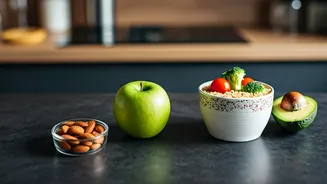
A truly balanced meal necessitates the inclusion of ample dietary fiber, and dal chawal is no exception. To achieve this, a simple yet effective addition is a fresh bowl of salad. Incorporating elements like cucumber, tomatoes, and other seasonal vegetables provides not only a refreshing crunch and vibrant flavors but also a substantial dose of essential vitamins and minerals. Furthermore, the fiber present in these raw vegetables plays a significant role in slowing down the digestive process. This gradual digestion promotes a more stable release of energy, preventing the characteristic energy slumps that can follow a carbohydrate-heavy meal. By ensuring your plate is adorned with fiber-rich components, you enhance both the nutrient density and the overall digestive health benefits of your dal chawal.
Smart Final Additions
For individuals striving to elevate their dal chawal into an exceptionally well-rounded and fitness-oriented meal, an additional smart component can be incorporated: Greek yogurt. Singh suggests that adding around 200 grams of Greek yogurt can be a game-changer. This addition brings a dual benefit: it significantly boosts the meal's protein content, further enhancing satiety, and introduces beneficial probiotics. These probiotics are vital for maintaining a healthy gut microbiome, which is increasingly recognized for its impact on overall well-being and digestion. Thus, by rounding off your meal with Greek yogurt, you not only enhance its nutritional completeness but also contribute positively to your gut health, making it a truly holistic dietary upgrade.