



Embrace the Plank
The plank is an incredibly versatile exercise that targets numerous muscle groups simultaneously. To perform a plank, begin by positioning yourself face
down, supporting your body on your forearms and toes. Ensure your body forms a straight line from head to heels, engaging your core muscles to maintain stability. Hold this position, focusing on keeping your back straight and your core tight. Beginners should aim to hold for at least 30 seconds, gradually increasing the duration as strength improves. The plank is excellent for strengthening the core, improving posture, and enhancing overall body stability. Incorporating planks into your workout routine, even for short durations, can lead to noticeable improvements in physical fitness and core strength. Remember to breathe steadily throughout the exercise and avoid sagging your hips or arching your back. Planks can be done anywhere, making them a perfect choice for those short on time. For enhanced effectiveness, vary the plank by introducing side planks to engage the oblique muscles, which will give a fuller workout.
Master the Squat
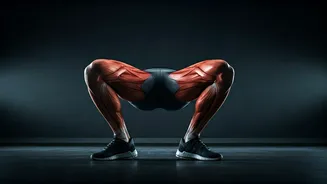
Squats are another fundamental exercise that can be done anywhere, offering a full-body workout. Stand with your feet shoulder-width apart, toes pointing slightly outward. Lower your body as if you're sitting in a chair, keeping your back straight and your core engaged. Aim to get your thighs parallel to the ground, or as low as comfortable. Ensure your knees don't extend past your toes. Drive back up to the starting position, squeezing your glutes as you stand. Beginners can start with 10-12 repetitions. Squats are an excellent way to strengthen your legs and glutes, improving overall lower-body strength and stability. Proper form is crucial to avoid injuries, so take your time and focus on technique. Squats are highly effective for building muscle mass and improving overall athletic performance. Furthermore, squat variations can be introduced as your fitness levels improve. Consider variations such as jump squats, which incorporate a jump at the top, or goblet squats, in which a weight is held close to the chest to increase intensity.
Yoga: Flexibility & Calm
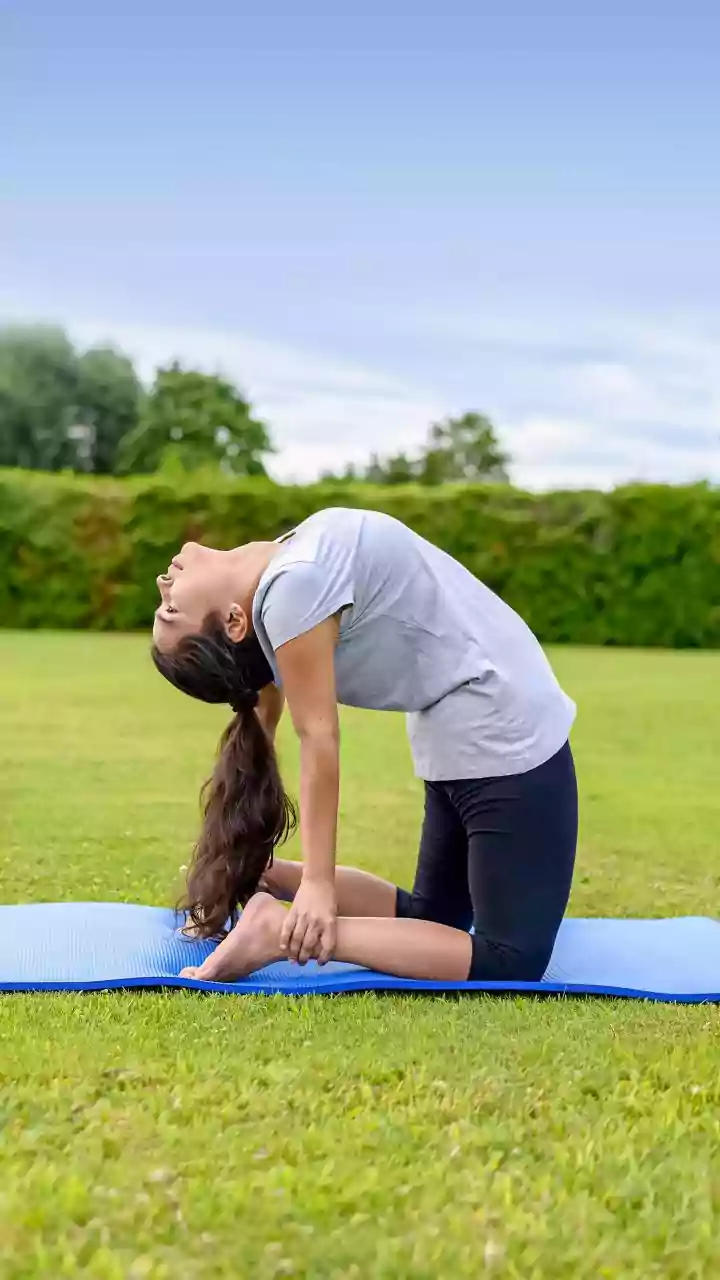
Yoga is an ancient practice that combines physical postures, breathing techniques, and meditation to promote physical and mental well-being. Incorporating even a few minutes of yoga into your daily routine can yield significant benefits. Begin with simple poses like the mountain pose (Tadasana), downward-facing dog (Adho Mukha Svanasana), or the child's pose (Balasana), focusing on proper alignment and deep breathing. Yoga improves flexibility, balance, and strength while reducing stress and promoting relaxation. There are numerous online resources available, including videos and guided sessions, making it easy to learn and practice yoga at home. Whether you're a beginner or an experienced practitioner, yoga can be adapted to suit your fitness level. Yoga is useful for stress reduction. This is highly beneficial in environments that tend to cause more stress, such as the busy schedules of many Indians.
Lunges: Leg Strength
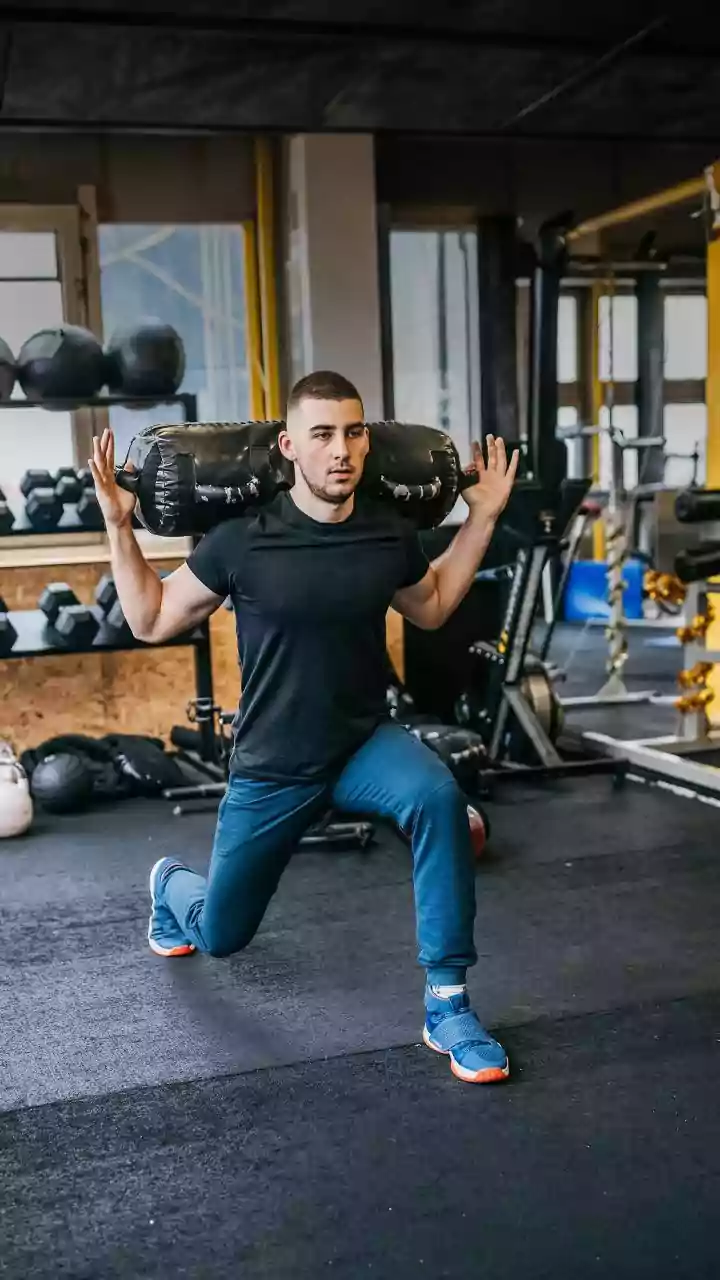
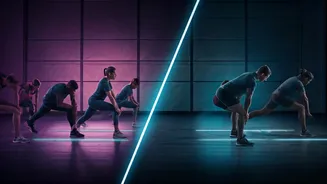
Lunges are an effective exercise for strengthening your legs and glutes. To perform a lunge, stand with your feet hip-width apart. Step forward with one leg and lower your body until your front knee is bent at a 90-degree angle, and your back knee nearly touches the floor. Keep your front knee aligned with your ankle, and your back straight. Push off your front foot to return to the starting position and repeat on the other side. Lunges can be modified by including lateral lunges or reverse lunges, targeting various muscle groups. Lunges are a practical exercise that can be done at home, or anywhere you have sufficient space. This makes it an ideal choice for busy individuals. Lunges enhance balance and coordination, making them a great exercise for functional fitness. Remember to maintain proper form to maximize effectiveness and minimize the risk of injury. Also consider holding weights while doing lunges, which is a good way of increasing the effectiveness of this exercise.
Jumping Jacks Energize
Jumping jacks are a classic cardio exercise that’s easy to do and requires no equipment. Stand with your feet together and your arms at your sides. Jump your feet out to the sides while raising your arms overhead. Jump back to the starting position, bringing your feet together and your arms to your sides. Jumping jacks are an excellent warm-up exercise and a great way to boost your heart rate and improve cardiovascular health. Aim for short bursts of jumping jacks throughout the day to boost energy levels. These are an incredibly accessible exercise and require minimal space, making them suitable for anyone, anytime. Jumping jacks burn a significant number of calories, making them a great choice for those looking to lose weight. Incorporating a few sets of jumping jacks in your daily routine can contribute to overall fitness and energy levels.
Push-ups: Upper Body
Push-ups are a fundamental exercise that strengthens the chest, shoulders, and triceps. Start in a plank position with your hands shoulder-width apart. Lower your body until your chest nearly touches the floor, keeping your back straight and your core engaged. Push back up to the starting position. Beginners can modify push-ups by performing them against a wall or on their knees. Regular push-ups enhance upper-body strength and endurance. Gradually increase the number of repetitions as you gain strength. Push-ups can be incorporated into a circuit training routine for a more complete workout. It's important to focus on maintaining proper form throughout the exercise to maximize effectiveness and avoid injuries. Push-ups are a highly accessible exercise, allowing you to train wherever you may be and are suitable for people of all fitness levels. As your strength increases, you can try variations like incline push-ups.
Cycling for Fitness
Cycling, whether outdoors or on a stationary bike, offers a fantastic cardiovascular workout that’s easy on the joints. Start with a moderate pace and gradually increase the intensity and duration of your rides. Cycling is an excellent way to improve your heart health, burn calories, and strengthen your leg muscles. It is suitable for people of all ages and fitness levels. It is also a very low-impact exercise, making it an excellent choice for individuals with joint problems. Cycling can be easily incorporated into daily routines by commuting to work or school by bicycle. It provides an enjoyable and practical method for staying active. Cycling can be performed in your own space, allowing you the flexibility to exercise when it best suits your schedule. Consider using intervals, such as alternating between high-intensity and low-intensity pedaling periods. This will increase the effectiveness of the exercise.
Crunches: Core Focus
Crunches are a widely practiced exercise used to strengthen the abdominal muscles. Lie on your back with your knees bent and your feet flat on the floor. Place your hands lightly behind your head, supporting your neck. Engage your core and lift your upper body towards your knees, keeping your lower back pressed into the floor. Avoid pulling on your neck. Slowly lower back down. Crunches effectively target the rectus abdominis muscles, which are key to core strength. Start with a few repetitions and gradually increase the number as you improve. Crunches can be adapted by performing variations such as reverse crunches or bicycle crunches. Ensure proper form to prevent strain on your neck and back. Crunches are very easy to perform and require no special equipment, making them suitable for those short on time. Crunches are a very useful tool for improving your posture and balance.
Burpees: Full Body
Burpees are a highly effective full-body exercise that combines a squat, push-up, and jump into one dynamic movement. Start in a standing position, then squat down and place your hands on the floor in front of you. Kick your feet back into a push-up position, perform a push-up, and then jump your feet back towards your hands. Jump up into the air, reaching your arms overhead. Burpees are an excellent way to improve cardiovascular fitness, strength, and endurance. Burpees also work all of the major muscle groups, making them a very time-efficient exercise. They are quite intense, and may not be suitable for beginners. Modify the exercise as needed by removing the push-up or the jump. Doing fewer burpees initially, or using the modifications, are effective ways to build towards doing the full exercise. Burpees are best incorporated into a high-intensity interval training (HIIT) routine for optimal results. They can be performed virtually anywhere and require no equipment.
Walking: Simple & Effective
Walking is a simple yet extremely effective exercise for improving overall health and fitness. Aim for at least 30 minutes of brisk walking most days of the week. Walking is easy to fit into your daily routine by taking the stairs instead of the elevator, or by walking during your lunch break. Walking improves cardiovascular health, strengthens your legs, and boosts your mood. Walking is also very low-impact, making it a great exercise for people of all ages and fitness levels. Vary your walking routines by incorporating hills, stairs, or varied terrain to increase the intensity and challenge your muscles. It is also an effective way to manage weight and burn calories. Walking can be done in any environment, whether it be outdoors or on a treadmill. Consider adding in a weighted vest, or holding weights in your hands. This will have a considerable impact on the effectiveness of the exercise.