






Moon Factory Dreams
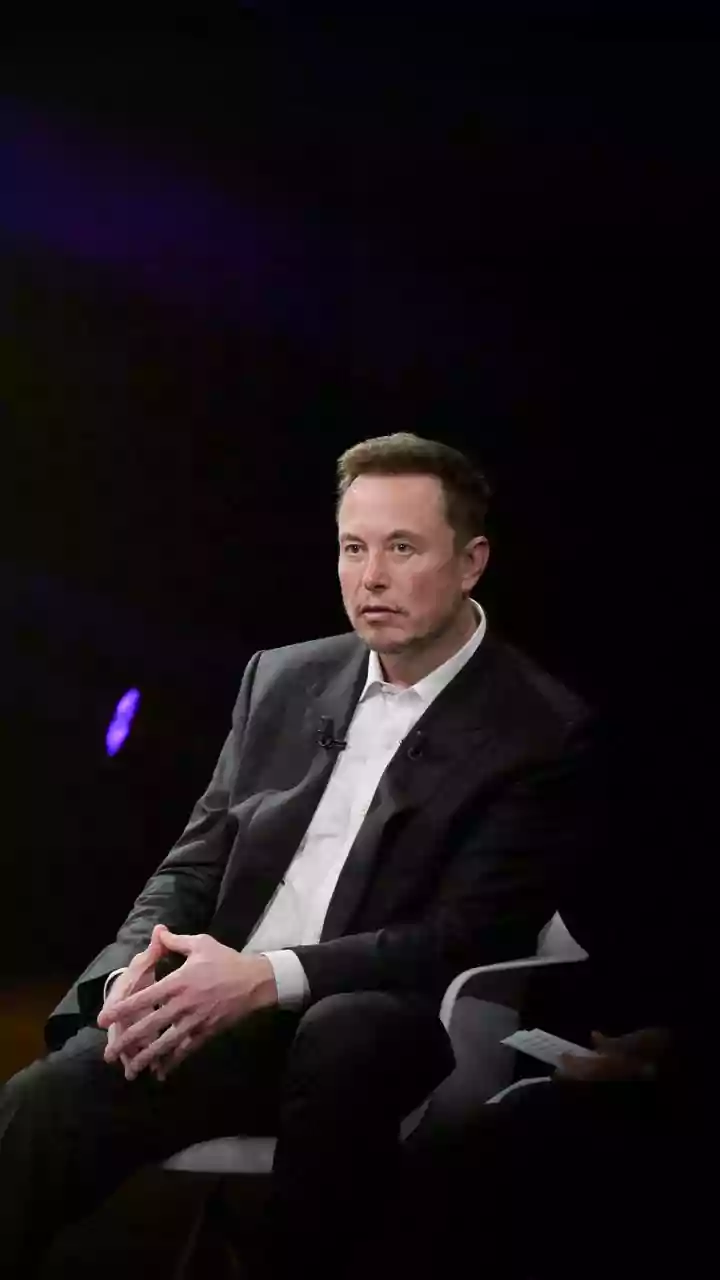
Elon Musk has put forth a forward-thinking concept centered around lunar capabilities, involving a manufacturing complex, AI-driven satellites, and a massive
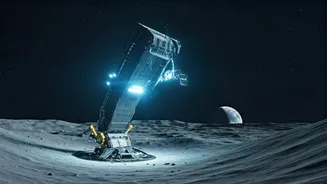
catapult system. Following SpaceX's recent integration of xAI in early February 2026, Musk conveyed in a company-wide memo his belief that the cosmos would soon become the most economical region for extensive AI computation. This efficiency is attributed to the virtually limitless solar energy available and the cooling benefits of a vacuum environment. Beyond this immediate prospect, he also articulated a more distant aspiration: to construct satellites directly on the moon and employ a powerful electromagnetic mass driver, akin to a colossal railgun, to propel these satellites into deep space trajectories. This groundbreaking approach could drastically alter how we expand our presence and technological reach beyond Earth.
The Lunar Supply Chain
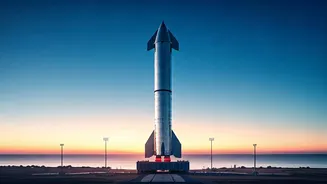
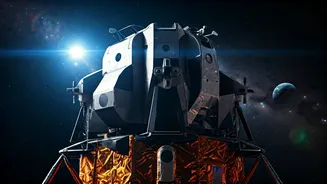
The envisioned lunar manufacturing process hinges on efficient cargo transport and resource utilization. Musk posits that SpaceX's Starship rocket, designed for significant payloads beyond Earth's orbit, is key. By enabling in-space propellant transfers and executing multiple lunar landings, Starship could ferry the substantial equipment necessary for establishing a self-sustaining manufacturing operation on the moon. Once the infrastructure is in place, factories could leverage local lunar resources to construct advanced AI satellites. Subsequently, an electromagnetic launcher situated on the lunar surface would accelerate these satellites, negating the need for conventional chemical rockets. This system holds the potential to deploy hundreds of terawatts of AI satellite capacity annually, a scale Musk connects to advancing human civilization according to the Kardashev scale, a metric for societal energy consumption.
A Concept's Long History
While this vision may seem like pure science fiction, the core idea of using electromagnetic launchers on the moon has a history spanning decades. Back in 1974, physicist Gerard O’Neill first proposed the use of lunar "mass drivers." His ambitious plan involved mining lunar materials and launching them into orbit to construct solar power satellites or even space habitats. O’Neill, collaborating with colleagues at MIT, even developed early prototypes of this technology. Subsequent explorations by organizations like the Space Studies Institute suggested that a mass driver roughly 520 feet in length could effectively propel materials off the lunar surface. The primary allure of such a system is the significant reduction in energy required compared to launching from Earth, thanks to the moon's weaker gravitational pull. Combined with solar power and the use of in-situ resources, the reliance on shipping fuel from Earth would be dramatically diminished, paving the way for a more sustainable space economy.
Modern Resonance
More recently, the concept of electromagnetic launchers for lunar applications has been revisited. In a 2023 report to the Air Force Office of Scientific Research, Robert Peterkin of General Atomics Electromagnetic Systems reignited interest in the idea. He argued that contemporary electromagnetic launchers, powered by the abundant solar energy available on the moon, could indeed support a resource-driven lunar economy. Peterkin pointed to the successful implementation of electromagnetic aircraft launch systems on U.S. Navy carriers as evidence that the technology can operate at scale, although adapting it for lunar use would necessitate considerable engineering advancements. The moon is known to possess vital resources like silicon, aluminum, iron, and titanium, alongside water ice found in perpetually shadowed craters. These materials are considered foundational for creating a self-sufficient space infrastructure, enabling a complete cycle of mining, refining, manufacturing, and launching, all without the immense energetic cost of escaping Earth's deep gravity well. Musk’s contribution to this long-standing mass driver discourse is the modern impetus: the burgeoning demand for AI computation.
AI's Lunar Role
With data centers on Earth facing increasing strain from power and cooling demands, several entities are exploring off-world computing solutions, including orbital and space-based data processing. Musk's proposal takes this concept a significant step further by integrating the moon directly into the supply chain for these advanced AI operations. While the current plan remains largely theoretical—Starship has yet to complete a crewed lunar mission, lunar factories are non-existent, and a functional kilometer-scale electromagnetic launcher on the moon is still speculative—the idea of a lunar catapult has been contemplated for over half a century. Musk's recent statements do not introduce the concept but rather bring it back into public discourse, this time linking it directly to the needs of artificial intelligence rather than solely to resource extraction or space colonization. The fundamental question shifts from feasibility—as engineers have long confirmed the physics are sound—to the practicalities of investment, construction, and ongoing maintenance of such a monumental undertaking on the lunar surface.