






Geographic Significance & Layout
Nestled within the awe-inspiring Western Ghats, the Wayanad Wildlife Sanctuary stands as a vital protected area in Kerala, celebrated for its abundant
biodiversity and rugged forest terrain. Spanning a considerable 344.44 sq km, the sanctuary isn't a single contiguous block but is divided into two distinct forest segments: Muthanga in the southern part and Tholpetty in the northern section. These two pockets, located approximately 18 km from Sulthan Bathery (Muthanga) and near Thirunelli close to the Karnataka border (Tholpetty), are integral to the larger Nilgiri Biosphere Reserve. They act as a crucial ecological corridor, facilitating the seamless movement of wildlife between protected areas in Kerala, Karnataka, and Tamil Nadu. Muthanga shares its borders with Karnataka's Bandipur Tiger Reserve and Tamil Nadu's Mudumalai Wildlife Sanctuary, and also connects with Kerala's own Sulthan Bathery and Kurichiat forest ranges. Tholpetty, conversely, is adjacent to Karnataka's Nagarhole range, underscoring the sanctuary's strategic importance in maintaining inter-state wildlife connectivity and preserving large-scale ecological integrity.
Conservation & Historical Roots
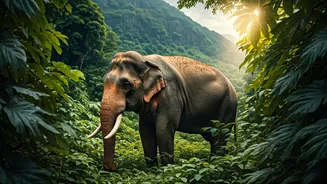
Established as a wildlife sanctuary in 1973, this region is a cornerstone of conservation efforts, notably participating in Project Elephant. The sanctuary's dense forests are frequently traversed by herds of elephants during their seasonal migrations, highlighting its critical role in supporting these majestic creatures. Beyond its ecological significance, Wayanad Wildlife Sanctuary is steeped in history. These very forests once provided refuge to Pazhassi Raja, a legendary figure in Indian history who fiercely resisted British colonial rule. The sanctuary's declaration in 1973 marked a pivotal moment in safeguarding its natural heritage and historical legacy, ensuring the protection of its diverse ecosystems and the species that inhabit them for future generations to appreciate and benefit from.
Topography & Climate Dynamics
The sanctuary's landscape is characterized by its undulating hills, deep forested valleys, and expansive elevated plateaus, which contribute significantly to its scenic beauty. The highest point, Karottimala, reaches an elevation of approximately 3,800 feet above sea level, while other hill ranges vary between 2,100 and 2,600 feet. This varied topography plays a key role in creating a consistently cool and pleasant climate throughout the year. Winter temperatures can dip to around 13°C, offering a refreshing respite, while summer highs rarely exceed 32°C. The region receives substantial rainfall, averaging about 2,200 mm annually, with the most intense showers occurring from June to August. This abundant precipitation is vital for sustaining the lush forests and maintaining the perennial water sources that are essential for the survival of the sanctuary's flora and fauna.
Flora, Fauna, and Avian Wonders
Wayanad Wildlife Sanctuary is cloaked in a vibrant tapestry of dense, green forests, featuring a mix of dry and moist deciduous woodlands alongside pockets of evergreen growth. Tall bamboo clusters, open grasslands, and plantations of teak and rosewood trees dot the landscape, interspersed with marshy areas and flowing streams that add to its varied character. This rich environment supports an impressive array of wildlife. Visitors often witness herds of elephants, deer, and sambar grazing in forest clearings. Other inhabitants include Indian bison, langurs, sloth bears, and the elusive slender loris. Deeper within the forests, apex predators like tigers and leopards are known to roam. The sanctuary is also a haven for reptiles, with monitor lizards and various snake species thriving, while its water bodies are home to turtles, fish, and crocodiles. Birdlife is particularly spectacular, boasting over 200 recorded species. The air is filled with their calls, and flashes of colour mark the presence of birds like the striking blue-bearded bee-eater, one of the largest of its kind, showcasing the sanctuary's immense natural wealth.
Exploring the Sanctuary
One of the most engaging ways to experience the Wayanad Wildlife Sanctuary is through a guided jeep safari, operated by the forest department. These excursions, lasting about two hours, are meticulously planned for early mornings and late afternoons, periods when wildlife is most active. Accompanied by trained naturalists, visitors traverse designated tourism zones within Muthanga and Tholpetty. These safaris offer an unparalleled opportunity to observe animals in their natural habitats while strictly adhering to conservation guidelines. To ensure the preservation of the core ecological areas, access to the inner regions, extending nearly 25 km, is exclusively permitted for forest officials and researchers. This measure minimizes human interference, safeguarding the sanctuary's delicate balance and contributing to sustained ecological health. Entry to the sanctuary requires prior permission, with visitor access thoughtfully managed to preserve its pristine environment.
Optimal Visiting Seasons
The prime time to visit Wayanad Wildlife Sanctuary is between October and March. During these months, the weather is refreshingly cool and pleasant, creating ideal conditions for both jeep safaris and general wildlife observation. The forest tracks are more accessible, and the likelihood of spotting animals within the designated tourism zones is notably higher. The monsoon season, from June to September, brings heavy rainfall, which significantly enhances the lush greenery. However, this period might see restrictions on safari operations and road access due to the intensity of the rains. The warmer months of April and May, while hotter, can still offer rewarding early-morning safari experiences, making the shoulder season a viable option for dedicated wildlife enthusiasts seeking a quieter visit.
Traveler's Guide: Reaching Wayanad
For travelers planning a visit to Wayanad Wildlife Sanctuary, reaching the destination is convenient through various modes of transport. By air, the nearest airport is Calicut International Airport (CCJ), situated approximately 90–95 km away. From Calicut, visitors can easily hire taxis or board buses to reach the towns of Sulthan Bathery or Mananthavady, from where a short drive leads to the sanctuary's entry points at Muthanga or Tholpetty. Wayanad itself does not have a railway station. The closest major railhead is Kozhikode Railway Station (CLT), which is well-connected to major cities across India. From Kozhikode, road transport options are readily available to reach Wayanad and subsequently the sanctuary. By road, Wayanad boasts excellent connectivity with major cities like Bengaluru (280 km), Mysuru (140 km), Kozhikode (85 km), and Kannur (120 km). Muthanga is easily accessible from Sulthan Bathery, while Tholpetty can be reached via the Mananthavady–Thirunelli Road, making the sanctuary a reachable destination for many.