





The Earth's Ancient Gemstone
Zircon boasts an incredible pedigree as one of the planet's oldest minerals, with geological records stretching back over four billion years. This natural
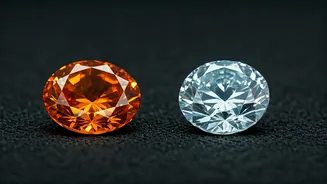
gemstone is extracted directly from the earth and is chemically known as zirconium silicate. Its allure lies in its remarkable refractive index, which allows it to capture and reflect light with a dazzling, diamond-like sparkle. A truly unique characteristic of zircon is its double refraction; when light enters the stone, it splits into two distinct rays, causing the rear facets to appear doubled, a phenomenon absent in diamonds. While the colorless variety serves as a popular diamond substitute, zircon also presents in captivating earthy hues like yellow, brown, and red, and can be transformed into a vibrant blue through heat treatment. However, its durability is moderate, ranking between 6.5 and 7.5 on the Mohs scale, making it susceptible to chipping if subjected to sharp impacts.
Lab-Created Brilliance: American Diamond
In India, the term 'American diamond' typically refers to cubic zirconia (CZ), a synthetic stone meticulously crafted in laboratories to mimic the appearance of a diamond. Unlike zircon, it has no natural origin and is produced from zirconium dioxide under controlled conditions. This precise manufacturing process results in an almost invariably flawless stone, free from any internal inclusions or surface imperfections. American diamonds exhibit single refraction, producing a sharp, clean sparkle, and are renowned for their intense 'fire'—the vivid rainbow-colored flashes that dance within the stone when light strikes it, often exceeding the brilliance of natural diamonds. Their durability is a significant advantage, with a Mohs hardness rating of 8 to 8.5, making them exceptionally resistant to wear and tear, ideal for daily use. The mass production of cubic zirconia contributes to its affordability, solidifying its status as a dominant material in the costume jewelry market.
Distinct Origins, Different Behavior
Despite both stones often serving as accessible alternatives to genuine diamonds, the similarities between zircon and American diamond (cubic zirconia) cease almost entirely at this point. Their fundamental differences span their origins, chemical structures, and how they perform when worn. Understanding these distinctions is crucial for anyone looking to make an informed purchase. Zircon is a natural mineral, an ancient artifact of the Earth, while American diamond is a product of human ingenuity in a laboratory. This core difference in genesis leads to variations in their physical and optical properties. While both can sparkle, the way they interact with light and their resistance to damage are marked by these divergent backgrounds, making it vital for consumers to recognize they are selecting entirely different materials, each with its own unique appeal and characteristics.