
AI Risk Hedge
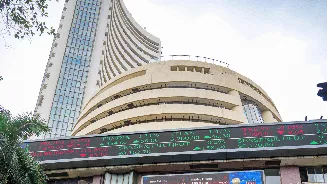
Global investment funds are increasingly viewing Indian stocks as a crucial defense against the potential risks associated with artificial intelligence.
This shift in perspective arises from the belief that India's market offers a unique combination of growth potential and stability, making it an attractive option for diversifying portfolios. As AI technologies continue to advance, investors are seeking markets that can withstand economic fluctuations and technological disruptions. Indian stocks, with their diverse sectors and robust economic fundamentals, are seen as a safe haven in this evolving landscape. This trend reflects a broader move towards prioritizing investments that can maintain value amid uncertainties.
Rupee's Weakening Trend
The Indian rupee has been experiencing downward pressure, primarily due to substantial corporate dollar outflows that are overshadowing any positive impacts from the Federal Reserve's policies. These outflows represent a notable trend, reflecting how international companies are re-evaluating their positions in the Indian market. Several factors could contribute to this trend. These include strategic investments, debt repayments, and repatriation of profits. As the dollar outflows increase, the rupee's value diminishes, influencing import costs and inflation. This situation necessitates careful management to ensure the stability of the Indian economy. Monitoring these flows and creating suitable policies are crucial for maintaining economic balance.
Sectoral Tariff Impact
Beyond the broader market trends, specific sectors within the Indian economy are adapting to external pressures like tariffs. The impact of tariffs on various sectors is significant, creating both challenges and opportunities. One sector that has been particularly affected is the shrimp industry. Tariffs imposed by international markets often make Indian exports less competitive. In response, these sectors have to innovate. Strategies include seeking new markets, improving efficiency to cut costs, and diversifying their product range to adapt to the changing global market. This highlights the adaptability of Indian businesses and their continuous efforts to navigate economic uncertainties. Understanding these sector-specific challenges is essential for anticipating the overall economic performance.
Current Market Mood
The prevailing sentiment in the market is crucial to evaluate when considering the state of the Indian stock market. Market mood is a complex measure shaped by a combination of economic indicators, global events, and investor psychology. Factors contributing to the current sentiment include the rupee's weakening, the potential benefits and risks associated with AI, and the impact of tariffs on diverse sectors. Moreover, fluctuations in the stock prices of major companies like Tata Motors and Adani Power provide further clues regarding the market dynamics. Investors are advised to watch these indicators and adapt their strategies to changes. Staying informed about the market sentiment is crucial for making well-informed investment decisions.