
GRB 250702B Unveiled
Gamma-ray bursts (GRBs) are the most energetic explosions witnessed since the Big Bang. Typically, these events are short-lived, lasting only a few minutes.
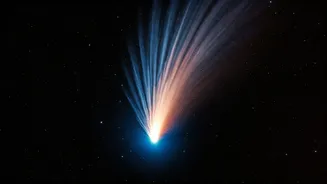
However, the GRB 250702B, detected on July 2, 2025, by NASA's Fermi Gamma-ray Space Telescope, broke all records. Its extraordinary seven-hour duration immediately set it apart from approximately 15,000 other GRBs previously observed. The prolonged duration was not the only intriguing aspect; the burst also exhibited repeating explosive bursts, extending its effects over several days. This unique behavior allowed astronomers an unparalleled chance to investigate such an unusual event, offering a deep dive into the nature of these cosmic phenomena. The data collected suggests that this GRB could represent an entirely new class of cosmic explosion.
A Prolonged Cosmic Blast
The remarkable seven-hour duration of GRB 250702B is the standout feature, setting a new benchmark in the study of these energetic events. Previous GRBs typically flash and fade within minutes, making GRB 250702B a significant outlier. This extended lifespan enabled scientists to gather more data and observe the burst's evolution over a much longer period. The repeating nature of the bursts further complicated the picture, suggesting a complex mechanism at play. These recurring explosions were not random; they pointed to an underlying process that continued to fuel the event over several days. This prolonged and repetitive behavior provided a wealth of information for astronomers, opening the door to new insights into the inner workings of GRBs and the cosmic events that trigger them.
Black Hole's Role Suspected
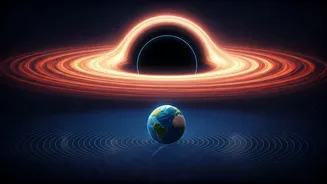
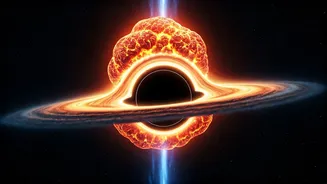
One of the leading theories surrounding the cause of GRB 250702B suggests the involvement of an intermediate-mass black hole. These black holes are less common than their supermassive or stellar-mass counterparts. Scientists believe this specific GRB may have resulted from such a black hole consuming a star. The process of a black hole tearing apart a star is a violent and chaotic event, which could account for the energy released during the GRB. The repeating bursts might indicate the black hole's ongoing interaction with stellar material, with each burst representing a fresh feeding frenzy. This scenario provides a compelling explanation for the burst’s unusual characteristics and suggests that the event offers a unique chance to study the behaviors of intermediate-mass black holes, which are otherwise hard to observe directly. Scientists will continue to analyze the data to confirm the exact nature of the black hole and its relationship to the GRB.
Unique Study Opportunity
The extended duration and unusual behavior of GRB 250702B provide scientists with an exceptional chance to study GRBs in greater detail. Most GRBs are too fleeting to permit in-depth analysis. However, the lengthy nature of this event enabled researchers to collect a substantial amount of data about its various phases and characteristics. Detailed observations could provide invaluable information regarding the mechanisms that trigger these cosmic explosions. Because of its longevity, astronomers could analyze multiple wavelengths of light emitted during the burst, which is a rare occurrence. This allowed them to map the changes within the burst's environment. The ability to monitor the repeating explosions helped the scientists to explore the burst's ongoing evolution over several days. Such insights could lead to a deeper understanding of the processes driving the most powerful explosions in the universe.
A New Cosmic Explosion?
The unique properties of GRB 250702B have led scientists to speculate that it might represent an entirely new type of cosmic explosion. The combination of the long duration and the recurring bursts differs significantly from the characteristics of other observed GRBs. This suggests that the processes responsible for this explosion could be distinct from those that trigger more typical gamma-ray bursts. The discovery challenges existing models of GRBs and pushes astronomers to rethink the possible mechanisms that give rise to these phenomenal events. If this hypothesis is correct, then GRB 250702B represents a new class of cosmic phenomenon. Additional research will be needed to better understand the underlying physics that governs these unique explosions. Further studies may focus on the characteristics of this event, and whether similar events have occurred elsewhere in the universe.