







Divided Responsibilities
In India's food safety framework, a clear division of labor exists, with the Food Safety and Standards Authority of India (FSSAI) serving as the national
policy-setter and standard-bearer. This apex body is tasked with formulating regulations and overseeing the broader strategy for food safety across the country. However, the day-to-day operational brunt of ensuring food businesses comply with these standards falls squarely on the shoulders of state food safety authorities. These state-level bodies are responsible for the crucial functions of issuing licenses to food operators, conducting regular inspections of establishments, and taking necessary enforcement actions when violations are found. According to sources familiar with the regulatory structure, a staggering 98% of food businesses operate under the direct purview of these state authorities, underscoring their pivotal role in the actual implementation of food safety laws and practices.
Accountability Debates
Despite the explicit delineation of duties, the dual system of food safety governance in India has ignited a persistent debate regarding accountability. While states are on the front lines of enforcement, experts contend that FSSAI, as the overarching national regulator, cannot abdicate its responsibility for the ultimate outcomes of food safety. Past high-profile incidents, such as the widely publicized issues surrounding instant noodles and recurring concerns about the quality of products like baby food and spices, have repeatedly placed the regulator under a microscope. These controversies have exposed not only the gaps in state-level enforcement but also potential weaknesses in central oversight, standard setting, and rapid response mechanisms. Government insiders acknowledge that the central government has, on multiple occasions, intervened to tighten national norms, reinforcing FSSAI's position as the principal authority ultimately accountable for the nation's food safety.
Intensified Enforcement Activity
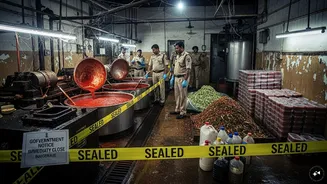
The fiscal year 2025–26 has witnessed a marked acceleration in food safety enforcement activities, primarily propelled by the diligent efforts of state authorities. During this period, an impressive 3,97,009 inspections were carried out across various food establishments nationwide. Furthermore, a substantial 1,65,747 food samples were subjected to analysis up to the third quarter of the fiscal year, with a notable 17.16% of these samples failing to meet the required compliance standards, leading to subsequent regulatory interventions. The legal enforcement mechanisms have also been significantly bolstered. Data indicates that 23,580 adjudication cases were resolved, resulting in 1,756 criminal convictions. Substantial financial penalties, totaling ₹154.87 crore, were imposed, and 945 food recalls were initiated to proactively prevent unsafe products from reaching consumers, showcasing a robust and active approach to safeguarding public health.
States Lead the Charge
The surge in enforcement actions clearly highlights the indispensable role that Indian states play in the practical application of food safety legislation. Commissioners of Food Safety have spearheaded these crucial enforcement initiatives at the state level, while Designated Officers have managed the critical processes of licensing and adjudication within their respective districts. The frontline of this effort comprises Food Safety Officers, who are instrumental in conducting on-ground inspections, meticulously collecting samples for testing, and diligently investigating consumer complaints. For civil infractions, the authority to impose penalties and mandate corrective measures rests with Additional District Magistrates, who serve as Adjudicating Officers, ensuring that violations are addressed promptly and effectively at the local level.
Expanding Reach
A significant achievement during the review period has been the strategic effort to integrate the informal food sector into the formal regulatory fold. Over 10 lakh street food vendors have now been brought under the regulatory framework, a move designed to elevate hygiene standards and ensure safer practices at the grassroots level. To streamline compliance for businesses, licensing requirements have been made more adaptable by adjusting turnover thresholds. Simultaneously, FSSAI has been actively enhancing the nation's testing capabilities by formally recognizing 18 laboratories, including advanced facilities situated in Singtam and Tirumala, thereby bolstering the overall capacity to detect and identify food contamination effectively.
Collective Oversight
These developments collectively paint a picture of a progressively maturing regulatory landscape in India, characterized by a shared commitment between the central government and the states in ensuring food safety. However, seasoned observers emphasize that accountability should not be diluted or fragmented across different tiers of governance. A key perspective shared is that while the operational framework is inherently collaborative, the ultimate responsibility remains collective. FSSAI, in its capacity as the national regulator, cannot disengage from its pivotal role. As enforcement measures continue to intensify and consumer awareness and expectations rise, the scrutiny directed at both state authorities and the central regulator is poised to increase. Ultimately, for the citizens of India, the jurisdiction of who enforces food safety is secondary to the paramount concern of trusting the system that guarantees the safety of the food they consume daily.