




Festival Significance
Chaitra Navratri marks a pivotal moment in the Hindu calendar, heralding the commencement of the Vikram Samvat new year. Celebrated globally by devotees,
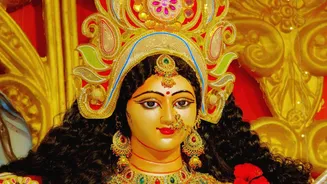
this festival spans nine days dedicated to the worship of the nine distinct manifestations of Goddess Durga. Each form embodies potent virtues such as power, courage, serenity, purity, fearlessness, wisdom, protection, and spiritual advancement. The festival is deeply rooted in the triumph of righteousness over malevolence, symbolized by Goddess Durga's victory over the demon Mahishasura. It is a period of immense devotion, purity, and gratitude towards the divine feminine, culminating in the celebration of Ram Navami on the final day. Many observe fasts and adhere to a sattvik lifestyle, dedicating these days to spiritual introspection and seeking the Goddess's blessings.
Ghatsthapana Timings
The auspicious commencement of Chaitra Navratri in 2026 is marked by the Ghatsthapana ritual, signifying the invocation of Goddess Durga. The primary Ghatasthapana Muhurat is scheduled for March 19, 2026, from 06:52 AM to 07:43 AM. An additional auspicious window, the Abhijit Muhurat, falls between 12:05 PM and 12:53 PM on the same day, offering an opportune time for devotees. The Pratipada Tithi, which initiates the festival, begins at 06:52 AM on March 19th and concludes at 04:52 AM on March 20th. The Meena Lagna, considered highly favorable for such ceremonies, starts at 06:26 AM on March 19th and extends until 07:43 AM on March 20th. Notably, the Ghatasthapana Muhurta in 2026 will occur during the Dvi-Svabhava Meena Lagna, and due to a skipped Pratipada, it is observed on Amavasya Tithi, emphasizing the need for precise adherence to the timings.
Daily Devotional Schedule
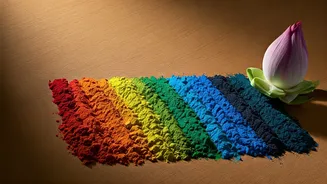
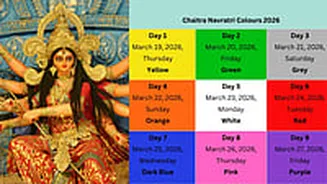
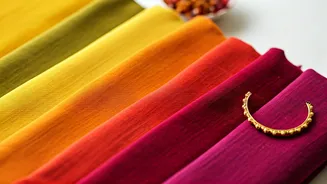
Chaitra Navratri 2026 unfolds over nine dynamic days, each dedicated to a specific form of Goddess Durga and associated with a vibrant color. Day one, March 19th, honors Maa Shailputri and is represented by the color Yellow. This is followed by Day two, March 20th, dedicated to Maa Brahmacharini, in Green. The subsequent days feature Maa Chandraghanta (Grey) on March 21st, Maa Kushmanda (Orange) on March 22nd, Maa Skandamata (White) on March 23rd, Maa Katyayani (Red) on March 24th, Maa Kaalratri (Royal Blue) on March 25th, and Maa Mahagauri (Pink) on March 26th. The final day, March 27th, is dedicated to Maa Siddhidatri, often depicted as a form of Maa Skandamata, in Purple, culminating in the celebration of Ram Navami. Adhering to this daily schedule allows devotees to connect deeply with each aspect of the Goddess.
Puja Rituals & Offerings
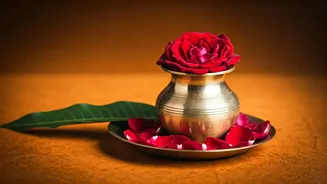
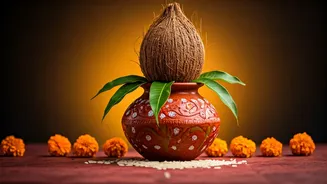
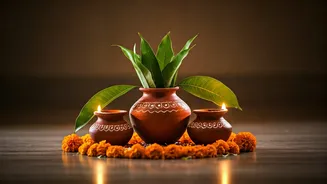
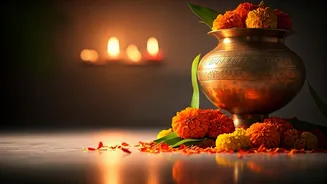
The initial day of Navratri is consecrated with the Ghatsthapana ritual, a foundational practice for the entire festival. Devotees are encouraged to purify the designated space for the altar before establishing an idol of Goddess Durga. The first day specifically venerates Maa Shailputri, considered the daughter of the Himalayas. Central to this ritual is the placement of a kalash (sacred pot), topped with a coconut, signifying prosperity and divine presence. Lighting a lamp with pure ghee is customary to invoke the Goddess. Adorning the idol with 'shringar' (traditional adornments) and garlands is also a significant part of the worship. Chanting sacred mantras is essential to invite the divine energy of Maa Durga. Reciting the Durga Saptashati, or at least its key components like the Kavach, Argala, and Keelak, is highly recommended. Post-fasting observances often include consuming fruits, and for some, meals prepared with ingredients like kuttu (buckwheat flour), fried potatoes, and aloo ki sabzi, always seasoned with rock salt (sendha namak).