




Celebrating Makar Sankranti
Makar Sankranti, a significant harvest festival, marks the sun's transition into the zodiac sign of Makara (Capricorn). Celebrated with immense enthusiasm
across India, the festival symbolizes new beginnings and the welcoming of warmer days. It's a time for families and communities to come together, fly kites, and, of course, enjoy a feast of traditional foods. The festival typically falls in mid-January, and its timing is based on the solar cycle, unlike many other festivals that follow the lunar calendar. This results in the date of Makar Sankranti being relatively fixed, making it a reliable marker on the Indian festive calendar. The festivities and culinary traditions vary by region, but the spirit of joy, sharing, and gratitude for the harvest remains consistent throughout the country.
Easy Festive Recipes
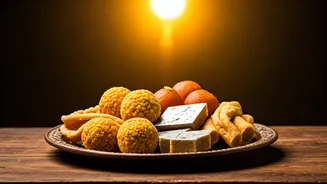
Makar Sankranti celebrations often involve preparing a variety of dishes, many of which are steeped in tradition and regional variations. These recipes are perfect for those wanting to dive into festive cooking, even with limited time or experience. You could try making til laddu (sesame seed balls), a sweet treat symbolizing prosperity and good health. These are easily made by combining sesame seeds with jaggery and a touch of ghee. Another staple is chikki, a brittle made from peanuts and jaggery. This crunchy snack is easy to customize with different nuts. Finally, there's the traditional khichdi, a savory porridge made with rice and lentils, often eaten during the festival as a sign of gratitude for the harvest.
Til Laddu: Sweetness Personified
Til laddu are a quintessential part of Makar Sankranti celebrations, symbolizing good health and prosperity. The recipe typically involves lightly roasting sesame seeds to enhance their flavor and then mixing them with jaggery syrup. The jaggery, often in its unrefined form, adds a distinct sweetness and earthy undertones. A touch of ghee is added to bind the mixture and provides a rich texture. The mixture is then shaped into small, round balls while still warm, creating the iconic til laddu. This simple dessert is not only delicious but also carries cultural significance, representing the sweetness of life and the importance of sharing during the harvest season. Variations include adding nuts or spices for an added layer of flavor.
Chikki: A Crunchy Delight
Chikki, a popular brittle made from peanuts and jaggery, is another favorite during Makar Sankranti. Peanuts are typically dry roasted until they become crispy, releasing their natural oils and enhancing their flavor. The jaggery is melted into a syrup, often with a hint of ghee for richness, and then the peanuts are stirred into this bubbling mixture. The hot mixture is poured onto a flat surface and allowed to cool and harden. This mixture then becomes chikki. It is a delightful combination of textures, with the crunchiness of the peanuts contrasting the sweetness and slight chewiness of the jaggery. It is also an easily customizable treat, as you can incorporate other nuts and seeds to create unique variations, such as adding almonds, cashews, or even sesame seeds.
Khichdi: A Comfort Food
Khichdi is a simple yet nourishing dish that holds a special place in the culinary traditions of Makar Sankranti. It is often prepared with rice and lentils, though regional variations can include other grains and vegetables. The rice and lentils are cooked together, typically with spices such as turmeric, cumin, and asafoetida. The dish is usually cooked with ghee, which lends a rich flavor, and can be garnished with fresh coriander leaves. Khichdi is not only easy to digest but also offers a balanced nutritional profile, making it a perfect meal for the festive season. It's a symbol of simplicity and abundance, representing the generosity of the harvest.