







Death Valley's Fiery Grip
Death Valley, situated in California, USA, is globally acknowledged as the planet's most intensely hot region. This arid expanse holds the distinguished
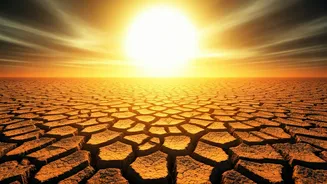
Guinness World Records title for the highest temperature ever documented: a staggering 56.7 degrees Celsius, recorded on July 10, 1913. Far from being a typical desert landscape, Death Valley features the lowest elevation in North America at its Badwater Basin, dipping 282 feet below sea level. This unique topographical characteristic plays a pivotal role in trapping heat, creating an oven-like environment that contributes significantly to its extreme thermal readings. The interplay of its geography and climate makes it a compelling subject for understanding the limits of Earth's temperatures.
Geographic Heat Magnifiers
The extreme temperatures experienced in a location are not accidental; they are a complex result of interplay between its physical landscape and atmospheric conditions. As confirmed by Guinness World Records, several specific geographical and topographical elements converge to drive these intense heat measurements. The very formation of the land, including its elevation relative to sea level and the surrounding landforms, can create natural heat traps. These features can prevent cooler air from circulating, leading to a sustained build-up of heat. Understanding these geological influences is key to comprehending why certain areas on Earth become so exceptionally hot, exceeding what might be expected from general climate patterns alone.
Indigenous Resilience and Adaptation
Within the vast expanse of the Mojave Desert, which encompasses Death Valley, the Timbisha Shoshone Native American community has a deep historical connection, with ancestral roots firmly planted in this challenging environment. Although only a small number of individuals currently reside year-round within the protected boundaries of Death Valley National Park, their presence signifies a long history of adaptation to extreme conditions. These indigenous peoples have developed profound knowledge and unique survival strategies over generations, demonstrating incredible resilience in a place that many would find uninhabitable. Their continued presence offers a testament to human ingenuity and the ability to thrive even in the most formidable climates.
Global Heat Hotspots
While Death Valley holds the record for a single hottest spot, other regions globally contend with persistent extreme heat. A compilation by World Population Review highlights the top five hottest countries, underscoring that intense temperatures are a widespread phenomenon. Senegal ranks first on this list, followed closely by Mali in second place. Burkina Faso secures the third position, while Djibouti and Gambia round out the top five in fourth and fifth, respectively. These nations, primarily located in arid or semi-arid zones, frequently experience searing heat that profoundly impacts daily life and requires significant adaptation strategies from their inhabitants.
Living with Extreme Heat
Navigating life in regions defined by extreme heat presents significant health challenges and necessitates profound lifestyle adjustments. Individuals residing in these scorching environments have developed a repertoire of adaptive behaviours to mitigate the risks associated with prolonged exposure to high temperatures. Common strategies include seeking refuge indoors during the hottest parts of the day, meticulously maintaining hydration by consuming ample fluids, and opting for lightweight, breathable clothing. Furthermore, work schedules are often recalibrated to avoid peak heat hours, ensuring that strenuous activities are conducted during cooler periods. These conscious changes are vital for well-being and survival in Earth's hottest locales.