






Beyond Memorization's Grasp
Contemporary children face a novel challenge: not a deficit in learning capacity, but a struggle to maintain sustained interest. This has catalyzed a significant
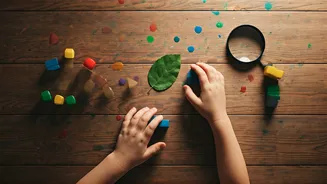
evolution in parental perspectives on early childhood education over recent years. The discourse is gradually shifting away from solely focusing on memorization drills and predefined academic outcomes. Instead, the emphasis is increasingly placed on the nuanced ways children genuinely engage with their learning material. In many households, the traditional image of a child diligently working on worksheets at a desk is being replaced by more dynamic scenarios. Consider a child involved in baking, actively measuring ingredients and pondering the science behind dough rising, or a young builder constructing a city from cardboard, wrestling with the engineering principles of bridge stability. These are not abstract lessons but tangible, often delightfully messy, interactions with the world.
The Rise of Active Engagement
This profound shift towards experiential learning is not a random occurrence; it's a direct response to the environment today's children inhabit. They are growing up immersed in highly stimulating contexts, characterized by ubiquitous digital screens, rapid content cycles, and a constant barrage of sensory input. In such a landscape, traditional didactic methods of instruction often struggle to capture and retain attention for extended periods. Parents are acutely aware of this disconnect, not interpreting it as a child's inability to learn, but rather as a mismatch between outdated pedagogical approaches and modern reality. Nitika Dial, Co-Founder of Taabur X WonderLab, articulates the growing importance of experiential learning, providing compelling reasons for parents to embrace this methodology. This approach fundamentally replaces passive reception of information with active participation, transforming abstract concepts into hands-on explorations and fostering a deeper, more intuitive understanding.
Nurturing Essential Life Skills
The current pedagogical transformation signals a broader redefinition of parental expectations regarding early development. There's a growing recognition that preparing a child for formal schooling is only one facet of early learning; cultivating crucial life skills is equally, if not more, important. These vital competencies include fostering intrinsic curiosity, enhancing communication abilities, developing robust problem-solving strategies, and building unwavering self-confidence. These are not skills acquired through mere repetition or passive instruction; they blossom organically through active exploration, genuine interaction, and the trial-and-error inherent in experiential activities. This evolution underscores a move towards holistic child development, where learning is intrinsically linked to personal growth and practical application in everyday life.
Integrating Learning into Life
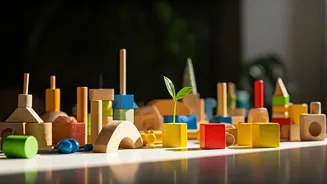
The trajectory of modern parenting styles is also significantly shaping this new educational paradigm. Many families are actively seeking a more balanced lifestyle, especially given increasingly demanding schedules and extensive screen time. Consequently, a conscious decision is being made to substitute passive screen engagement with more enriching activities such as building with blocks, participating in imaginative storytelling games, or undertaking simple do-it-yourself projects at home. This innovative mindset extends to reimagining everyday routines. A routine trip to the grocery store can become an engaging counting exercise, the kitchen transforms into a laboratory for measurement and observation, and a park visit evolves into an exploration of nature and physical coordination. Learning is no longer confined to designated 'study times'; it is seamlessly woven into the fabric of daily existence, making every moment an opportunity for growth and discovery.
Redefining Success Metrics
A significant paradigm shift is also evident in how parents now define success for their children. The traditional benchmarks, often centered on 'what the child has memorized,' are gradually giving way to an assessment of 'how the child thinks.' The focus is moving from the simplistic 'Did you get the answer right?' to the more insightful 'How did you figure it out?' This evolution signifies a deeper appreciation for the cognitive processes and problem-solving methodologies children employ. Experience-led learning doesn't aim to replace conventional educational structures but rather to complement them. By adding depth through context and active participation, it makes classroom learning more tangible, relatable, and ultimately, more memorable. This approach bridges the gap between theoretical knowledge and practical application, reinforcing academic concepts through real-world relevance.
The Power of Playful Exploration
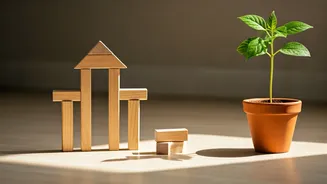
The inherent flexibility of experience-led learning is a key factor in its growing efficacy. It eschews a one-size-fits-all approach, recognizing that children can learn effectively through a diverse range of activities, including drawing, building, conversational exchanges, and hands-on experimentation. While the pathways to learning are open-ended, the learning outcomes themselves remain purposeful and targeted. This pedagogical philosophy is actively reshaping the design of learning environments, marking a distinct departure from content-heavy formats towards experience-centric ecosystems. In these vibrant settings, sustained engagement takes precedence over passive instruction, and innate curiosity is viewed as the fertile ground for discovery rather than a point of completion. Ultimately, this transformative approach is rooted in a fundamental truth: children acquire knowledge most effectively not through being told what to know, but through the empowering act of doing. The most enduring lessons are frequently those learned through direct experience, not solely through written or spoken word.