




The Heart of Chaunsa
Uttarakhandi cuisine is celebrated for its unpretentious yet deeply flavorful dishes, emphasizing the intrinsic taste of each component. Among these comforting
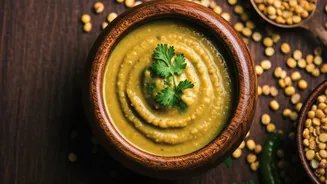
offerings, Chaunsa Dal emerges as a distinctive recipe, primarily crafted from urad dal. What sets this dal apart from more common lentil preparations is its foundational step: the urad dal is first dry-roasted, then ground into a coarse consistency. This process imbues the dish with a delightful nutty undertone and contributes to a thicker, more satisfying texture. The traditional method of crushing spices by hand in a mortar and pestle is another key element, releasing aromatic oils and infusing the dal with an authentic mountain essence. Typically prepared using robust mustard oil and often finished with a touch of roasted wheat flour for added richness, Chaunsa Dal is a testament to the simple, wholesome culinary traditions of the Himalayan region.
Crafting the Flavor Base
The distinctive character of Chaunsa Dal is intrinsically linked to its preparation methods. The process begins with dry-roasting urad dal until it emits a fragrant aroma and achieves a light golden hue, ensuring continuous stirring to prevent scorching. Once cooled, this roasted dal is ground coarsely, maintaining a slightly grainy texture that is crucial for the dish's traditional feel. Simultaneously, a vibrant spice paste is prepared. Instead of a blender, fresh ginger, garlic, green chilies, whole coriander seeds, and a handful of fresh coriander leaves are meticulously crushed together using a mortar and pestle. This manual crushing method is vital as it gently breaks down the ingredients, releasing their natural oils and intensifying their aromas, thereby contributing to a more profound and authentic flavor profile that is characteristic of this rustic mountain dish.
Building Richness and Depth
The final layers of flavor in Chaunsa Dal are achieved through a carefully prepared tempering and the incorporation of specific ingredients. Mustard oil is heated until it lightly smokes, signaling it's ready for the tempering process. Crackling mustard seeds followed by a pinch of asafoetida (hing) form the aromatic base. Into this sizzles the hand-crushed spice paste, which is sautéed until the raw aroma dissipates and the spices begin to release their oils. Ground turmeric, red chili powder, cumin powder, and salt are then added, cooked further until the masala is well-integrated and fragrant. A unique addition is a tablespoon of roasted wheat flour, mixed into the masala. This flour not only thickens the dal but also imparts a subtle, earthy richness and a deeper, more complex flavor profile, complementing the nutty undertones of the roasted urad dal and the pungency of the mustard oil, resulting in a truly wholesome and comforting meal.
Cooking and Serving
Once the masala base is rich and fragrant, the coarsely ground urad dal is introduced, stirred thoroughly to ensure it coats evenly and begins to absorb the infused flavors. Sufficient water is then added to achieve the desired consistency, and the dal is simmered over medium heat. Regular stirring is essential during this stage to prevent any lumps from forming and to ensure the dal cooks evenly, gradually thickening and softening to a palatable texture. As the dal reaches its final stages of cooking, a burst of freshness and aroma is added with half a teaspoon of garam masala and freshly chopped coriander leaves. A final minute of cooking allows these last additions to meld beautifully. Chaunsa Dal is best enjoyed piping hot, traditionally served alongside steamed rice, where its unique combination of nutty urad dal, pungent mustard oil, and robust, hand-crushed spices creates a comforting and deeply satisfying mountain-style culinary experience.