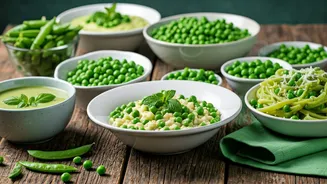

Peas: Culinary Superstar
Green peas, often seen as a simple side, are far more versatile than you might think. They bring a fresh, vibrant taste and a touch of sweetness to any
dish, making them a kitchen staple worldwide. Their adaptability allows them to shine in both simple preparations and elaborate culinary creations. They can be found in different styles of dishes from different cultures, be it soups, stews, or even incorporated into baked goods. So, let’s explore how the humble green pea transforms into extraordinary meals, turning everyday cooking into a celebration of flavor and creativity. It is a fantastic opportunity to bring variety to the dinner table and introduce a new favorite.
Nimona: North Indian Delight
Nimona is a hearty, flavorful dish popular in North India, especially during the winter season when fresh green peas are abundant. The preparation involves coarsely grinding the peas to create a thick, textured base. This is then cooked with tomatoes, onions, ginger, and aromatic spices like asafoetida, cumin, and coriander. The cooking process is crucial, as it allows the flavors to meld beautifully, resulting in a rich, comforting curry. Nimona is traditionally served with rice or roti and provides a warming experience, perfect for chilly evenings. This dish showcases how green peas can be transformed into a deeply satisfying and nourishing meal.
Samosa: Savory Filled Goodness
While samosas can be filled with various ingredients, a green pea filling is a popular and delicious choice. The peas are typically mashed or coarsely ground and mixed with spiced potatoes, onions, and often other vegetables like carrots and green chilies. The mixture is seasoned with a blend of spices, including cumin, coriander, and turmeric, which adds depth and complexity. This spiced filling is encased in a crispy, golden-brown pastry and deep-fried to perfection. The result is a savory treat with a satisfying crunch and a burst of flavorful peas inside. Samosas are a classic Indian snack that's loved for their comforting and flavorful nature.
Matar Paneer: Creamy Classic
Matar Paneer is another Indian favorite, featuring green peas and paneer (Indian cheese) in a creamy, tomato-based gravy. The peas are cooked until tender, and the paneer is often lightly fried or added directly to the gravy. The gravy itself is a delightful blend of tomatoes, onions, ginger, garlic, and a mix of aromatic spices like garam masala, turmeric, and chili powder. Sometimes, a touch of cream or cashew paste is added to enrich the sauce, creating a smooth and luscious texture. This combination offers a balance of sweetness from the peas, the soft texture of paneer, and the savory spices, making it a delicious and satisfying dish, usually served with naan or rice.
Pea Soup: Comfort in a Bowl
Pea soup is a classic dish that can be enjoyed throughout the year. It's often made with a base of fresh or frozen green peas, cooked with onions, carrots, celery, and vegetable or chicken broth. Herbs like parsley, thyme, and bay leaf add aroma and flavor. The soup can be pureed for a smooth consistency or left chunky for added texture. Variations may include adding ham or bacon for a smoky flavor. Pea soup is a versatile and nourishing dish, perfect for a light lunch or a comforting dinner, which offers a warm embrace on colder days. It is easily customizable to suit different preferences and dietary needs.
Green Pea Risotto: Italian Elegance
Risotto, a creamy Italian rice dish, is beautifully complemented by green peas. Arborio rice is gently cooked in broth and infused with white wine, and parmesan cheese. The peas are added toward the end, ensuring they retain their vibrant color and slight crunch. The dish is stirred constantly to create a creamy texture. Green pea risotto offers a touch of freshness and sweetness, providing a delightful contrast to the rich, cheesy risotto. It's a visually appealing dish and a testament to the elegant simplicity of Italian cuisine. This risotto exemplifies the versatility of the pea in international culinary practices.
Pea & Mint Pasta: Freshness
Pasta with peas and mint is a vibrant dish that celebrates fresh flavors. Cooked pasta is tossed with blanched green peas, fresh mint leaves, and often a simple sauce like olive oil, garlic, and a squeeze of lemon juice. The mint adds a refreshing aroma, complementing the sweetness of the peas. The dish is often finished with grated Parmesan cheese or a sprinkle of toasted pine nuts for added texture and flavor. This quick and easy dish is ideal for a light lunch or a weeknight dinner, embodying the essence of spring with its bright, herbaceous profile. It’s a perfect example of how simple ingredients can create a delicious and satisfying meal.
Pea Fritters: Crunchy Bites
Pea fritters provide a delightful way to enjoy green peas in a crispy, snackable form. The peas are often mashed and mixed with flour, eggs, and spices to create a batter. The batter is then formed into small patties or balls and deep-fried until golden brown and crispy. The spices may include cumin, coriander, and chili, enhancing the flavor of the peas. Pea fritters can be served with various dipping sauces, such as mint chutney, yogurt, or a sweet chili sauce. These fritters are a great appetizer or snack, offering a delightful combination of textures and flavors. They are also a wonderful way to introduce green peas to kids, making them a fun and tasty treat.
Pea Salad: Refreshing Side
A green pea salad is a simple yet refreshing side dish that’s perfect for picnics, potlucks, or a light lunch. The peas, often blanched to retain their vibrant color, are combined with other ingredients such as chopped onions, carrots, celery, and sometimes cheese or nuts for added texture and flavor. The dressing can range from a simple vinaigrette to a creamy mayonnaise-based dressing. This salad showcases the natural sweetness of green peas, providing a light and flavorful side that complements any main course. It's a versatile dish that can be easily adapted to include seasonal vegetables, making it a great addition to any meal.