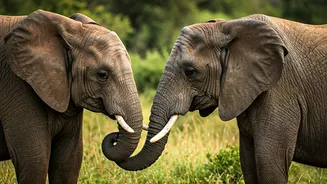








Emotional Depth Revealed
Elephants are far more than just majestic giants; they possess a profound emotional landscape that mirrors our own. Intriguingly, these magnificent creatures
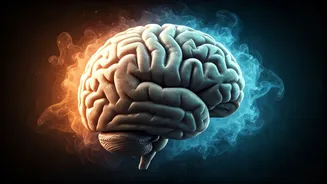
share a unique neurological trait with humans, great apes, and dolphins: the presence of spindle cells in their brains. These specialized neurons are intrinsically linked to advanced social awareness, deep empathy, and complex emotional processing, allowing them to form strong bonds and understand the feelings of others. When an elephant encounters the remains of a deceased herd member, a solemn ritual unfolds. They are known to revisit these sacred sites, gently touching the bones and standing in silent contemplation. This poignant behaviour strongly suggests a deep and enduring sense of grief and remembrance, highlighting their capacity for complex emotional responses to loss, akin to mourning rituals observed in humans.
The Mighty Trunk
The elephant's trunk, a marvel of biological engineering, is an incredibly sophisticated and versatile appendage, boasting over 40,000 distinct muscles. This astonishing number allows for a breathtaking range of dexterity and strength. With it, an elephant can effortlessly lift immense logs, demonstrating incredible power, yet also meticulously pick up the smallest blade of grass, showcasing unparalleled precision. This remarkable organ is not merely a tool but a testament to the intricate design found in nature, facilitating everything from feeding and drinking to smelling, communication, and even social interaction, making it arguably one of the most complex and functional structures in the entire animal kingdom.
Self-Awareness Unveiled
Elephants possess a striking level of self-awareness, a trait shared by a select group of highly intelligent animals. They are among the rare species to successfully pass the mirror self-recognition test, a critical indicator of consciousness and an understanding of one's own existence. This achievement places them in esteemed company, alongside dolphins and great apes, underscoring their sophisticated cognitive abilities. The ability to recognize oneself in a reflection suggests a developed sense of identity and an internal representation of their own body, allowing them to perceive themselves as distinct individuals within their social groups and the wider environment.
Vibrational Communication
Communication among elephants transcends the audible, venturing into the realm of seismic vibrations. These gentle giants utilize low-frequency sounds, often referred to as infrasound, which travel through the ground rather than solely through the air. Other elephants within the herd, or even those at considerable distances, can detect these subtle tremors through their sensitive feet. This extraordinary method of communication allows them to convey vital information across vast expanses, coordinating movements, warning of dangers, or maintaining social cohesion even when visual or auditory contact is impossible, showcasing an ingenious adaptation for survival and social connection.
Unrivaled Memory
The legendary memory of elephants is not an exaggeration but a crucial survival mechanism. These intelligent creatures possess an exceptional ability to recall vital information for decades. They can vividly remember the locations of scarce water sources, even after long periods of drought, and navigate complex migration routes that have been passed down through generations. This remarkable long-term memory is instrumental in their ability to survive harsh environmental conditions and ensures the continued prosperity of their herds. Furthermore, their memory extends to recognizing individual elephants and humans, forging lifelong bonds and remembering both allies and threats.
Tusk Dominance
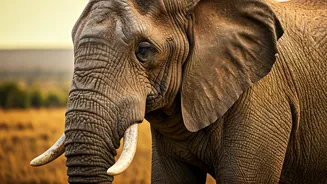
Just as humans exhibit a preference for using one hand over the other, elephants display a similar tendency with their tusks, being either left-tusked or right-tusked dominant. This distinct preference means one tusk is used more frequently for various tasks, such as digging, foraging, or defence. Consequently, the dominant tusk tends to become noticeably shorter and more worn down over time compared to its counterpart. This subtle asymmetry is a fascinating detail, often overlooked, that provides a unique insight into the individual habits and behavioural patterns of each elephant, further highlighting their distinct personalities and adaptations.