




Founding Vision Clash
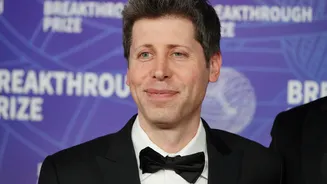
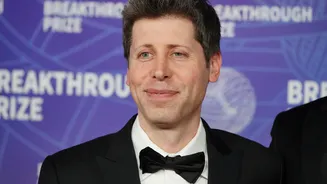
The genesis of OpenAI, a nonprofit entity established in 2015 by tech titans Elon Musk and Sam Altman, was rooted in a profound desire to steer the development
of Artificial General Intelligence (AGI) towards benefiting all of humanity. The founders envisioned an 'AI Manhattan Project,' aiming to create immensely powerful AI and share it openly, preventing any single entity, like Google, from monopolizing its impact on the human race. Initially, OpenAI committed to making its AI technology freely available as open-source software, a principle deeply embedded in its charter. However, by 2017, internal discourse revealed a growing concern among some members, including Musk, that complete open-sourcing could pose significant risks. Concurrently, securing the substantial funding required for AGI development became a pressing issue, leading to divergent strategies. Musk proposed integrating OpenAI's AI efforts with Tesla's burgeoning supercomputer infrastructure, a move that was ultimately rejected by Altman and others. This disagreement marked a pivotal moment, leading to Musk's departure from the board and his subsequent withdrawal of financial support, ultimately paving the way for his own AI ventures, such as xAI.
Allegations of Betrayal
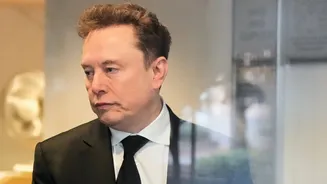
Elon Musk initiated legal proceedings in 2024, asserting that OpenAI, under the leadership of Sam Altman and other executives, has reneged on its original humanitarian mission, prioritizing financial gain instead. Musk contends that he played a role in the initial funding and that the organization's leadership deliberately misled him and other stakeholders about their commitment to a non-profit-only framework. Court documents unsealed during the discovery phase, including diary entries from Greg Brockman, OpenAI's president and co-founder, suggest internal contemplation about transitioning to a for-profit structure. One entry reportedly stated uncertainty about commitment to the non-profit model, with a desire to become a billionaire. Musk argues these records demonstrate a premeditated shift towards commercialization, contrary to promises made. The court's decision to allow the case to proceed to trial, based in part on evidence of potential deception, underscores the gravity of these allegations and the significant financial stakes involved, with Musk reportedly seeking $150 billion in damages.
OpenAI's Defense
OpenAI counters Musk's claims by asserting that he himself considered repurposing the nonprofit lab into a commercial venture prior to his departure in 2018. Evidence presented suggests that in 2017, Jared Birchall, the manager of Musk's family office, registered a company named 'Open Artificial Intelligence Technologies,' intended as a for-profit replica of OpenAI. In its public statements and court filings, OpenAI argues that Musk's own words and actions validate this perspective, indicating his desire for a commercial structure and majority equity in the company. Furthermore, OpenAI alleges that Musk sought absolute control over AGI development, even proposing that his children would oversee it, and that he intended to accumulate vast sums, such as $80 billion, for a self-sustaining city on Mars. OpenAI also accuses Musk of actively attempting to hinder its progress while concurrently advancing his own AI endeavors. The organization's current structure operates as a for-profit public benefit corporation (PBC) under the stewardship of its charitable arm, a model that evolved after initial proposals to eliminate nonprofit oversight faced considerable pushback from advocacy groups.
Trial's Potential Impact
The ongoing trial, presided over by Judge Yvonne Gonzalez Rogers and a nine-person jury, will focus on Musk's allegations of breach of charitable trust and unjust enrichment, following the dismissal of his fraud claims. The outcome holds significant implications for OpenAI's future operations, including its ambitious data center expansion plans and potential initial public offering. A ruling in Musk's favor could lead to substantial financial penalties and force a reversal of OpenAI's for-profit transition, potentially impacting its ability to compete with rivals like Anthropic and Google. Conversely, if OpenAI prevails, it would solidify its path as a commercial entity, enabling it to pursue its expansion strategies. The court is expected to hear testimony from key figures such as Sam Altman, Microsoft CEO Satya Nadella, Mira Murati, and potentially Shivon Zilis, among others. The credibility of witnesses and the interpretation of OpenAI's foundational documents will be central to the jury's deliberation, potentially shaping the trajectory of AI development and regulation globally.